Reviewed · HAMMAMET TOURS
Private Day Trip to Testour, Dougga and Bulla Regia from Hammamet
This private day trip from Hammamet strings together three very different worlds in Tunisia: an Andalusian village in Testour, and two Roman powerhouses at Dougga and Bulla Regia. It is a great way to see how many layers a single country can hold, without burning days on separate trips.
I love that admission tickets are included for Dougga and Bulla Regia, so you spend your time on the ruins instead of figuring out ticket lines. I also like the private-group setup, which makes it easier to move at a pace that suits your shoes, your questions, and your comfort level.
The one possible drawback is the time commitment. Even though the trip is listed at about 8 hours, plan for a longer day, especially if you stop for photos, stretch breaks, or extra viewing time.
Key things that make this trip worth your time

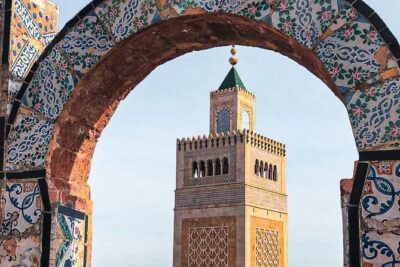
- Testour’s Great Mosque minaret with Andalusian-style details and a mechanical clock with counterclockwise hands
- UNESCO Dougga recognized as the best preserved small Roman city in North Africa
- Two full archaeological stops with admission tickets included, around 2 hours each
- Bulla Regia’s religious mix from Roman temples to Christian basilicas and the church of Alexander
- Local food moment in Testour, plus occasional roadside glimpses of everyday life
Hammamet to the ruins, the 7:30 start, and how the day really runs

This trip starts early, with pickup and departure around 7:30 am. That is not a small detail, because the day is built around the best light for photos and the calmer hours before crowds and heat kick in.
The duration is listed at about 8 hours, but you should mentally budget more. One of the most common friction points with archaeology tours in Tunisia is simple math: you have driving time plus real time to walk, look up at carvings, and take breaks when the sun or wind gets bossy.
If you like your touring structured, you will probably enjoy this. If you prefer a slow, lazy morning, you may feel the schedule squeeze. Still, the payoff is huge because you get three stops that are usually seen as separate outings.
More from Hammamet to compare against
- Private tour: Medina,Carthage ,Sidi Bou Said, Bardo Museum+lunch
★ 5.0 · 194 reviews - A Private Night at Desert Douz Tozeur
★ 5.0 · 29 reviews - Private and Guided Tour to Kairouan and El Jem and Monastir
★ 4.5 · 22 reviews
Testour: Andalusian architecture, the Great Mosque, and a clock that turns the other way
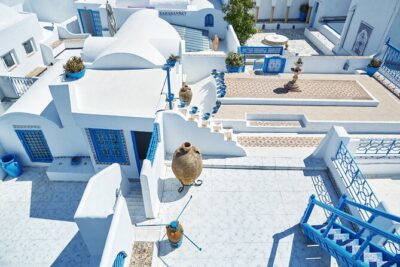
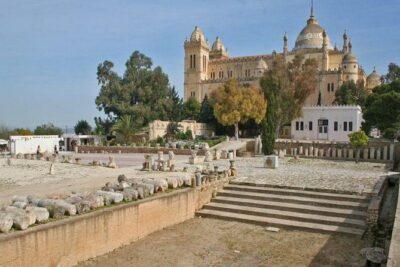
Testour is the warm-up act for the Romans, but it deserves attention on its own. The village was founded by Moorish people at the beginning of the 17th century, and the architecture shows that Andalusian connection clearly.
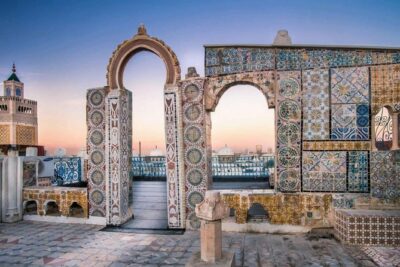
The star is the Great Mosque and its minaret. It is about 23 meters tall, octagonal, and decorated with Andalusian-style inscriptions and glazed details. Even the clock is a story. The mechanical clock at the top has hands that turn counterclockwise, which is the kind of quirky detail you remember long after the trip is over.
On top of the views and photos, there is usually a food moment here too. You get a cheese tasting tied to the region’s specialties. In real-life terms, this is one of those small breaks that keeps a long day from feeling like a nonstop museum tour.
Practical tip: for the minaret and surrounding views, bring a phone camera that handles bright light well. In this part of Tunisia, sun glare can flatten details, especially around stone and glazed surfaces.
How to get the most out of Testour
Testour works best when you treat it like more than a quick stop. Spend a little time looking closely at inscriptions on the minaret and the small window details. Then use that context to appreciate what comes next at Dougga and Bulla Regia, where the “why” behind design and symbols matters.
Dougga UNESCO: why this Roman city is a top-tier stop

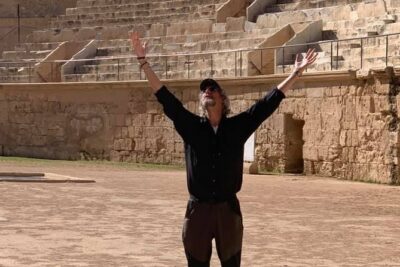
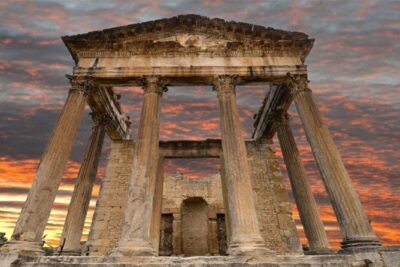
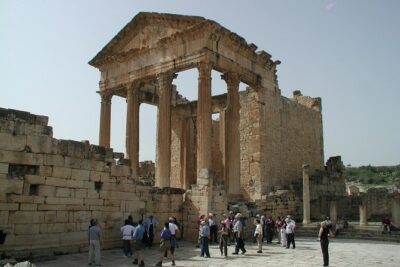
If you care about ancient cities, Dougga is the headline. This is the UNESCO-listed site on the World Heritage List since 1997, described as the best preserved small Roman city in North Africa.
The ruins feel “complete” in a rare way. Within the site boundaries you can see multiple phases of the ancient city, including the monumental core and the public buildings that tell you how people lived day to day.
Here are the main stops you can expect to see, and why each one matters:
- Capitol and forum areas: these give you the political and civic heartbeat of the city
- Theater: a strong reminder that Romans built for public life, not just monuments
- Thermal baths: proof that daily leisure and ritual were built into infrastructure
- Houses: you get a sense of domestic scale and city planning
- Place of the rose of the winds: a charming detail that helps you connect architecture with how Romans tracked space and direction
- Triumphal arch: it is where power and celebration were literally carved into stone
- Libyco-Punic Mausoleum: a nice hint that not everything here is strictly one cultural label
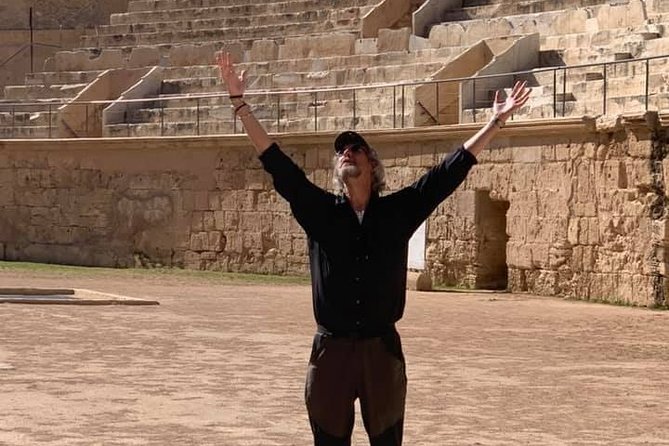
One stop that often lands as a highlight is the Venus Temple, plus the condition of the Roman theatre, which tends to impress because you can still read the spaces and proportions instead of just staring at scattered blocks.
Point the Hammamet day somewhere else:
- Quad ride on the hills of Hammamet
★ 4.0 · 104 reviews - 2-Day Tunisian Sahara Tour with Food & Stay from Hammamet
★ 4.5 · 80 reviews - Tour to the Medina of Hammamet and the Spice Market of Nabeul
★ 4.0 · 45 reviews - Tunis, Sidi Bousaid and Carthage day trip from Hammamet
★ 4.5 · 44 reviews
The time you get matters
You get around 2 hours here with admission included. That is enough time to see the big public structures, but you still need to choose what to focus on. If you are the type who reads every sign, plan to move a little slower. If you are more visual, start with the theater and forum zones, then circle back to baths and side buildings.
Bring a steady pace mindset. This is not about speed. It is about letting the buildings “click” in your head.
Bulla Regia: Roman splendor meets Christian worship
After Dougga, the day shifts again at Bulla Regia. This site sits a few kilometers north of the city of Jendouba in northwest Tunisia, and it is one of the key cultural tourism stops in that region.
What makes Bulla Regia stand out is the long timeline. The remains reflect more than 17 centuries of an agglomeration founded by the Numidians at least by the end of the 6th century BC. It then grew quickly into a royal residence. Later, under Rome, it moved into different roles:
- autonomous during the early Roman period
- erected as a municipality under the Flavians
- established as a Roman colony under Emperor Hadrian (117 to 138)
- and by the end of the 5th century, its inhabitants were considered “bad Christians” by Augustine
You can see that evolution in the buildings. Bulla Regia is known for its religious architecture:
- Capitol
- Temple of Apollo
- Two Christian basilicas
- Church of Alexander
What to watch for while walking the site
At Bulla Regia, I recommend slowing down just a touch and paying attention to how religious spaces are arranged. Even if you do not know the exact functions, you can still sense the change from temple worship to Christian basilica layouts.
Also, since you get about 2 hours here, you will likely end up choosing a “route.” If your guide points out the Christian basilicas first, go with that flow, then circle back if you still have energy for the Apollo temple and other major structures.
Guides and drivers: what turns a drive into a real day
This kind of day trip lives or dies by the people in the car and at each site. The guiding quality on this itinerary is consistently the difference between seeing ruins and actually understanding them.
You may be guided by different team members depending on your departure, including Faouzi, Mohamed, or Chaoukni, and the overall pattern is the same: clear explanations and a practical approach. In rain or shifting weather, a strong guide tries to get you through the key parts before conditions close in.
I also like the fact that the day is run with human comfort in mind. On at least one departure, the guide worked with a group member who had walking issues, helping make the pacing workable. That is a good sign for anyone who worries about keeping up.
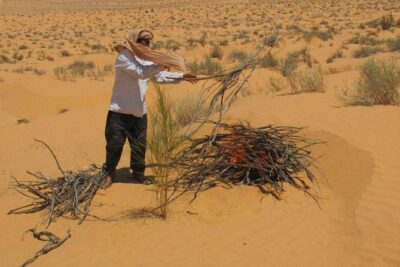
One extra that can make the day feel less like a checklist is a roadside look at local life. There is an example of a stop to see a Berber woman baking bread in an ancient furnace, followed by tasting the bread. That kind of moment breaks up the archaeological focus and makes the day feel more connected to modern Tunisia.
When things go sideways
Road days can be unpredictable. On one day, there was a minor car incident that caused delays. That is not something you can eliminate by booking, but it is worth knowing that the real world can interfere, even on well-run tours.
Price and value: what you get for $133.57 per person
At $133.57 per person, this is not a budget bus ride. It is priced like a private, curated archaeology day with pickup included and a dedicated driver.
The value hinges on what is included:
- Pickup offered from your area around Hammamet
- Private setup so it is just your group
- Mobile ticket for the logistics side
- Admission tickets included for both Dougga and Bulla Regia
- A local tasting in Testour, including the cheese element listed for the region
If you were planning Dougga and Bulla Regia on your own, the costs can add up fast once you factor in transportation and time. Paying for a single coordinated day is often smarter, especially if you want a guided explanation that turns ruins into a story you can follow.
Group discounts are also listed. That matters if you are traveling with family or friends and can share the private vehicle cost more efficiently.
Bottom line: the price feels fair if you want structure, guidance, and included site admissions in one go. If you love solo exploring, and you do not care much about interpretation, you might find cheaper options. But you would likely lose the convenience and smooth flow.
What to pack and how to handle the walking, heat, and photos
This trip is built around outdoor sites. Even when the ruins look flat from a distance, you will still cover real ground.
Plan for:
- sun and wind, especially if you are taking photos around open ruins
- comfortable shoes for uneven stone areas
- a small bag for water, sunscreen, and a hat (not provided in the info, so you will want to bring your own essentials)
- a light layer if it cools down later in the day
If you have mobility concerns, say something early. The itinerary suggests most travelers can participate, and guides have shown willingness to adjust for walking needs. A quick heads up helps your guide pick a route that makes sense for you.
For timing, treat the 2-hour blocks as “typical.” In practice, your pace and attention will decide how much you see. If you want the full story, you will probably ask questions, and that is part of the value of a guided stop.
Should you book this Testour, Dougga, and Bulla Regia day trip?
You should book if you want:
- three major archaeological stops in one day, without the hassle of planning between them
- UNESCO-level ruins at Dougga, plus the religious layered site of Bulla Regia
- the kind of guided explanations that help you connect theater, forums, basilicas, and temples into one picture
- pickup and a private-group setup that feels efficient
Skip or rethink it if:
- you hate early starts and long days
- you want total independence and do not care about admission and interpretation
- your schedule is tight and you cannot tolerate the possibility of the day running later
One last practical note: the experience is listed as requiring good weather. If the forecast looks rough, you may have an alternate date or a full refund option depending on what happens, so it is worth being flexible if you can.
FAQ
What sites are included in this day trip?
The tour includes Testour, Dougga, and Bulla Regia. You visit the main highlights at each location, with Dougga and Bulla Regia each listed at about 2 hours.
How long is the experience?
It is listed as about 8 hours.
What time does the tour start?
The start time is 7:30 am.
Is pickup from Hammamet included?
Yes, pickup is offered.
Is this a private tour?
Yes. It is described as a private tour/activity, and only your group will participate.
Are admission tickets included?
Yes. Admission tickets are included for Dougga and Bulla Regia.
Do you get a mobile ticket?
Yes. The experience includes a mobile ticket.
Is there a food or tasting stop in Testour?
Yes. The description includes a cheese tasting in Testour.
Are service animals allowed?
Yes. Service animals are allowed.
What if the weather is poor?
The experience requires good weather. If it is canceled due to poor weather, you will be offered a different date or a full refund.
How does cancellation work?
There is free cancellation. You can cancel up to 24 hours in advance for a full refund.
Fresh reviews around Hammamet
- Cap-Bon Self-Guided Excursion from Hammamet★ 4.5 · 3 reviews
- Kairouan, El Djem, Monastir Self-Guided Excursion from Hammamet★ 4.5 · 5 reviews
- Tunis, Carthage and Sidi Bou Said Self-Guided Excursion from Hammamet★ 4.5 · 4 reviews
- Ancient Carthage and Sidi Bou Said Half Day Tour with Lunch★ 4.0 · 9 reviews
- 2 Days Tour of the Sahara from Hammamet★ 3.5 · 11 reviews
- 3-Day Private Excursion to the Sahara departing from Hammamet★ 4.5 · 10 reviews
- Circuit the south of Tunisia in 2 days Sahara Explorer★ 4.5 · 14 reviews
- A Private Night at Desert Douz Tozeur★ 5.0 · 29 reviews
Hammamet Tours, compared.

2-Day Tunisian Sahara Tour with Food & Stay from Hammamet
Read our review →
Tour to the Medina of Hammamet and the Spice Market of Nabeul
Read our review →
Tunis, Sidi Bousaid and Carthage day trip from Hammamet
Read our review →
From Hammamet or Tunis: Carthage, Bardo, Sidi Bou said and Medina
Read our review →Browse the lists this tour appears in