Private Tour to Kairouan, El Jem & Monastir from Tunis_hammamet

Reviewed · EL JEM AMPHITHEATRE TOURS

Private Tour to Kairouan, El Jem & Monastir from Tunis_hammamet

5.0 · 301 reviews From $98 Operated by Didon tours · Bookable on Viator
Book on Viator →

Kairouan, El Djem, and Monastir in one long day is a neat trick, because you swap religious Tunisia for Roman-scale spectacle and then end with an early Islamic fortress by the sea. I love how the Great Mosque of Kairouan makes history feel physical, and I love that El Djem’s amphitheater is big enough to impress you without the huge crowds you might expect from a famous site.

One thing to plan for: this is a long day (about 8 to 10 hours) with real driving time between stops, and lunch is not included. If you’re the type who needs control over your food timing, pack snacks or plan a lunch option in advance.

Key highlights at a glance

Private Tour to Kairouan, El Jem & Monastir from Tunis_hammamet - Key highlights at a glance

  • Great Mosque of Kairouan entry included, plus time to walk the medina afterward
  • El Djem amphitheater with a strong “Roman colosseum” feel (including the underground side of the experience)
  • Ribat of Monastir with spiral steps to a watchtower and sea views
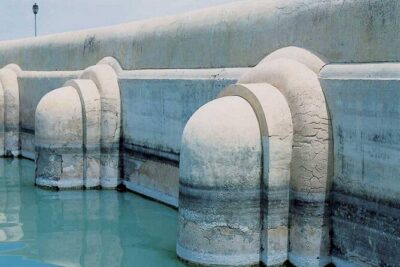
  • Aghlabid basins for a quick look at major 9th-century hydraulic engineering
  • Private format means you move at your group’s pace, with pickup and an air-conditioned vehicle

A One-Day Triangle: Why Kairouan, El Djem, and Monastir Fit Together

This private tour is built around a simple idea: Kairouan gives you Tunisia’s spiritual center, El Djem gives you Roman power, and Monastir adds coastal Islamic architecture and defense. You’re not trying to cram in every museum in Tunisia. You’re hitting three places that each explain a different chapter of the region.

The Great Mosque is the symbolic heart of Kairouan, and it shows up in the way the whole city holds its identity. El Djem shifts the scale instantly. Even in a shorter visit, you get that sense of an ancient entertainment machine with serious engineering behind it.

Then you finish in Monastir at the Ribat, which is not just pretty scenery. It was built as a defensive work at the dawn of Islam, with space for prayer and a watchtower that once sent nighttime signals. That last stop tends to stick with people, because it blends religion, military life, and geography in one compact building.

Pickup From Tunis or Hammamet, and How to Handle the Drive Time

Private Tour to Kairouan, El Jem & Monastir from Tunis_hammamet - Pickup From Tunis or Hammamet, and How to Handle the Drive Time
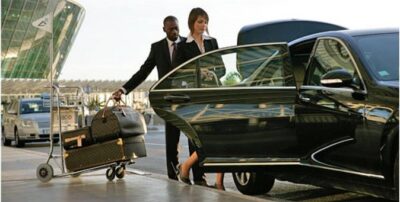
You’re picked up from your hotel area, traveling in an air-conditioned vehicle. The route is a triangle south of Tunis, which is why the day feels full. Even though most stops are around 20 to 40 minutes, you still spend hours on the road.

In practice, this matters for comfort:

  • Wear shoes you can walk in for short bursts inside historic sites.
  • Bring water, because you might not get a long break.
  • If you get motion sick, sit where you feel best in the car.

The upside of all that driving is you get breadth in a single day without needing to rent a car or stitch together multiple day trips. Also, since it’s private, the guide can flex the flow a bit if timing changes at a site.

Entering The Great Mosque of Kairouan: 670 AD Meets a Fortress-Like Feel

Private Tour to Kairouan, El Jem & Monastir from Tunis_hammamet - Entering The Great Mosque of Kairouan: 670 AD Meets a Fortress-Like Feel
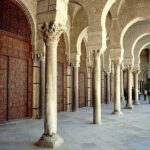
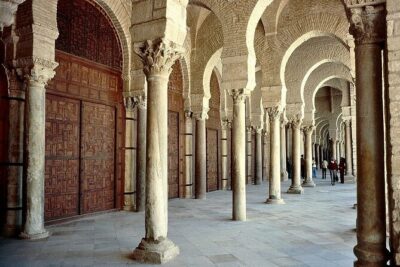
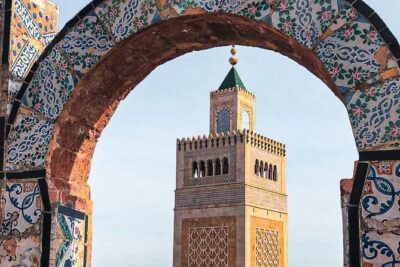
The Great Mosque of Kairouan is the reason people plan a stop here at all. It’s one of the oldest religious buildings in the Muslim West, and it’s tightly linked to Kairouan’s status as the fourth holy city of Islam.

When you arrive, what hits first is the structure:

  • the imposing minaret,
  • a courtyard with serious dimensions,
  • arcades that provide shelter, and
  • a sundial in the courtyard setting.

Then there are the doors, including high cedar-wood doors with rich carvings, and the prayer spaces framed by dozens of marble columns. The mosque’s design has that fortress-like look people describe as adobe, which is a big part of its power. It feels built to last, not built to impress tourists.

Time is scheduled at about 40 minutes with admission included. That’s enough for a careful look if you’re not rushing, but you still need to respect the flow inside a working religious site. If you want photos, do it early or in the calmer corners of the courtyard, when you can slow down.

Kairouan Medina Break: Souks, Les Mekroudhs, and Carpet Craft

Private Tour to Kairouan, El Jem & Monastir from Tunis_hammamet - Kairouan Medina Break: Souks, Les Mekroudhs, and Carpet Craft
After the mosque, you get time to walk Kairouan’s medina. This is one of the most preserved and authentic parts of Tunisia, and that matters. You’re not just passing through a souvenir corridor. You’re seeing the older street rhythm that still supports everyday trade.

You get about 30 minutes here, which is short but useful. You can:

  • look through souks and crafts shops,
  • take a snack break, and
  • spot what people are making locally.

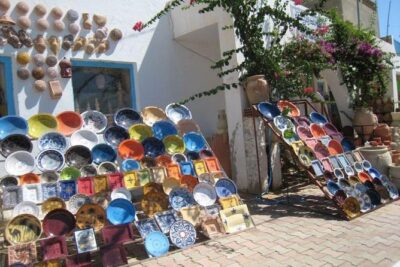
Two things to watch for are pastries and carpets. Kairouan’s well-known pastry is Les Mekroudhs, and you’ll often see them offered when the medina gets busy with daily shopping. Carpet making is also common, and you’ll likely see workshops or sales displays tied to that craft.

Keep your expectations realistic: with only about 30 minutes, you’re not doing a slow, deep shopping session. This is a taste-and-wander window. If you want shopping to be a core part of your day, plan that outside this timed visit too.

El Djem Amphitheater: A Roman Colosseum That Still Feels Close

Private Tour to Kairouan, El Jem & Monastir from Tunis_hammamet - El Djem Amphitheater: A Roman Colosseum That Still Feels Close
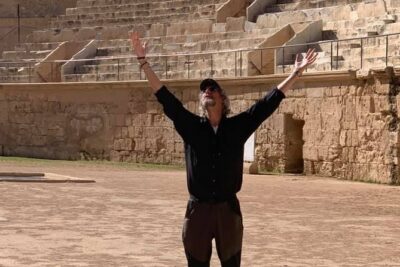
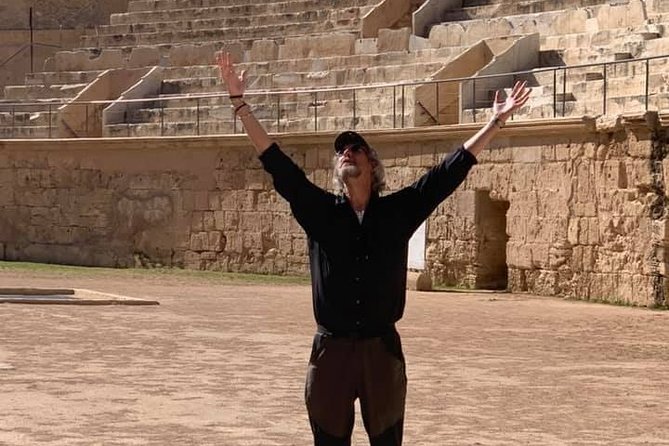
If you only remember one stop from this tour, it’s a strong candidate: the Amphitheatre D’el Jem. It’s a Roman monument founded in the 3rd century AD and classified as a World Heritage Site in 1972. The scale is hard to ignore, with a capacity around 30,000 spectators.

What makes El Djem special is that it carries the Roman idea of spectacle but in a setting that feels more grounded and less like a theme-park. It’s often described as smaller than Rome, but more extensive than you expect because of the underground structures. That underground side matters. It’s part of why you can feel the machine behind the performance.

You’ll have about 40 minutes, admission included. That’s enough to:

  • walk the key areas,
  • understand how the seating and spaces relate,
  • and still absorb the site without feeling trapped on a tight route.

Practical note: the amphitheater is an outdoor-heavy site. Bring sun protection, even on comfortable days. If it’s very hot, shorten your photo missions and focus on the main viewpoints where you can actually connect what you see to the Roman design.

Ribat of Monastir: Spiral Steps, Prayer Rooms, and Night Signals

Private Tour to Kairouan, El Jem & Monastir from Tunis_hammamet - Ribat of Monastir: Spiral Steps, Prayer Rooms, and Night Signals
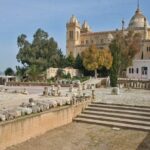
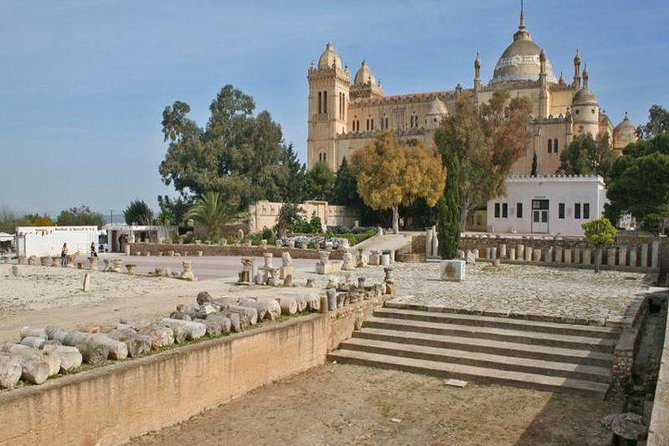
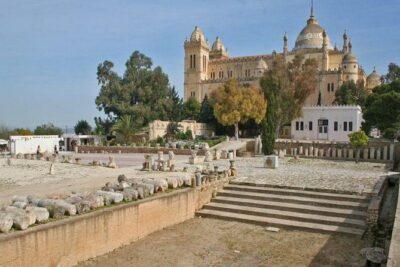
You end with the Ribat of Monastir, one of the oldest defensive works built along the Maghreb coast by the Arab conquerors. Founded in 796, it was built early in Islam, and it later saw medieval renovations.

The structure is arranged in a quadrilateral shape, with four main buildings and two interior courtyards. Inside, the story becomes more human. The ribat included small cells for the warrior monks, people who had military functions but also devoted time to prayer and contemplation.

There are also prayer rooms. The most spacious one now houses rare collectibles connected to worship, along with medieval crafts. That detail is a good reminder that these sites are not just about walls. They were living spaces shaped by routine, defense, and faith.

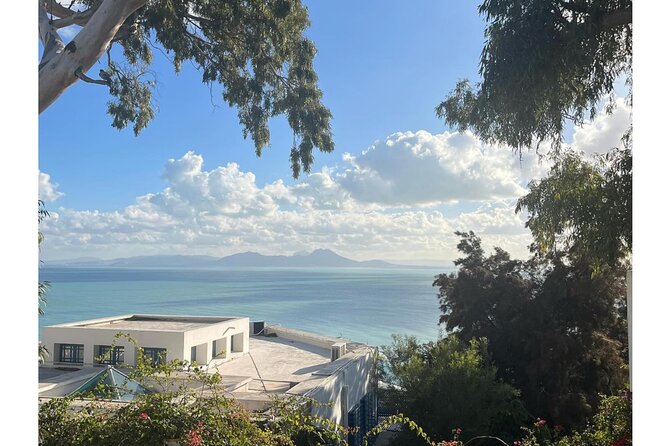
Then there are the spiral steps. A hundred steps lead up to the watchtower. From the top you get a superb view over Monastir and the sea, and historically the ribats exchanged luminous messages with neighboring towers at night. Even if you’re not imagining the signals literally, it helps you understand why the architecture was built here.

The visit is about 40 minutes with entrance included. If stairs are an issue for you, decide ahead of time how much of the climb you want to do. The tower view is the payoff, but you can still enjoy the main areas below if needed.

Aghlabid Basins: The Fast Stop That Explains How Cities Survive

Private Tour to Kairouan, El Jem & Monastir from Tunis_hammamet - Aghlabid Basins: The Fast Stop That Explains How Cities Survive
Not every highlight on this tour is dramatic and loud. Some are practical. Bassins Aghlabites are a historical monument outside Kairouan’s medina ramparts, dating from the early second half of the 9th century.

These basins are considered the most important hydraulic works in the history of the Muslim world, and that’s a big claim. What it means for you is that this is where you see the engineering behind settlement life. Water management made cities possible, and this kind of infrastructure shaped what Kairouan could become.

Your visit is short, about 20 minutes, admission included. This is a good stop if you like context. Even a brief visit can give you a new lens for the mosque and medina, because you start to see how religion and daily life depended on the same physical systems.

Price and Value Check for This Private Day Trip

At $98.48 per person for a private experience, you’re mainly paying for three things:

1) a guide who handles the site meaning and timing,

2) the air-conditioned vehicle for a long day, and

3) multiple entrance tickets that are already included.

In this case, entrances included are clearly listed for:

  • the Great Mosque of Kairouan,
  • the Medina of Kairouan area visit,
  • the Amphitheater of El Djem,
  • the Forte El Ribat (Ribat of Monastir),
  • and the Aghlabid basins.

GST is included too. Lunch is the only major omission in the pricing, so you’re responsible for planning a meal stop.

Is it good value? Usually yes, especially if you’re not interested in driving yourself and you want all the key admissions covered. The value gets better if you have even one or two people who enjoy history, because the guide’s explanation of design, purpose, and tradeoffs across the three regions can turn short visits into meaningful ones.

Guides That Make the Difference, and One Shopping Caution

A big theme from the experience reports linked to this tour is guide quality. Several names show up repeatedly, including Yaya, Kimos, Caulios, Bilel, Ahmed, Chaouki, Beligh, Bilal, Belir, and Balagh. When the guide is strong, the day flows better, and the sites feel connected instead of separated by car rides.

You should also think about one potential downside that has shown up with this kind of day trip: shopping stops that feel like a hard sell. I can’t control what any individual guide chooses to do, but you can control your expectations.

My practical advice:

  • Ask before you leave whether the plan includes any shop stops.
  • If you’re taken to a carpet shop or anything marketed as official, go slow. For higher-value purchases, confirm authenticity with care and compare options.
  • If you prefer zero pressure, make that clear early in the day.

That alone can keep the day focused on mosques, Roman engineering, and the ribat, where the real payoff is.

Who This Tour Suits Best (and Who Might Want Something Else)

This works especially well if you’re based in Tunis or Hammamet and you want a one-day hit of Tunisia’s big three cultural anchors.

It suits:

  • people who like structured days with short site visits,
  • history and architecture lovers who want meaning more than endless time,
  • visitors who value pickup and an air-conditioned ride for comfort,
  • couples and small groups who want flexibility without planning.

It might be less ideal if:

  • you need long, slow time at each site,
  • you dislike driving days and prefer a calmer pace,
  • you rely on lunch being included as part of the plan.

The day is long, but it’s designed so you still feel like you saw the “why” behind each place, not just the surface.

Should You Book This Private Tour to Kairouan, El Jem & Monastir?

I’d book it if you want one efficient day that mixes religious Tunisia, Roman-scale architecture, and a coastal fortress story, all with key admissions handled for you. The included entrance tickets and the private setup are a real convenience, and the route makes sense if you’re staying near Tunis or Hammamet.

Before you say yes, do two things: decide how you feel about a long 8 to 10 hour day, and clarify in plain terms whether you want any shopping detours or not. If you’re on the same page, this is a strong way to turn limited time into real variety.

FAQ

How long is the private tour?

It runs about 8 to 10 hours.

Where is the tour located, and do you get hotel pickup?

The tour is based in Tunis, Tunisia, and pickup is offered from your hotel.

What does the tour cost?

The price is $98.48 per person.

Is the Great Mosque of Kairouan entrance included?

Yes, entrance to the Great Mosque of Kairouan is included.

Is lunch included?

No, lunch is not included.

What entrance fees are included besides the mosque?

Entrance is included for the Medina of Kairouan, the Amphitheater of El Jem, the Forte El Ribat, and the Aghlabid basins.

Is this a private tour?

Yes. It is a private tour/activity, and only your group participates.

Do I need good weather for the experience?

Yes. The tour requires good weather, and if it is canceled due to poor weather you are offered another date or a full refund.

What is the cancellation policy?

Free cancellation is available. You can cancel up to 24 hours in advance for a full refund.

Are service animals allowed?

Yes, service animals are allowed.

More like this

El Jem Amphitheatre Tours, compared.

The full El Jem Amphitheatre Tours list →
Fun VIP Tour: El Jem, Kairouan, Monastir/Sousse
★★★★★★★★★★5.0· 451 reviews· from $30

Fun VIP Tour: El Jem, Kairouan, Monastir/Sousse

Read our review →
Daytrip to Kairouan and El Jem Colosseum
★★★★★★★★★★4.5· 55 reviews· from $151

Daytrip to Kairouan and El Jem Colosseum

Read our review →
Private Half Day Tour Roman Coliseum EL JEM
★★★★★★★★★★5.0· 51 reviews· from $80

Private Half Day Tour Roman Coliseum EL JEM

Read our review →
Half-day excursion from Sousse to the amphitheater of El Jem
★★★★★★★★★★5.0· 47 reviews· from $75

Half-day excursion from Sousse to the amphitheater of El Jem

Read our review →
Kairouan and El Jem Private Day Tour
★★★★★★★★★★4.5· 38 reviews· from $85

Kairouan and El Jem Private Day Tour

Read our review →
Private and Guided Tour to Kairouan and El Jem and Monastir
★★★★★★★★★★4.5· 22 reviews· from $98

Private and Guided Tour to Kairouan and El Jem and Monastir

Read our review →
Private Half Day Tour to Roman Coliseum EL JEM from Monastir
★★★★★★★★★★5.0· 16 reviews· from $80

Private Half Day Tour to Roman Coliseum EL JEM from Monastir

Read our review →
Kairouan Holy City and El Jem Colosseum Tour from Sousse
★★★★★★★★★★4.5· 13 reviews· from $85

Kairouan Holy City and El Jem Colosseum Tour from Sousse

Read our review →
Scroll to Top

Explore Tunisia

Ruins, medinas, islands and the dune sea, ranked and reviewed.