
Reviewed · MEDINA WALKS
Guided tour in the UNESCO world heritage Medina of Tunis
If the UNESCO Medina of Tunis feels like a maze at first, this tour is the cheat code. You get a certified local guide leading you through the lanes with the kind of context that turns random streets into a story. I love that you’re not stuck in one shop strip, you get a smart mix of mosque, schools, markets, and old residences. The only drawback to plan for is that it is a walking tour in a dense old quarter, so you’ll want comfortable shoes and a calm pace with the crowd energy.
You’ll meet your guide, Saber ARRAKI, at La Kasba and end closer to La Medina, with a route designed for a half-day rhythm (about 2 hours 30 minutes to 3 hours 30 minutes). Many stops are quick, which is great for seeing a lot, but it also means you won’t linger forever in each place. Think of it as your best “overview plus orientation” day, then you can return later for the details that hook you most.
Key highlights to look forward to
- Local certified guiding with real Tunis know-how, led by Saber ARRAKI
- Zitouna Mosque area focus with its major role in the medina of Tunis
- Medersa Slimaniya and/or Bir Lahjar, including admission on included stops
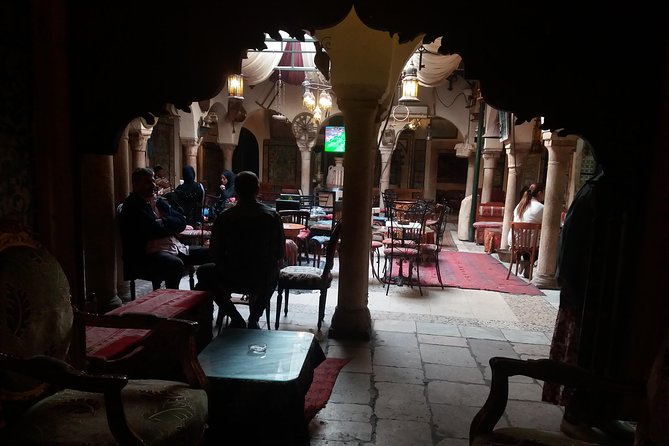
- Souk Al Attarine and Café du Souk for perfume trade and a classic break
- Craft and everyday life stops, from goldsmiths to hammam and chechia-makers
- Photo breaks and monument streets, including Rue du Pacha and viewpoints over the medina
A Guided UNESCO Medina of Tunis Walk, Without Getting Lost in the Shops
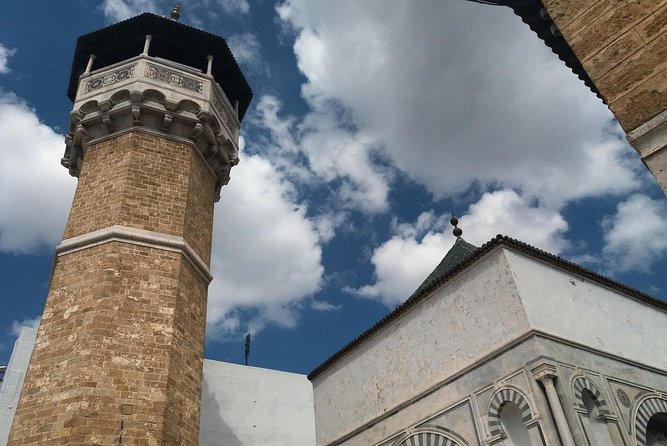
The UNESCO Medina of Tunis is not just an outdoor mall. It is a working urban fabric, a neighborhood full of routines, workshops, and places that still matter to locals. What makes this tour work is simple: you’re not trying to memorize a map. You’re following someone who knows what to point at, what to ignore, and how the sites connect.
I like that the walking route is built to give you context fast. You start with landmark religious architecture, then shift into schools and markets, then end up on streets where monuments sit close together. By the time you reach the later stops, you’ll understand why the medina feels layered, not random.
One more practical win: the group stays small (max 15 travelers). In a medina, smaller usually means less time waiting, more time asking questions, and a guide who can actually respond to the group.
More from Tunis to compare against
- Historical Tour of Ancient Carthage
★ 5.0 · 51 reviews - 2 Hour Hergla Visit and Sousse Medina Heritage Tour
★ 4.5 · 3 reviews
Meet Saber ARRAKI: Certified, Local, and Ready With Answers
This tour is led by Saber ARRAKI, a national certified guide approved by the Tunisian National Tourism Office. He is also described as someone who grew up there, which matters. People who know a place from the inside tend to explain things in plain language, not museum-speak.
I also appreciate the way the tour style comes through in the feedback: guests highlight his patience, his good English, and even his sense of humor. That means questions do not feel like interruptions. You can ask about culture, architecture, or daily life and get a real answer instead of a quick general line.
And because the tour is built for a group of up to 15, the guide can keep a steady rhythm. You’re not just following a person in front, you’re learning how to read the medina while you walk.
Price and Timing for a 2.5 to 3.5 Hour Route
The price is $46.53 per person, and it includes all fees and taxes. That matters because “cheap” tours sometimes hide extra costs. Here, you at least know the base cost is all-in, with a mobile ticket provided.
You should book with timing in mind too. The tour runs about 2 hours 30 minutes to 3 hours 30 minutes, and it starts at 9:00 am from La Kasba. Most travelers like a morning start because the streets feel more manageable before the heat and later-day crowds.
Also note what is not included: private transportation. The tour is structured for walking through central medina areas, and it’s listed as near public transportation. If you’re staying nearby, this is exactly the kind of morning activity that fits.
Your Route From La Kasba to La Medina, Stop by Stop
This isn’t a single “big monument” visit. It’s a connected chain of places that show how the medina works. You’ll move between religious sites, traditional houses, schools, crafts, and market corners, with several stops quick enough to keep your energy up.
The order below is how the tour flows in the provided plan. Some parts are longer (like Dar Lasram and the mosque complex), while others are short passes designed to get you oriented and keep the pace friendly.
You’ll also see that admission is handled differently depending on the stop. Some places are free to enter, and for others you’ll either have admission included or you might need to pay on site. I’d think of it as: you get the key paid sites handled in advance, and the “walk-by culture” stops are mostly free.
Point the Tunis day somewhere else:
- Private Tour to Kairouan, El Jem & Monastir from Tunis_hammamet
★ 5.0 · 301 reviews - Private tour: Medina,Carthage ,Sidi Bou Said, Bardo Museum+lunch
★ 5.0 · 230 reviews - Carthage, Bardo Museum, Sidi Bou Said and Medina Private Day Tour
★ 4.5 · 153 reviews - Private Excursion to Testour, Dougga and Bulla Regia from Tunis.
★ 5.0 · 100 reviews
Zitouna Mosque, the Olive Tree Icon of Tunis
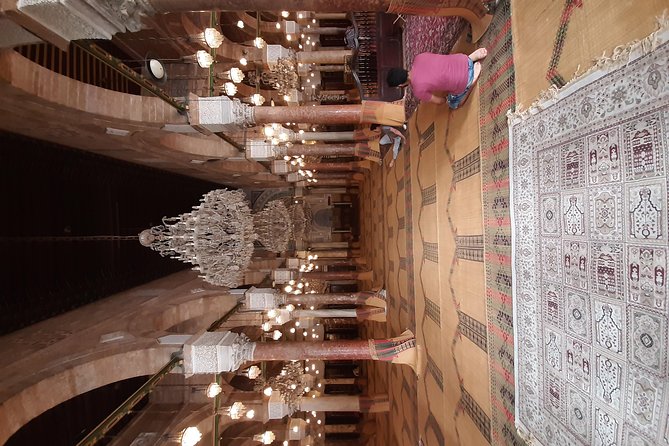
The tour’s anchor is the Zitouna Mosque, also known as the Mosque of the Olive Tree. It’s the main mosque in the medina and one of the oldest and largest sanctuaries in Tunis. Even if you’re not there for religious architecture specifically, it’s the best place to start because it gives you a center of gravity for everything else.
This mosque covers about 5,000 m² and has nine entrances. You’ll also hear about its 184 ancient columns, mainly sourced from the Carthage site. That blend of older materials and ongoing cultural importance is what makes the Zitouna area so meaningful.
If you’re the kind of traveler who likes to understand symbolism, this stop pays off fast. Once you see how major the Zitouna complex is, the medina’s layout makes more sense. Streets feel like connections, not obstacles.
Dar Lasram: A Traditional Tunisian House and How Private Space Works
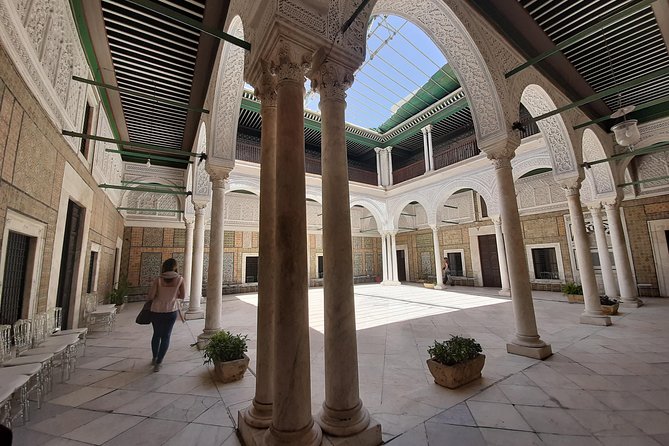
Next comes Dar Lasram, a traditional Tunisian house that functions as a living example of domestic layout. The plan here is very readable: the ground floor is for shops and service areas, the upper levels are for the main house, and there’s also a guest-house area upstairs.
The building covers about 2,250 m², and it’s the kind of place where you can feel how the medina used space efficiently. The tour points out how the structure supports daily life, not just display.
Important cost note: admission ticket is not included for Dar Lasram. The stop is about 30 minutes, so if you want to focus on photos and layout, this is a good length. Just budget for possible on-site entry.
Medersa Slimaniya and Bir Lahjar: Learning Centers in Old Tunis
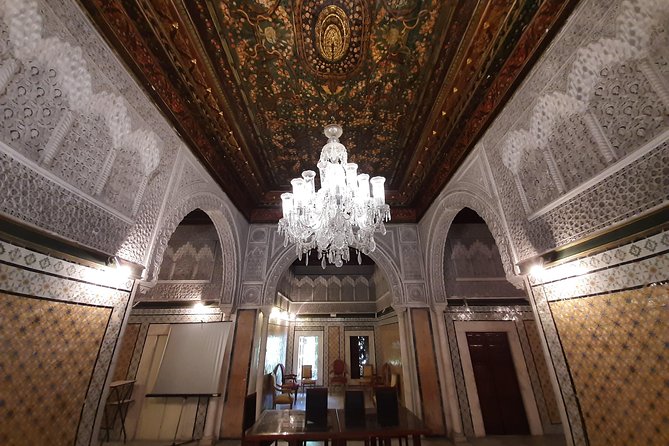
One of my favorite parts of Tunis medina tours is when they stop treating education as a footnote. In this route, you get two major options tied to the tradition of medersas, religious schools in the medina.
You’ll visit Medersa Slimaniya, built in 1754 by Ali I Pasha in memory of his son Suleiman. The story attached to Suleiman’s death is part of why the place carries emotional weight. It sits close to the Zitouna Mosque, near souq El Koutbiya and souq El Kachachine.
At another point in the tour, you may also have a choice: Bir Lahjar or Slimaniya depending on what’s scheduled. The plan describes Madrasa Bir Lahjar as hosting Malikite students from different regions for decades. That gives you a useful perspective. These weren’t only local schools. They drew students from far enough away to create a campus-like community inside the medina.
Admission note: Medersa Slimaniya includes admission, and Bir Lahjar includes admission (when it’s the one you visit). So this is one of the places where you feel the “included” value the most.
Souk Al Attarine and the Café du Souk Break You’ll Be Glad You Took
Then the tour shifts into commerce, starting with Souk Al Attarine, the souk of perfumers. You’ll spend about 15 minutes in this focused trade lane. It’s specialized, meaning you’re not just seeing generic souvenir chaos. You’re walking a street where scents and beauty products are the point.
After that, you get a breather: Café du Souk. This is listed as about 30 minutes, and admission is free. I like stops like this because they let you reset without feeling like you’re “wasting time.” In the medina, your eyes and brain can get overloaded. A café break helps you digest what you just learned.
These market stops also show you a practical side of the medina. Shops are not just storefronts. They connect crafts, families, and daily exchange. Perfume trade is a good example because it highlights how goods are tied to sensory culture.
Rue de la Kasbah, Goldsmiths, Hammam el Kachachine: Craft and Daily Rhythm
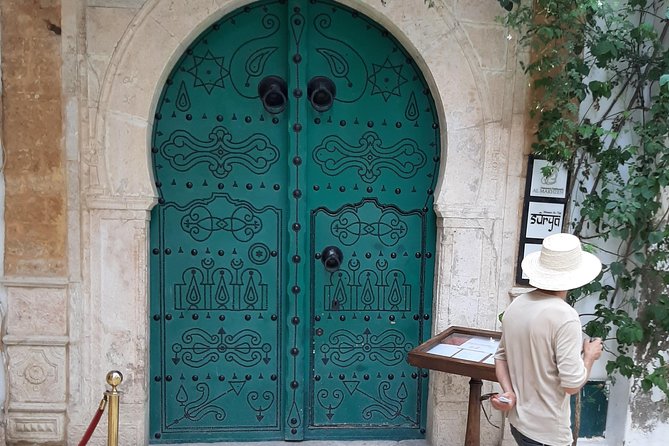
As you continue, you move through the medina in smaller taste-sized segments, which is exactly how you should experience this area. You’ll pass along Rue de la Kasbah for a quick look at the Hammouda Pasha Mosque.
Then it’s on to Souk el-Birka, the market of goldsmiths. You’re there for about 5 minutes, a short stop but useful for getting your bearings and spotting how different trades cluster.
After goldsmiths, you discover Hammam el Kachachine, again for around 5 minutes. A hammam is more than a building. It’s part of the social rhythm. Even if you don’t go inside on this specific stop, seeing it as part of the medina’s real-life infrastructure changes how you see the neighborhood.
These quick stops are valuable because they break the day into digestible chunks. You’re not trapped in one environment the whole time.
Grand Souk des Chechias and Dar El Jeld: Traditional Makers and a Photo Pause
Next you’ll visit Grand Souk des Chechias, a look at traditional Chaouachine (chechia) makers. This is another craft-based lane, and it helps round out the “what people do here” picture.
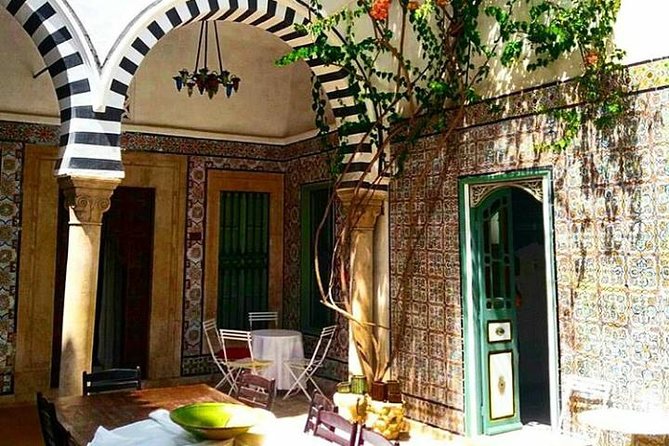
Then there’s a short photo break near Dar El Jeld, described as an old residence converted into a gourmet restaurant. The tour gives you about 5 minutes here, which is perfect for snapping photos and noticing the exterior character before you move on.
I like that the route includes photo pauses rather than forcing constant stop-and-go. You get designated moments to slow down and frame shots. When you’re walking in tight lanes, that structure really helps.
Rue du Pacha: A Street Where Monuments Show Up Close Together
One of the most satisfying segments is Rue du Pacha, where you get a concentrated look at monuments in one line of walking. The stop is about 30 minutes, and admission is listed as free.
This street includes Dar Hammouda Pasha, the didi ben arous mausoleum, and the Hammouda Pasha Mosque. The idea here is not just to tick off names, it’s to understand how the medina can group significant sites so close together. You can feel the power of patronage and the way important buildings shaped the neighborhood.
If you like architecture, this part is a good payoff. You see how styles and religious spaces connect to nearby cultural and memorial structures.
Also, some groups highlight rooftop viewpoints over the Medina with sightlines toward Al-Zaytouna Mosque. Even if you’re not chasing photos, that kind of elevation helps you see the medina as an integrated whole.
Arts Center Bir Lahjar Option: Why the Closing Beats Matter
Near the end you may visit Arts center Bir Lahjar, tied to the Madrasa Bir Lahjar. This is another 15-minute stop and admission is included on the visit option.
The helpful detail here is what the tour emphasizes about Malikite students coming from different regions. That detail turns the site into something more than a building. It becomes a clue about how Tunis was connected to wider networks of learning and travel, even centuries ago.
A close like this also keeps your final impression grounded in real purpose. The medina is famous for crafts and streets, but the educational and spiritual backbone is what holds it together.
Small-Group Tips So You Get the Most Out of Every Stop
If you want this tour to feel smooth, here’s how I’d set yourself up:
- Plan for slow, steady walking and short stops. The route is designed to keep you moving, but with frequent pauses.
- Ask questions early, not later. The guide’s answers are part of the value, and early questions make later sites click.
- Wear shoes you can trust. You’ll be in the medina, and the ground is not like a clean pedestrian plaza.
- Bring a photo-ready mindset. There are multiple photo moments, including a specific pause by Dar El Jeld and viewpoints over the medina area.
If you care about the medina beyond souvenirs, this tour is one of the best ways to calibrate your attention. Afterward, you’ll have a map in your head, even if you never used a map app.
Weather also matters. This experience requires good weather, and if conditions are poor you’ll be offered another date or a refund.
Should You Book This Medina of Tunis Guided Tour?
I think you should book it if you want a smart first day in Tunis. This is ideal when you want to see major landmarks fast, but still understand what you’re looking at. The route balances architecture (Zitouna, Hammouda Pasha Mosque), learning spaces (Medersas), and everyday life (perfumers, hammam, goldsmiths, chechia makers).
It’s also a strong fit if you like a guide who is patient and answers questions clearly. The small group size makes it feel like a real walking conversation, not a hurried group shuffle.
Skip it only if you already know the medina well and you mostly want free time to wander without structure. If you want a guided orientation with enough depth to guide your next visits, this is the kind of tour that pays off for days.
FAQ
How long is the Guided Tour in the UNESCO Medina of Tunis?
The tour runs about 2 hours 30 minutes to 3 hours 30 minutes.
What time does the tour start, and where is the meeting point?
The start time is 9:00 am. The meeting point is La Kasba, Tunis, Tunisia.
Where does the tour end?
The tour ends in La Medina, Tunis, Tunisia.
What is the group size limit?
The tour has a maximum of 15 travelers.
What is included in the price?
The price includes all fees and taxes, and you receive a mobile ticket.
Are admission tickets included for every stop?
Not every stop includes admission. Dar Lasram lists admission ticket not included, while Medersa Slimaniya and Madrasa Bir Lahjar list admission ticket included. Some souks and café stops are listed as free.
Is private transportation included?
No, private transportation is not included.
Is this tour suitable for people who need service animals?
Service animals are allowed.
What happens if the weather is bad?
This experience requires good weather. If it’s canceled due to poor weather, you’ll be offered a different date or a full refund.
Fresh reviews around Tunis
- Explore Tunisia in Depth:The Private Grand Tour in 8 Days★ 5.0 · 3 reviews
- Private Group Day Tour Tunis Medina Carthage Sidi Bou Said★ 4.5 · 3 reviews
- Private Tour Bardo Museum, Carthage, Sidi Bou Said and Medina★ 4.5 · 3 reviews
- 3-Day South of Tunisia Guided Tour from Tunis★ 4.0 · 3 reviews
- Private Tour to Kairouan, El Jem and Sousse★ 5.0 · 4 reviews
- From Tunis: Star Wars 5 day tour★ 5.0 · 4 reviews
- Private Excursion to the Cap Bon Peninsula★ 5.0 · 4 reviews
- 4-Day Private Tour: Sahara and Djerba Island from Tunis and Hammamet★ 5.0 · 4 reviews
Medina Walks, compared.
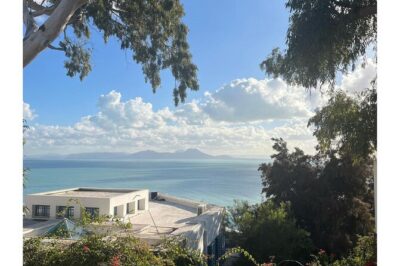
VIP Tour: Tunis Medina/Bardo, Sidi Bou Said, Carthage
Read our review →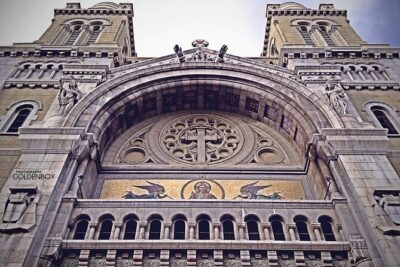
Private tour: Medina,Carthage ,Sidi Bou Said, Bardo Museum+lunch
Read our review →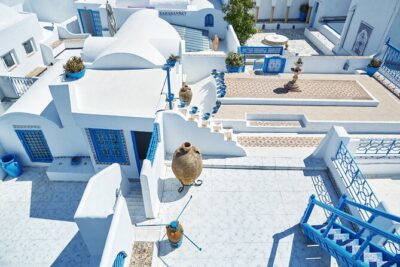
Carthage, Bardo Museum, Sidi Bou Said and Medina Private Day Tour
Read our review →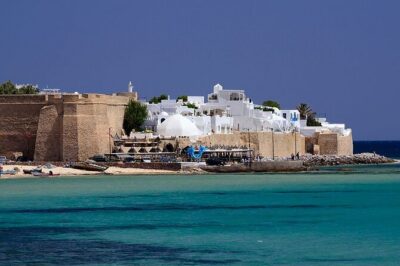
Tour to the Medina of Hammamet and the Spice Market of Nabeul
Read our review →
Carthage, Bardo Museum, Sidi Bou Said & Medina Group Tour
Read our review →
From Hammamet or Tunis: Carthage, Bardo, Sidi Bou said and Medina
Read our review →
Private Day Tour Tunis Medina Carthage Sidi Bou Said Bardo Museum
Read our review →Private tour: Medina,Carthage ,Sidi Bou Said, Bardo Museum+lunch
Read our review →Browse the lists this tour appears in