
Reviewed · CARTHAGE & SIDI BOU SAID TOURS
Private Walking Tour of Carthage Archaeological Site in Tunisia
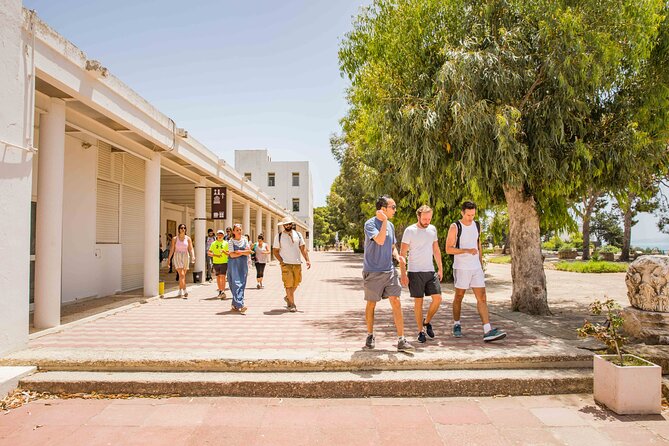
Carthage is one of those places where you can feel layers of time at walking speed, from Punic corners to Roman set pieces, all close to the sea. I especially like that this is a private route with a professional guide, so you get explanations matched to what you are seeing. I also like that admission is built into the stops, so you are not constantly checking entry rules mid-walk. One thing to watch: if you try to change plans late, communication can be inconsistent, as seen when a request to extend the day to Tunis was not handled.
This tour runs about 2 to 3 hours, which is a smart amount of time for Carthage. You will move from site to site, with a moderate pace, and the experience is designed for people who can comfortably walk on uneven ground. If weather is poor, the tour can be rescheduled or refunded, so plan your day with a little flexibility.
You start at Le Lemon Tour near the archaeological zone and finish at the Amphitheatre of Carthage, with help to reach a cab or train station. At $61.94 per person, the value comes from what is included: a guide, taxes and fees, and tickets at each major stop, not just a walk and a map.
Key Highlights You Will Actually Care About
- All key stops include admission, so the route stays focused instead of turning into a ticket hunt.
- Punic to Roman storyline in one walk, with the Tophet, Punic ports, and Roman baths all tied together.
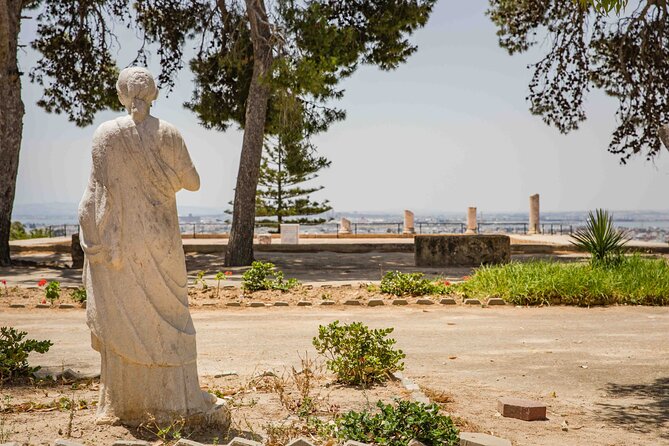
- Antoninus Baths facing the sea, a standout mix of ruins and coastline views.
- Villas Romaines with mosaics, plus scenic viewpoints that make the Roman segment more than just standing ruins.
- Roman Theatre of Carthage, a quick but memorable finish point in the time box.
Price and Value, What You Are Really Paying For
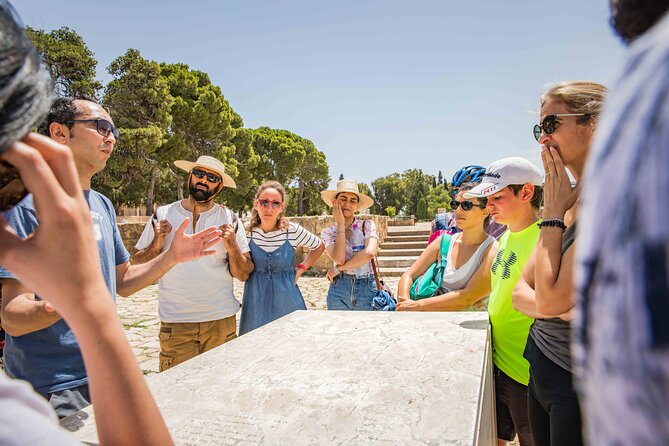
At $61.94 per person for a private walking tour, the price makes sense when you break down what is included. You are getting a professional guide plus all taxes and fees. On top of that, every stop lists an admission ticket included, so your tour time is protected. You are not forced to stop and sort out separate entry costs or last-minute questions at each site.
The other value driver is format. Because it is private, you are not competing with a large group for listening time at each location. Carthage rewards attention. The guide’s job is to help you connect what you see, from the Punic sanctuary areas to Roman constructions. If you only have a couple hours, this structure is what keeps the experience coherent.
You will also see options like a mobile ticket and group discounts. The “average booked 29 days in advance” timing is not about prestige, it is about reality: Carthage is busy in travel season and guided slots can fill. If you have firm dates, booking earlier helps you pick the time window you want.
More from Tunis to compare against
- Walking city tour
★ 4.0 · 18 reviews - Walking City Tour
★ 4.5 · 7 reviews - Fun VIP Tour: Sousse &/OR Monastir (Walking Tour or Car Option)
★ 5.0 · 69 reviews
Where the Tour Starts and Ends, and Why That Matters
You meet at Le Lemon Tour, 9 Rue Hannibal, right at the archaeological area (Site archéologique de Carthage 2025). That is convenient because you do not burn your first minutes figuring out transportation into the zone.
The tour ends at the Amphitheatre of Carthage, and the guide helps you reach a cab or a train station. This matters because the worst part of many “site-to-site” tours is the scramble at the end. Here, you get a hand with the exit plan, which is especially useful if you are using local public transport or just want to avoid walking back.
The tour is listed as being near public transportation. So even if you are not staying right in the center of Tunis, you should be able to reach the start without a complicated logistical plan.
The 2 to 3 Hour Route, How to Pace Yourself
The tour’s time window, about 2 to 3 hours, is designed for “see and understand,” not “see everything.” You will walk between multiple parts of the Carthage archaeological site and then finish with the Roman Theatre. That is enough time to learn the main Punic culture and Roman history themes without feeling like you are sprinting.
You should plan for moderate physical fitness. Carthage ruins can involve uneven surfaces and sun exposure. Wear comfortable shoes and bring water. I also recommend a light layer, because you can get a temperature shift near the sea even when it is warm inland.
The best way to enjoy the pacing is to stop when the guide stops, not when you feel like it. The route is short by design, so the explanations are meant to land at the right location.
Stop 1, Site Archeologique de Carthage, Your Fast Track Through Time
Your first major stop is the Site Archeologique de Carthage, where the route moves between points of interest such as the Punic sanctuary, the Magon quarter, the ancient Punic ports, and the Antonin baths. This opening segment sets the theme of the day.
I like that it starts broad. You get a sense of where these zones sit relative to each other, and you begin to understand the “map in your head” effect you need for Carthage. Without that, the ruins can feel like separate piles of stone. With a guide guiding your attention, the site becomes a story you can follow.
How long is this part? About 1 hour. That is a good chunk of time to get orientation and start learning. The drawback is that if you arrive tired or dehydrated, this is the segment most likely to feel like a blur. So treat the first hour like your warm-up and focus on steady, comfortable walking.
Point the Tunis day somewhere else:
- Private Tour to Kairouan, El Jem & Monastir from Tunis_hammamet
★ 5.0 · 301 reviews - Private tour: Medina,Carthage ,Sidi Bou Said, Bardo Museum+lunch
★ 5.0 · 230 reviews - Carthage, Bardo Museum, Sidi Bou Said and Medina Private Day Tour
★ 4.5 · 153 reviews - Private Excursion to Testour, Dougga and Bulla Regia from Tunis.
★ 5.0 · 100 reviews
Stop 2, Tophet de Carthage, The Punic Sanctuary Focus
Next you visit the Tophet de Carthage, a sanctuary tied to Punic culture. This is a short stop, listed around 15 minutes, but it is intentionally focused.
Why it matters: Tophet gives you the cultural anchor. After you spend time moving through general “where things are,” this stop helps translate what you are looking at. Even if you only remember a few key ideas after, this sanctuary is the one that gives the Punic side emotional weight.
The quick timing is good for energy management. It also means you should listen closely during the guide’s explanation, because there is not much extra time to wander off.
Stop 3, Punic Ports and Museum, Where the Mediterranean Story Clicks
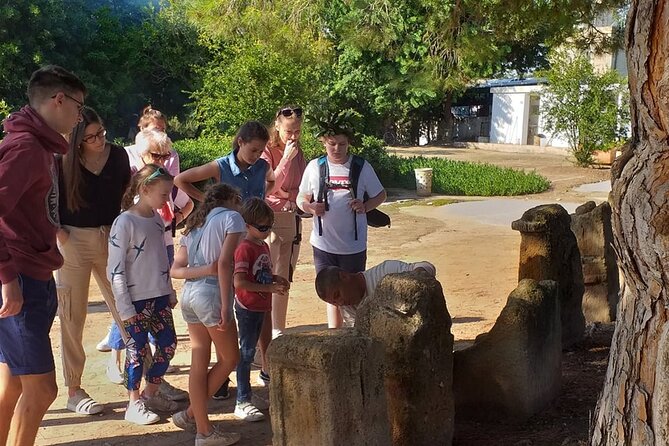
Then comes the Punic Ports & Museum, again around 15 minutes. This stop is built for context. Ports are not just locations, they help explain how a society connects with the wider world.
The description frames it as a major port of Mediterranean history. That is exactly the kind of clue you want early in the walk, because it helps you connect the Punic culture theme to real-world movement, trade, and contact patterns.
The practical downside: 15 minutes can feel fast. You will not be able to do an in-depth museum browse, so if you love museums, just know this is a “see the key items and understand their role” moment rather than a long museum visit.
Stop 4, Baths of Antoninus, Roman Power Plus Sea Views
About 40 minutes are set aside for the Baths of Antoninus. This is one of the most visually satisfying segments on the route. The baths include many ruins, and importantly, they include baths that face the sea. They were of the biggest of the Roman Empire, at least in the way the tour frames their scale and importance.
This is where the Roman story becomes physical. Roman bath complexes are grand by nature, and you can often read their significance just from size and location. Facing the sea adds a second layer. You are looking at ruins, but also taking in the way the environment shaped Roman leisure spaces.
The only thing to watch here is sun and heat. A long Roman site stop plus sea air can still mean you are exposed for part of it. Bring water and take shade breaks when the guide offers them.
Stop 5, Villas Romaines, Mosaics and a Better Kind of Pause
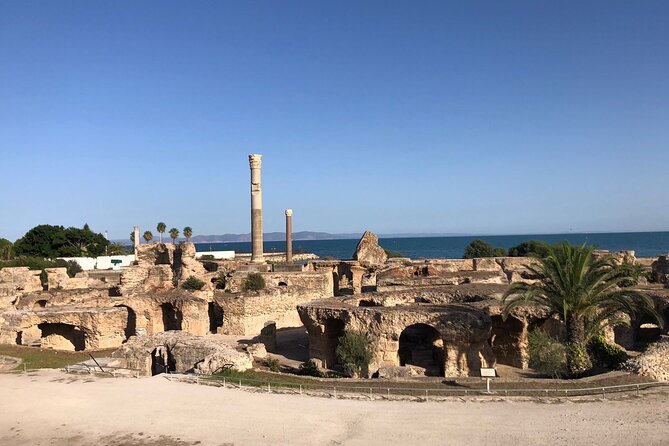
Next are the Villas Romaines, around 20 minutes. The highlights include an example of a Roman villa with mosaics and a nice sightseeing segment.
I like this stop because it changes the pace from “big structures” to “lived-in details.” Mosaics are visually rewarding, and they make Roman artistry feel tangible rather than abstract. The sightseeing component also helps you breathe. Carthage is not just ruins, it is also a place with strong views and sunlight, and this is one of the moments where that beauty fits into the story.
The main consideration is time. Twenty minutes is enough to see what you need and take photos, but not enough for a slow art-study session. If you are the type who loves spending 45 minutes on a single mosaic, you might want to pair this day with extra free time later.
Stop 6, Roman Theatre of Carthage, A Clean, Memorable Finish
The final stop is the Roman Theatre of Carthage, listed at about 10 minutes. It is short, but it is a satisfying ending point because theatres are instantly legible as places made for crowds, performance, and public life.
This stop also supports the day’s overall flow. You move through Punic sanctuaries and ports, then Roman baths and villas, and you finish with a Roman public space. It is a neat arc in a compact tour.
Logistically, finishing here also helps you get to the Amphitheatre area where the tour ends. The guide helps you reach a cab or a train station, which keeps you from ending your day with a navigation problem.
The Guides, and What Good Tutoring Looks Like Here
This kind of tour lives or dies on the guide. You are walking between multiple specialized areas, and you need someone who can connect Punic culture and Roman history in plain language.
One name that appears in past positive experiences is Mohammed, praised as a good guide. Another support thread includes staff member Rania, who helped with taxi coordination, and a guide named Chedi, described as prepared and attentive. You do not need fancy theory. What you need is clarity, and the guide’s ability to explain what you are seeing before the next stop.
A practical tip: ask one question early. Something simple like what ties the sanctuary and ports together. When the guide answers, you will start noticing patterns across the whole route.
Weather and Comfort, How to Plan Your Day in Carthage
The tour depends on good weather, and if it is canceled due to poor conditions, you get offered another date or a full refund. That is not small print you should ignore. Carthage is partly an outdoor walking experience, and rough weather can make ruins less safe and less pleasant.
Plan your day so you can adjust. If you are trying to pack Tunis sightseeing the same afternoon, keep your schedule buffer. One past disappointment came from a failure to arrange an extension after a request, so treat changes as something you need to confirm clearly, not something you assume will happen.
For your own comfort: wear shoes with grip, bring sun protection, and keep a small plan for water. Carthage can heat up quickly, especially when you are walking between open-air zones.
Who This Private Walking Tour Is Best For
You will probably love this tour if you fit one of these buckets:
- You want Punic and Roman Carthage in one guided route, without doing separate tours.
- You like structure and explanations more than wandering alone.
- You prefer a private experience where a guide can answer your questions at each stop.
- You want a manageable 2 to 3 hours, not an all-day commitment.
It might be less ideal if you want a long museum-style experience inside buildings, because several stops are short. It is also not the best fit if you dislike walking on uneven surfaces or you want a perfectly flexible, easily expandable itinerary on the fly.
Should You Book This Carthage Private Walking Tour?
I’d book it if you want a focused, guided walk through Carthage’s most important zones, with admission tickets handled and a guide who can keep the story straight from Punic sanctuaries to Roman baths and theatre.
I would think twice if your plan depends heavily on last-minute schedule extensions. The experience can go smoothly, but past communication issues around altering timing are a real caution sign. If you need extra time in Tunis after, build it as a separate plan you can confirm in advance.
If you book, do it for the right reasons: the guide time, the included entry, and the way the route connects the site into one understandable sequence. In Carthage, that is the difference between taking photos and actually getting meaning from what you see.
FAQ
What is the duration of the Private Walking Tour of Carthage Archaeological Site?
The tour lasts about 2 to 3 hours.
How much does the tour cost?
The price is $61.94 per person.
Is this tour private?
Yes. It is a private tour or activity, and only your group participates.
Where does the tour start and end?
You start at Le Lemon Tour, 9 Rue Hannibal, Site archéologique de Carthage 2025, Tunisia. The tour ends at The Amphitheatre of Carthage, with the guide helping you reach a cab or train station.
What stops are included in the walk?
The tour includes Site Archeologique de Carthage, Tophet de Carthage, Punic Ports and Museum, Baths of Antoninus, Villas Romaines, and the Roman Theatre of Carthage.
Are admission tickets included?
Yes. Admission tickets are included for each listed stop.
Is hotel pickup included?
No. Hotel pickup and drop-off are not included.
What fitness level do I need?
The tour is listed for travelers with a moderate physical fitness level.
Do I need a passport?
Yes. A current valid passport is required on the day of travel.
What happens if the weather is poor?
If the tour is canceled due to poor weather, you will be offered a different date or a full refund.
Can I get a full refund if I cancel?
Yes, free cancellation is available. You must cancel at least 24 hours before the experience’s start time for a full refund.
Fresh reviews around Tunis
- Private Group Day Tour Tunis Medina Carthage Sidi Bou Said★ 4.5 · 3 reviews
- Explore Tunisia in Depth:The Private Grand Tour in 8 Days★ 5.0 · 3 reviews
- Private Tour Bardo Museum, Carthage, Sidi Bou Said and Medina★ 4.5 · 3 reviews
- 3-Day South of Tunisia Guided Tour from Tunis★ 4.0 · 3 reviews
- Private Tour to Kairouan, El Jem and Sousse★ 5.0 · 4 reviews
- Private Excursion to the Cap Bon Peninsula★ 5.0 · 4 reviews
- From Tunis: Star Wars 5 day tour★ 5.0 · 4 reviews
- 4-Day Private Tour: Sahara and Djerba Island from Tunis and Hammamet★ 5.0 · 4 reviews
Carthage & Sidi Bou Said Tours, compared.
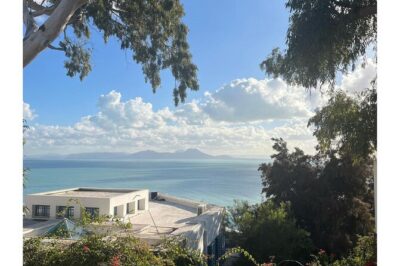
VIP Tour: Tunis Medina/Bardo, Sidi Bou Said, Carthage
Read our review →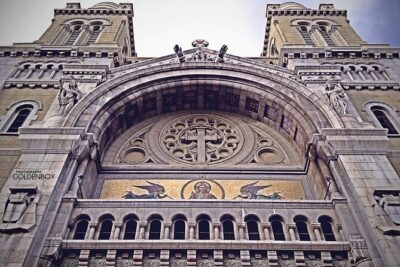
Private tour: Medina,Carthage ,Sidi Bou Said, Bardo Museum+lunch
Read our review →
Carthage, Bardo Museum, Sidi Bou Said and Medina Private Day Tour
Read our review →
Guided Bike Tour of Carthage Archeological Site in Tunisia
Read our review →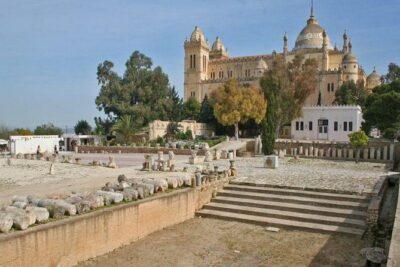
1 day excursion Tunis Sidi Bousaid Carthage departure from Sousse
Read our review →
Group Guided Bike Tour of Carthage Archeological Site in Tunisia
Read our review →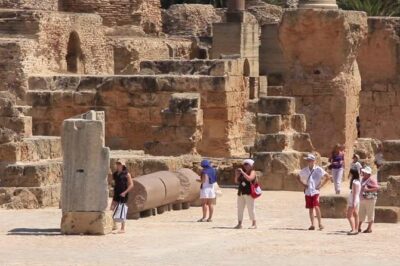
Archaelogical Site Of Carthage + Picturesque Village Of Sidi Bou Said
Read our review →
Browse the lists this tour appears in