
Reviewed · SAHARA DESERT TOURS
The three desert and mountain oases
South Tunisia is interesting because it flips from palm-and-coast Tunisia into geology that feels otherworldly. You will move through Tataouine’s ksours, then the Reg desert of rocks, then the Erg dune desert, with a night where the Milky Way can feel close. The route also threads in salt lakes and mountain oases, plus stops tied to Star Wars filming.
Two things I like a lot about this trip are the mix of scenery and the human pace. I like that you spend nights in different styles of places, from hotel or lodging to a camp under tent, so the trip doesn’t feel like one long drive. I also like that you eat multiple meals included with the group, including breakfasts and dinners, so you are not constantly planning meals on the fly.
One thing to consider is that this is a weather-dependent desert circuit. The description notes it requires good weather, so plan for the possibility of a date change if conditions are not right.
Key highlights you should care about
- Private, small-group travel (max 15) with an air-conditioned vehicle
- A serious desert sequence: Reg (rock desert) to Erg (dune desert)
- Sleep under tent stars, with a Milky Way night described as a standout
- Salt lakes plus mountain oases, so you get more than dunes
- Star Wars filming sites, approached as part of the places, not just a photo stop
- Meals included for 7 breakfasts, 7 lunches, 7 dinners, helping value and rhythm
South Tunisia by vehicle: ksours, rock desert, and dunes that feel enormous
This is not a quick taste. It’s a long South Tunisia circuit built around change: architecture, then rock desert, then sand desert, then pockets of water and greenery in the form of mountain oases.
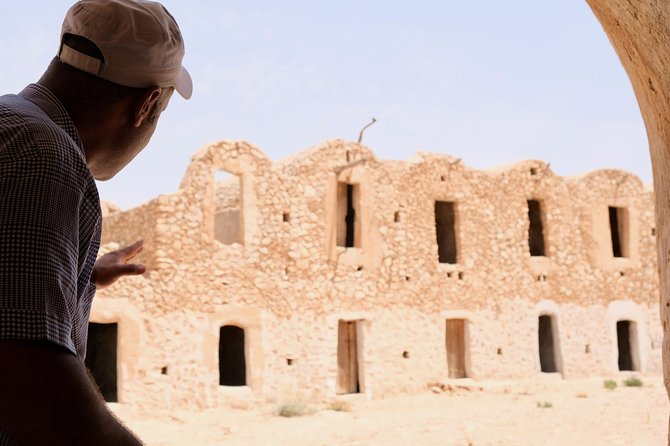
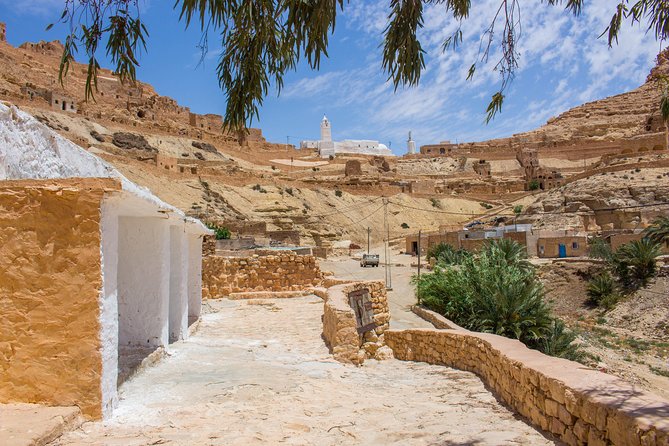
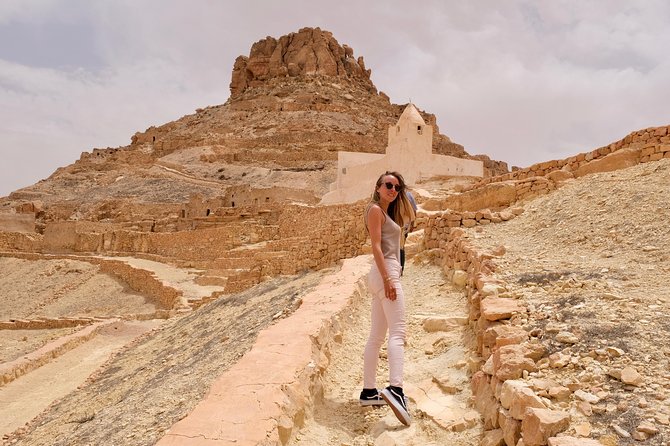
You start with the ksours of Tataouine, which are those distinctive fortified homes and storied hill villages you only get in southern Tunisia. Even if you are not a history person, they are worth seeing because they explain how people adapted to a harsh environment long before cars and cameras.
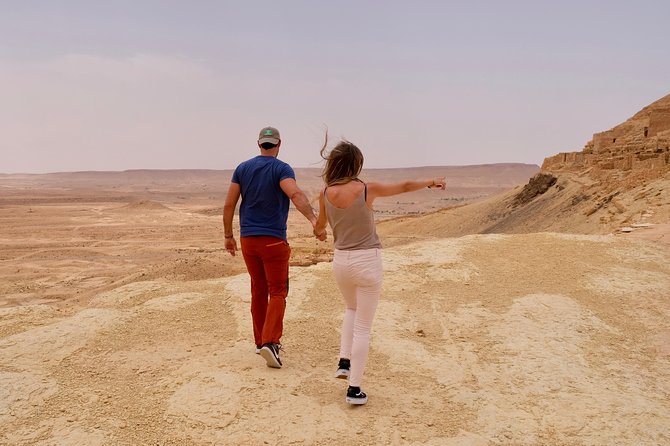
Then the trip leans hard into desert time. The Reg is the desert of rocks, where the ground looks broken and ancient. The Erg is the dune desert, where horizons stretch and the scale can get unreal fast. Between them, you feel the shift in texture, light, and even how sound carries.
A big part of why this itinerary works is that you are not only driving between points. You’re also changing how you experience the region, from built sites to open desert to oasis areas.
Stacking up Djerba options? Start with these:
- Discovery ride on horseback or camel 2h30
★ 5.0 · 153 reviews - Djerba Flamingo Island Pirate Boatrip – Trip, Lunch & Pick-up
★ 3.5 · 84 reviews - One night under the tent: Tataouine – Chenini – Ksar Ghilane – Matmata
★ 5.0 · 53 reviews
Private transport and real guiding: how the max 15 group affects your day
With a maximum of 15 travelers, this tour stays in a sweet spot. You get a group atmosphere, but you are not stuck waiting on a giant crowd for every stop. The vehicle is air-conditioned, which matters when you’re moving across stretches where the heat can build.
The description also emphasizes you travel in a privatized vehicle, supervised by a driver and an approved guide by the Tunisian Tourist Office. In plain terms: someone is responsible for navigation and interpretation, so you spend more time looking at the world and less time figuring things out.
If you want a confidence signal on service quality, the names that have come up with strong feedback include Walid as a chauffeur and Aymen as a guide. Other praised guide names include Fami and Mounir, and a chauffeur Kaled was singled out for punctuality, a clean vehicle, and good driving. That cluster of comments lines up with what you want on a long desert itinerary: clear timing, smooth logistics, and explanations that make stops easier to understand.
The desert-and-oasis route: what each stop means for your trip
Because the exact day-by-day schedule isn’t laid out here, I’ll describe the route in the order the experience presents it, and what each phase gives you.
Tataouine ksours: built-in perspective before the open desert
The ksours are your first “anchor.” They are man-made, yes, but they also teach you how people organized life around protection, storage, and geography. When you later stand in empty desert space, you will feel the contrast more clearly.
Potential drawback: if you hate walking uphill or viewing spots from set angles, you’ll want to keep your pace realistic. This kind of area often involves uneven ground and short climbs.
Point the Djerba day somewhere else:
- Private Day Trip Ksar Ghilane Oasis
★ 5.0 · 53 reviews - Guided Tour of Djerba island, Museums, Crocodile park & lunch
★ 4.0 · 52 reviews - Door of the tunisian desert Ksar Ghilane and Matmata: Full one Day
★ 4.0 · 42 reviews - Private Day Trip Tataouine and Berber Village
★ 5.0 · 40 reviews
Reg desert, then Erg dunes: two types of emptiness
The Reg (rock desert) hits first, and it changes your sense of what desert means. Instead of soft sand everywhere, you get a harsher surface and a more broken look to the ground. Light can be sharp here.
Then comes the Erg (dune desert), where movement and angle matter. Dunes can look similar from far away, but close up the shape changes fast. This is where that “miles and miles” feeling becomes real.
Practical note: the dunes and salt areas can make footing slow. Build in time for short breaks, photos, and simply standing still to let the view sink in.
Salt lakes crossing: the weird, flat interlude that makes the desert feel real
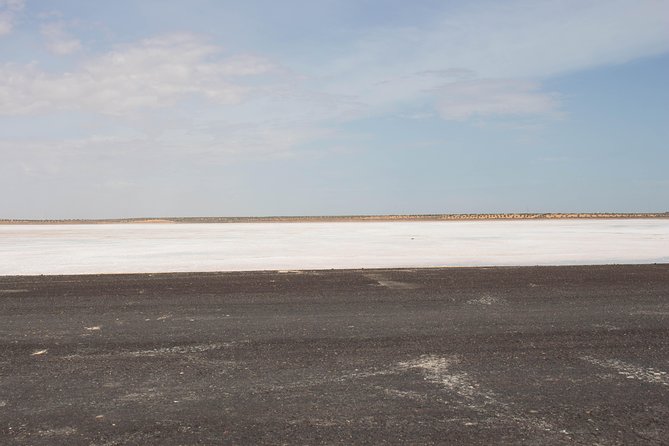
Salt lakes break the pattern. They are part of the circuit between dunes and mountain oases. This phase can be visually stark, but it’s useful because it gives your brain a different kind of “desert picture,” one that is flatter and more reflective than sand.
Potential consideration: you’ll probably want eye protection and to plan around glare if conditions are bright. Nothing in the data specifies gear, so bring what you normally use for strong sun.
Mountain oases: where the trip slows down and your senses catch up
After dunes and salt flats, the mountain oases feel like a reward. Even if you’ve seen oases in other countries, these ones matter because they follow directly after open desert. You perceive the contrast in a way you just don’t get from a one-day tour.
This is also where you get more of the “everyday” tone mentioned in the description. You eat at the inhabitants, which shifts the experience away from scenery-only.
A tent night and the Milky Way: why this one changes the whole tone
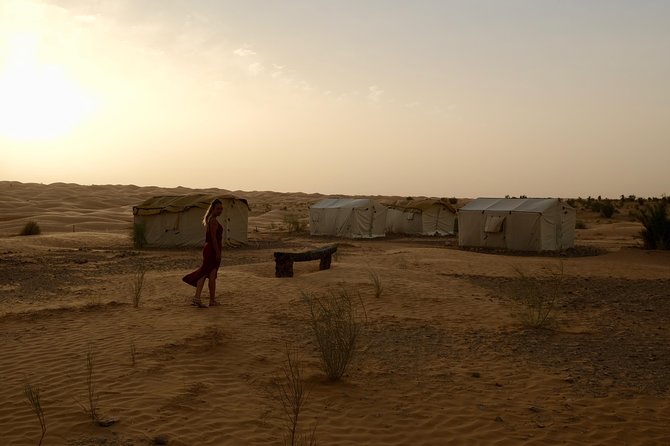
One of the strongest parts of this experience is the night where you sleep in tents in a setting worthy of miles, with the Milky Way described as so visible it seems at hand. Even if you have camped before, the desert version tends to feel different because there are fewer light sources and more open sky.
Why it’s valuable: it turns the desert from a daytime stop into something you can only understand after dark. Daytime desert often looks like “waiting for the next view.” Night desert can feel like “you are in the place,” not just passing through it.
What to consider: a tent night can mean different comfort levels than a hotel. The tour does promise different accommodation types across the trip, but it doesn’t say anything about bedding or comfort extras. So I’d plan on keeping your expectations flexible and focusing on the star sky and atmosphere.
Star Wars filming sites: seeing the movie locations without losing your mind
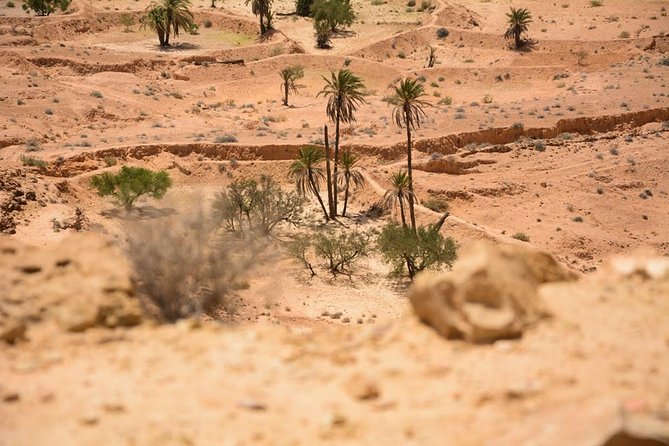
This circuit includes stops where Star Wars was shot. The good way to approach these sites is as a bonus layer. Yes, you may recognize a silhouette or a set look. But the bigger value here is that you’ll see why filmmakers picked this region: huge skies, stark terrain, and dramatic light.
If you are a fan, you’ll likely enjoy it more with a simple mindset. Don’t treat it like a theme park. Treat it like a chance to connect pop culture to real places.
Potential drawback: if you only care about the movie and not the setting, you might end up spending more time comparing scenes than actually absorbing the environment. On this route, the environment is the point.
Sleeping in multiple styles: hotel, lodging, guest house, and camp
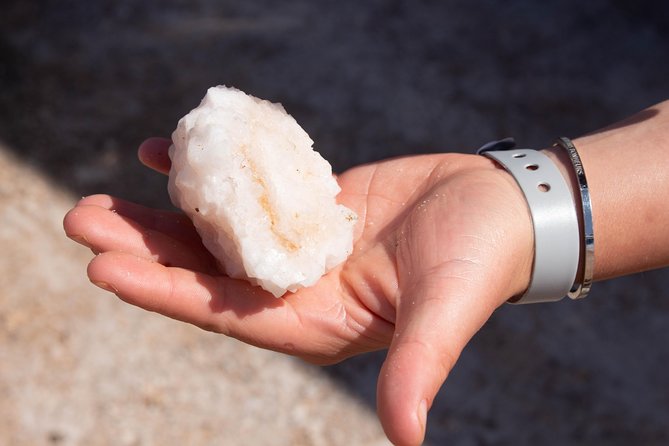
The trip’s accommodation mix is part of the reason it feels like a circuit rather than one repetitive hotel day. The description says you’ll stay in different types of places, including hotel, lodging, camp under tent, and guest house.
That variety is practical as well as atmospheric. Different nights break up the same routine, which helps when you’re traveling through long desert distances. Also, staying in guest-house settings and eating with locals is where you get a more grounded feel for daily life.
What to consider: switching accommodation types can mean you will adapt to different bathroom setups and routines. The description doesn’t specify details, so bring your own patience and handle it like you would any adventurous road trip.
Meals included: what “eat at the inhabitant” adds to the value
Food matters on long circuits, because it shapes your energy level. Here, meals are included for 7 breakfasts, 7 lunches, and 7 dinners. That’s a big slice of travel cost control. It also means you’re not hunting for restaurants after a full day of driving and walking.
The description says you eat at the inhabitant and “draw a lot on local life and daily life of a Tunisian.” In practice, that usually means the meal is not just a pit stop. It becomes part of how you understand the region, where hospitality and routine are center stage.
What you should plan for: beverages and personal expenses are not included. So if you like a specific drink or plan to buy extra water or snacks, budget for that.
Price and logistics: is $2,033.38 per person good value?
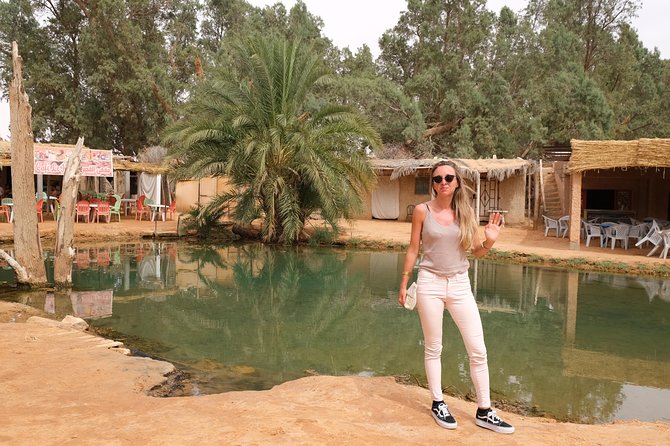
At $2,033.38 per person, this is not a budget desert add-on. It’s priced like a proper guided circuit with meaningful ground time, included meals, and varied lodging, including a tent night.
Here’s what likely drives the cost:
- a privatized, air-conditioned vehicle for the full run
- guiding and supervision for a route through multiple environments
- included meals for 7 breakfasts, 7 lunches, 7 dinners
- lodging variety, including camp under tent
- small group size with a maximum of 15
- group discounts, though the exact discount level isn’t stated
So is it worth it? For me, the key question is whether you want the whole South Tunisia sweep in one organized package. If you are trying to stitch together your own itinerary across Tataouine, desert areas, and mountain oases, the time and coordination costs add up fast. This tour bundles the hard parts and keeps the flow moving.
Who might hesitate: if you hate long days in a vehicle, or if tent nights are a deal-breaker for comfort, the price may feel steep. But if you want an all-in experience with structure and meals handled, the value math looks more sensible.
Who this tour fits best, and who should rethink it
This tour states that most travelers can participate, and it’s built for a group size that stays manageable. Based on the nature of the route, it tends to suit:
- People who want to see the desert sequence in one go, Reg to Erg
- Travelers who like guided explanations, not just photo stops
- Fans of authentic meals, including eating with locals
- Anyone who wants a real desert night under stars
It may be less ideal if:
- You have very limited tolerance for uneven ground or long outdoor time
- You expect the comfort level of a full-service hotel every night
- You are only interested in one tiny slice of the route, like dunes only
Practical advice to make the most of the circuit
A few smart moves help a lot on this kind of trip:
- Embrace the rhythm of changes: scenery, accommodation type, meal settings, and pacing all shift. That’s the point.
- Keep your camera ready but also plan to look with your eyes first. The desert phases can be visually repetitive if you’re only trying to capture everything.
- For the tent night, plan to be okay with simpler comfort than a standard room. The star sky is the main event.
- Since beverages and personal expenses aren’t included, decide ahead of time how you want to handle water, snacks, and extras.
Also, it starts early, at 8:00 am in Djerba. Early departures on desert days mean you’ll sleep better when you stop over planning everything the night before.
Should you book this desert and mountain oases tour?
I’d book this if you want a structured South Tunisia circuit with real variety: ksours, Reg rocks, Erg dunes, salt lakes, mountain oases, plus a desert night under stars and optional Star Wars stops. The included meals, private transport, and small-group size help make it feel like a proper journey, not a rushed day excursion.
I’d think twice if weather uncertainty would stress you out, or if tent camping comfort is a hard requirement. The tour requires good weather, and if it gets canceled because conditions aren’t right, you’ll be offered another date or a full refund.
If your priority is seeing the region in depth with a driver and approved guide handling the details, this is a strong fit.
FAQ
How long is the tour?
The experience is described as about 8 days.
Where does the tour start and end?
It starts in Djerba, Tunisia, and it ends back at the meeting point in the same area.
What time does it start?
The start time is 8:00 am.
What is included in the price?
The description includes an air-conditioned vehicle and meals: 7 breakfasts, 7 lunches, and 7 dinners.
What is not included?
Bevages and personal expenses are not included, and flights and optional activities offered on site are also not included.
What is the group size?
The tour has a maximum of 15 travelers.
What if the weather is bad?
The experience requires good weather. If it is canceled due to poor weather, you’ll be offered a different date or a full refund.
Can I cancel after booking?
Yes, you can cancel for free up to 24 hours in advance for a full refund.
Are service animals allowed?
Service animals are allowed.
Fresh reviews around Djerba
- Day Trip in Ksar Ghilane with Lunch and Pickup★ 3.5 · 7 reviews
- From Djerba: Explore the desert in a day★ 5.0 · 8 reviews
- 1 day excursion to Chenini-Tataouine★ 5.0 · 8 reviews
- Horseback riding or camel at sunset in Djerba★ 5.0 · 6 reviews
- 2 days tour to Douz & Ksar Ghilan oasis. and an overnight in the sahara under bedouin tent .. Dinner in the camp, Private Jeep – with english speaking guide.★ 4.5 · 8 reviews
- Ksar Ghilaine and Chneni Tataouine 1 day tour in Tunisia★ 5.0 · 8 reviews
- Desert tours and adventurous camel trekking through the Sahara★ 4.0 · 10 reviews
- Private 3-Day Excursion to the Tunisian Desert★ 5.0 · 10 reviews
Sahara Desert Tours, compared.
2-Day Tunisian Sahara Tour with Food & Stay from Hammamet
Read our review →
2-Day Tunisian Sahara Tour with Food & Stay from Sousse
Read our review →
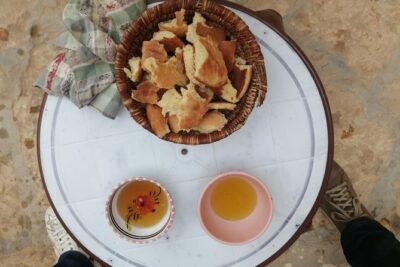
One night under the tent: Tataouine – Chenini – Ksar Ghilane – Matmata
Read our review →
Door of the tunisian desert Ksar Ghilane and Matmata: Full one Day
Read our review →
Ksar Ghilane 1 day: The hot spring and the homestay
Read our review →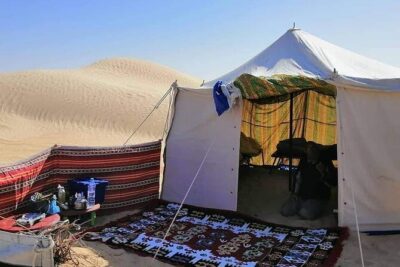
Browse the lists this tour appears in