
Reviewed · GUIDED
7 Day Guided Tunisia Tour Including Pickup
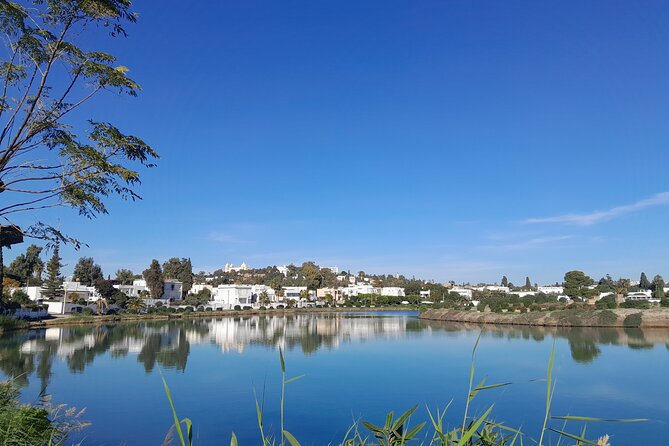
Tunisia works best when you move fast and still have a guide who knows the story behind the scenery. This 7-day guided route does that well, linking medinas, Roman giants, and Sahara sights without feeling like you are bouncing around randomly.
I really like the way the plan balances UNESCO-era sites with Berber architecture and desert stops. You also get strong human value here, because the guiding team is repeatedly praised by name, including Salem, and you feel that safety-first, detail-attentive vibe.
One thing to keep in mind: monument entrance fees are not consistently included, even though some stops list free or included tickets. Bring a budget for on-site costs, and ask your guide what is covered that day.
Key reasons this tour feels worth it
- UNESCO highlights in the right order: Sousse, El Jem, Dougga, and the Medinas get real time.
- Roman ruins plus desert reality: big amphitheater day, then troglodyte homes, then salt flats and oases.
- Guides named in the feedback: Salem shows up often, plus guides like Yassine, Ziad, Kais, Samir, and others.
- Mealtime support: 6 breakfasts and 6 dinners are included, which cuts logistics stress.
- Star Wars connections used lightly: Ong Jemel and other desert areas are referenced, but the sights still matter on their own.
A route that packs Tunisia into 7 days without losing the plot
If you want Tunisia as a single, coherent story, this itinerary is a good match. It starts with Sousse and El Jem, then heads south through Matmata and the ksour region. From there, it shifts into classic Sahara country near Douz, Chott el Jerid, Chebika, Tamerza, and the dunes around Ong Jemel. The final act is religious and Roman Tunisia: Kairouan, Dougga, the Medina of Tunis, plus Sidi Bou Said and Carthage.
This is the kind of trip where you’ll learn to read the land. You see how Berber villages used stone and hill shapes for shelter, how salt flats form white horizons in dry months, and how Roman power was built into stone everywhere it could reach.
You’ll also appreciate the flow of short drives and focused stops. Each day is built around a few high-impact places rather than dozens of quick photo stops.
More from Tunis to compare against
- Guided Bike Tour of Carthage Archeological Site in Tunisia
★ 5.0 · 88 reviews - Guided tour in the UNESCO world heritage Medina of Tunis
★ 5.0 · 68 reviews - Group Guided Bike Tour of Carthage Archeological Site in Tunisia
★ 5.0 · 57 reviews
Meet the guiding team: Salem and the whole support layer
A big reason this tour gets strong marks is the guide experience. Names come up repeatedly in the feedback: Salem is praised for professionalism and for keeping things smooth. Other guides mentioned include Yassine, Daoud, Ziad, Kais, and Samir. That matters because in Tunisia, the best moments often happen in the details, like how to interpret a medina’s layout, what to look for in ruins, and how to navigate desert timing.
You can also expect a driver team that is part of the experience, with names like Michel, Manuel, and Khaled appearing in the feedback. This is not a tour where you are left alone with a map. It is guided, and the group stays organized.
Practical benefit for you: a good guide helps you spend time at the right spot, not the busiest spot. And they help with pacing, which is a big deal when you are hopping between Roman stonework and sand-level heat.
Day 1: Sousse Medina and El Jem, then Matmata troglodyte houses
Day 1 is all about contrast. You start in Sousse, in the Medina of Sousse, a UNESCO-listed historic core known for being unusually well preserved. The medina is a maze of narrow streets and courtyards, with shops and small cafes tucked into everyday life. You’ll also hear about major landmarks, including the Great Mosque area. Even if you are not a deep architecture person, the layout alone teaches you how the city functions.
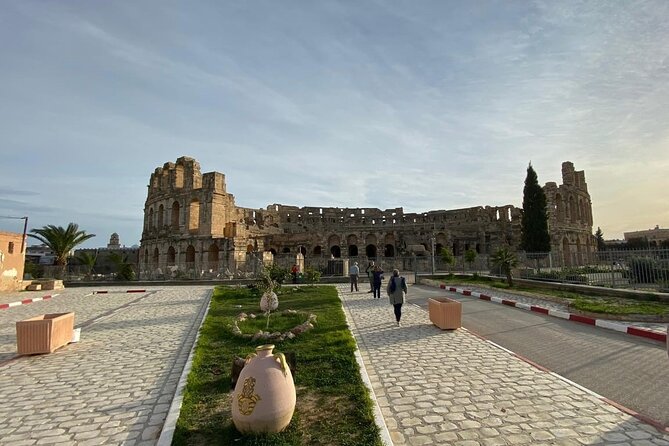
Next comes El Djem (El Jem Coliseum). This is one of the most impressive Roman amphitheaters you’ll find outside Rome, and it is famously intact. It dates to the 3rd century AD, built around the reign of Emperor Gordian, and it could hold up to 35,000 spectators. If you like ruins that feel real instead of symbolic, this is your anchor stop.
Then you finish the day with Matmata, famous for its troglodyte houses. These are underground homes carved into soft limestone hills. The logic is practical: the design helps with desert temperatures by using the earth as insulation. Some of these houses have been adapted into unique lodging, so the area carries a lived-in feel, not just a “look, take a photo, leave” vibe.
Drawback to consider: Matmata and El Jem can feel like heavy history days. If you get tired fast from museums and stones, ask your guide for pacing breaks. You will still enjoy it, but you want your energy to match the day.
Day 2: Chenini ksour, Ksar Ouled Soltane, and Ksar Hadada
On Day 2, you move into Berber fortress country. The day starts at Chenini, known for its ksour. These are fortified granaries and clustered defensive village structures built to protect crops and belongings from desert conditions and raids. The architecture is built into rocky hillsides, which means you can see why this style developed locally. Stone is not decoration here, it is survival.
From there, you visit Ksar Ouled Soltane near Tataouine. It is one of the region’s best-known ksars, and it’s particularly worthwhile if you want to understand how people organized storage and defense in one place. The short time you spend here feels like a crash course in desert-adaptation thinking.
Finally, you visit Ksar Hadada. The area is also tied to pop-culture references, including Star Wars locations that inspired the planet Tatooine. Still, even if you have never seen the films, you’ll likely care more about the shapes, the stone textures, and the desert terrain that frames everything.
Practical tip: bring a hat and expect dust. These places are dramatic, but they are also outdoors much of the time.
Point the Tunis day somewhere else:
- Private Tour to Kairouan, El Jem & Monastir from Tunis_hammamet
★ 5.0 · 301 reviews - Private tour: Medina,Carthage ,Sidi Bou Said, Bardo Museum+lunch
★ 5.0 · 230 reviews - Carthage, Bardo Museum, Sidi Bou Said and Medina Private Day Tour
★ 4.5 · 153 reviews - Private Excursion to Testour, Dougga and Bulla Regia from Tunis.
★ 5.0 · 100 reviews
Day 3: Douz and Chott el Jerid, the Sahara gateway and salt flats
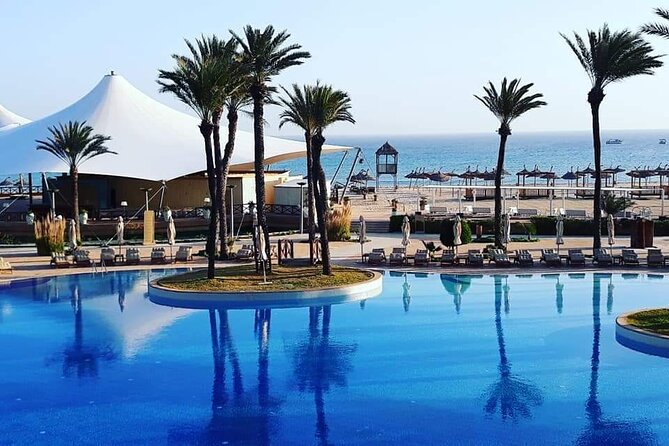
Day 3 starts in Douz, a town often called the Gateway to the Sahara. Even without booking an extra camel or dune activity, Douz gives you the right setup: you understand why people treat this edge-of-desert region as a launch pad. You’ll feel the shift from greener Tunisia to something drier and sharper.
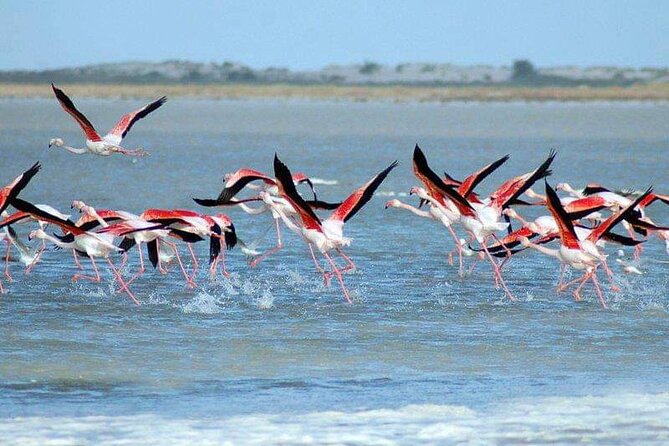
Then you hit Chott el Jerid, a shallow lake basin with high salt content. When it is dry, it becomes a wide stretch of salt crust and mud flats. When it fills after rain, it can briefly become a habitat for birds, including flamingos and migratory species.
What I like about this stop is how it trains your eye. You start noticing the ground patterns and how they change with seasons. It is also a natural break in the itinerary: less “buildings and ruins,” more “how does this place work.”
Possible consideration: depending on the season and weather, the visual you get can vary. Your guide can help you interpret what you are seeing that day.
Day 4: Chebika waterfall, Old Tamerza ruins, and Ong Jemel dunes
Day 4 is a classic desert-comfort blend. First is Chebika, centered on Ain Chebika, a waterfall-fed spring that flows down mountainside rock into cascades and pools. Palms appear where you would not expect them, and the sight usually feels like a reset button. This stop is included by ticket, so it is one of the days where your plan gives you a clear “worth it” payoff.
Next is Tamerza, specifically the abandoned old village known as Old Tamerza or Tamerza Medina. It was left behind in the 1960s after flooding driven by heavy rain. Today you see crumbling houses and narrow lanes, which can feel haunting, even if you keep it respectful and brief.
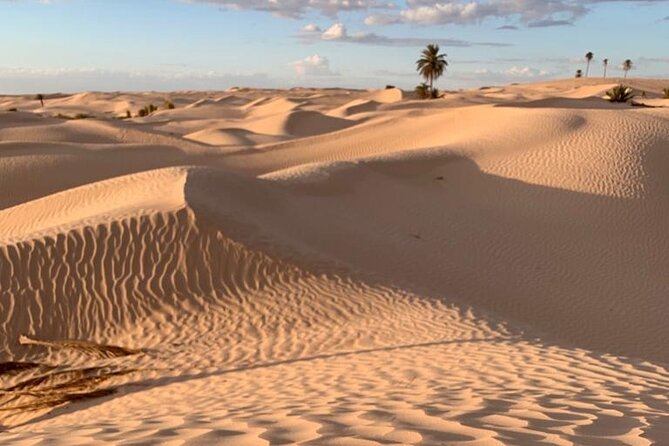
Finally, you head to Ong Jemel and the Eriguet Dunes area. Again, there are Star Wars references, but the real reason to go is the dune form. These are the kinds of shapes you understand instantly once you’re standing near them, and they also photograph well.
Practical tip: if you are sensitive to heat or long sun exposure, ask your guide about shade breaks. The itinerary covers outdoor time, so you’ll want sunscreen and water.
Day 5: Roman Sbeitla temples and Kairouan’s Islamic learning center
Day 5 pairs Roman architecture with a major Islamic city. You start at Sbeitla, an ancient Roman site once important enough to serve as capital of the Roman province of Africa Proconsularis. The ruins here are strong and readable. You can walk between forums, temples, basilicas, theaters, baths, and houses.
The standout feature is the trio of Roman temples dedicated to Jupiter, Juno, and Minerva. This is your day for “how did they build power?” Sbeitla’s stone keeps enough detail that you can imagine daily movement through the city, not just the idea of a Roman past.
After lunch and a transition, you visit Kairouan, founded in 670 AD and known as a center of Islamic learning and civilization. It served as the capital of Ifriqiya, a broader region covering parts of Tunisia, Algeria, and Libya. Even if your knowledge of Islamic history starts at zero, the city’s role is clear in how it is presented and what you focus on.
Consideration: this is a big day emotionally, because it switches from Roman “public spectacle and temples” to a religious learning center with deep roots. Give yourself time and don’t rush the final stop.
Day 6: Dougga UNESCO ruins and the Medina of Tunis
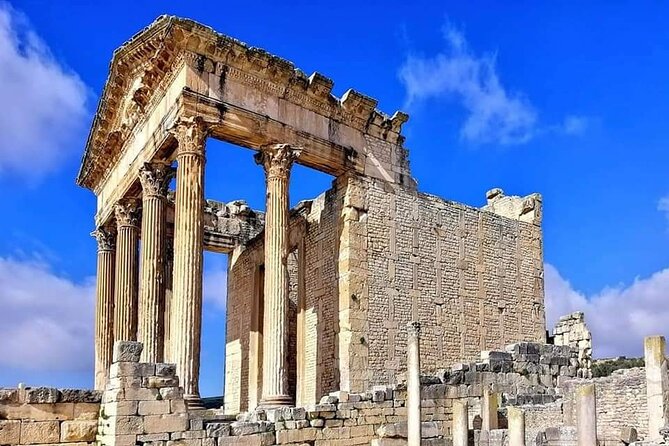
Day 6 brings you back to Roman scale, then into Tunisian city life. Dougga is a UNESCO World Heritage site and one of those places where the ruins feel almost organized, like the town is still waiting for people to return. You can see temples, theaters, grand public buildings, and mosaics. The word that fits is preserved, but more importantly, it is walkable and legible with a guide.
The guided story helps here. Instead of you just staring at stone blocks, you understand what the buildings likely meant and how the city functioned.
Then you end in the Medina of Tunis, UNESCO listed and dated back to the 9th century. This is the historic heart of Tunisia. The medina is a walled city maze where souks and craftsmanship live close to home life. You’ll notice how the medina feels active even when you’re moving calmly through it.
Small caution: medinas can feel overwhelming if you are tired. Start early in your day if you can, and let your guide help you pick streets that make sense rather than chasing every alley.
Day 7: Sidi Bou Said blue doors and Carthage’s layered ruins
Day 7 is designed to finish with two coastal hits. First is Sidi Bou Said, a hill town overlooking the Mediterranean. It is known for whitewashed buildings with blue accents and signature details like blue doors and wrought-iron windows. The architecture mixes Moorish and Andalusian influences, and the look is the reason artists and travelers return again and again.
Then you head to Carthage, a huge name for a reason. The ruins cover a broad area and show the depth of the city’s past, tied to trade, power, and military strength. The plan includes stops such as the Tophet, an ancient burial ground with rows of stelae related to Carthaginian religious practices, and the Antonine Baths, an immense complex built for social life and relaxation.
I like how Carthage closes the loop on Tunisia’s theme: different civilizations, different building materials, all leaving traces you can still walk around.
Consideration: Carthage can be spread out. Wear shoes that work on uneven ground and plan for a bit of walking even if the stops themselves are short.
Price and what you should budget for, including the meal value
The listed price is $1,858.33 per person, and you’ll often book around 46 days in advance. That sounds steep until you translate it into what you’re paying for: seven days of guided routing, pickup, group coordination, and daily transportation across a huge stretch of the country.
The deal includes breakfast (6) and dinner (6). That is not “all meals,” but it is still meaningful. You won’t have to decide every breakfast and every dinner during the most hectic travel days.
Now the tricky part: the operator notes that all fees and taxes and entrance fees at the monuments are not included. At the same time, the day-by-day plan labels some stops as free or ticket included. So do this smart thing: when you confirm, ask for a short list of which entrances are covered versus which you pay on site. Then you avoid surprise budgeting on day 6 or 7.
If you are traveling with a partner or small group, this price can feel more reasonable because you are sharing the costs of private-style guidance and transport.
Should you book this guided Tunisia tour?
Book it if you want a structured, high-coverage tour that mixes medinas, Roman ruins, Berber architecture, and desert scenery in a single line. You’ll especially like it if you care about context, because the guide names that keep showing up, including Salem, point to an experience that is organized and story-driven.
Skip it or adjust expectations if you are extremely price-sensitive, because monument entrances are not clearly “all included” across the board. Also consider whether you prefer slower travel. This itinerary moves, and it gives you a lot of sights, not a lot of downtime.
My take: if your goal is to see Tunisia’s big contrasts in one week and have someone handle the logistics while you focus on the places, this is a strong pick.
FAQ
What is the tour duration?
It is listed as 7 days (approx.).
Where does the pickup start?
Pickup is available, with the start point listed as Carthage Airport, Tunis, Tunisia.
What is included in the tour price?
The tour includes breakfast (6) and dinner (6), plus the tour features listed such as pickup offered, group discounts, and mobile ticket.
Are monument entrance fees included?
The tour information lists entrance fees at the monuments as not included. Some stops are marked as free or ticket included, so it is best to confirm which specific sites are covered.
What type of group is this?
It is described as a private tour/activity, meaning only your group will participate.
How flexible is the booking if plans change?
There is free cancellation if you cancel up to 24 hours in advance for a full refund.
What are the operating hours for the pickup/start window?
Opening hours are listed as Monday to Sunday, 8:00 AM to 6:00 PM (for the provided date range).
Fresh reviews around Tunis
- Private Group Day Tour Tunis Medina Carthage Sidi Bou Said★ 4.5 · 3 reviews
- Explore Tunisia in Depth:The Private Grand Tour in 8 Days★ 5.0 · 3 reviews
- Private Tour Bardo Museum, Carthage, Sidi Bou Said and Medina★ 4.5 · 3 reviews
- 3-Day South of Tunisia Guided Tour from Tunis★ 4.0 · 3 reviews
- Private Tour to Kairouan, El Jem and Sousse★ 5.0 · 4 reviews
- Private Excursion to the Cap Bon Peninsula★ 5.0 · 4 reviews
- From Tunis: Star Wars 5 day tour★ 5.0 · 4 reviews
- 4-Day Private Tour: Sahara and Djerba Island from Tunis and Hammamet★ 5.0 · 4 reviews
Guided, compared.
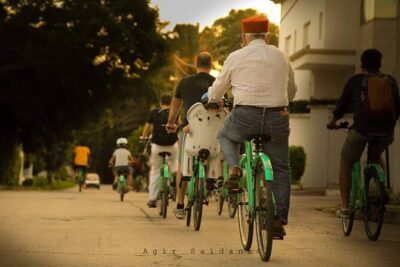
Guided Bike Tour of Carthage Archeological Site in Tunisia
Read our review →
Guided tour in the UNESCO world heritage Medina of Tunis
Read our review →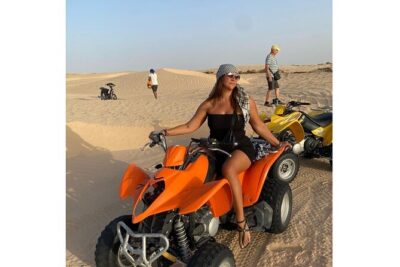
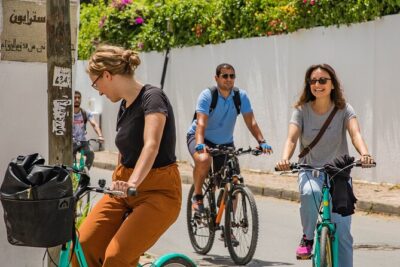
Group Guided Bike Tour of Carthage Archeological Site in Tunisia
Read our review →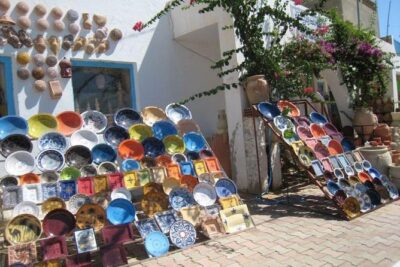
Guided Tour of Djerba island, Museums, Crocodile park & lunch
Read our review →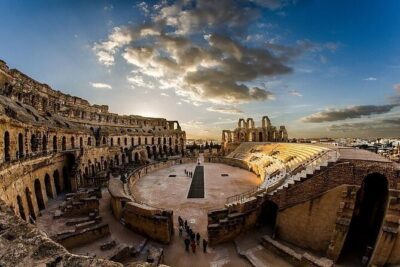
Private and Guided Tour to Kairouan and El Jem and Monastir
Read our review →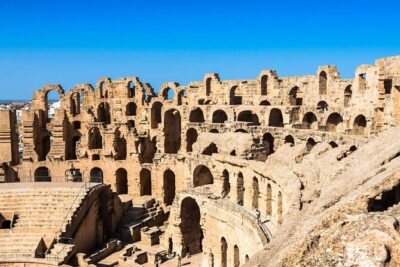
Kairouan & El Djem Guided Day Trip with Lunch from Hammamet
Read our review →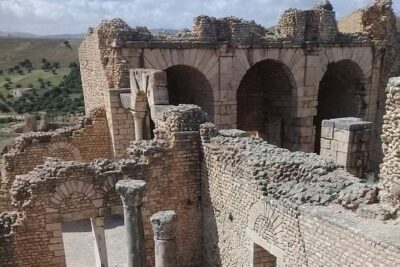
Private Guided Tour of Dougga and Testour Mosque
Read our review →Browse the lists this tour appears in