
Reviewed · CARTHAGE & SIDI BOU SAID TOURS
Carthage Discovery Half-Day Tour with Licensed Guide
Carthage is one of those places where the past feels close to the ground. You go from Phoenician-Punic power to Roman destruction and then into later eras, all while looking out toward the Mediterranean from Byrsa Hill. It is a great use of limited time, because you cover the big, meaningful stops in just a few hours.
I like two things a lot. First, the tour is private, so a licensed guide can pace things to your questions and interests. Second, you see more than one type of Carthage evidence, from dramatic ruins at the archaeological site to the controversial Tophet and then the museum that ties it together.
One consideration: the whole experience is about 4 hours, and it can involve some walking and sun. If heat and mobility are issues for you, plan for breaks and wear comfortable shoes.
Key Things You Should Notice Before You Go
- UNESCO Carthage sites in a tight half day, with multiple stops rather than just one area
- Tophet de Carthage, a sensitive stop tied to a long-running archaeological debate
- Carthage Museum near Saint-Louis basilica, where artifacts connect the Phoenician-Punic, Roman, and later periods
- Punic Ports geometry still matters, even if only the shapes remain today
- Pickup from Tunis or Hammamet by private, air-conditioned transport, which saves real time
Carthage in Four Hours: what this tour does well
This is a half-day format, roughly 4 hours, and it feels designed for first-timers. You get a guided path through the most important pieces of ancient Carthage without spending your whole day in transit.
The key is that the stop times are spaced to keep momentum. You have about 2 hours at the archaeological site, then 1 hour at the Tophet, 30 minutes in the museum, and about 30 minutes for the Punic ports. That rhythm matters. Carthage has so many layers that an unstructured visit can turn into random wandering. This keeps the story moving.
If you want a long, slow dig through every wall, every room, and every artifact tag, you might need more time than a half day. But if you want to understand the place and see the headline sights comfortably, this format is very workable.
More from Tunis to compare against
- Guided Bike Tour of Carthage Archeological Site in Tunisia
★ 5.0 · 88 reviews - Guided tour in the UNESCO world heritage Medina of Tunis
★ 5.0 · 68 reviews - Group Guided Bike Tour of Carthage Archeological Site in Tunisia
★ 5.0 · 57 reviews
Getting There From Tunis or Hammamet, and why pickup is worth it
You start with pickup from your hotel in Tunis (and the tour also offers pickup from Hammamet). Then you ride in a comfortable, air-conditioned private car. The drive to Carthage is described as about 25 minutes, so you are not burning half your morning just to reach the sites.
This is one of those practical details that changes the whole experience. In a place where midday heat can be intense, having a controlled schedule and transportation makes the day feel easier. It also means you show up with less stress, and that helps you actually listen to your guide.
If you are staying outside Tunis and Hammamet, the tour specifically only covers pickup in those two areas. So check your hotel location before you book.
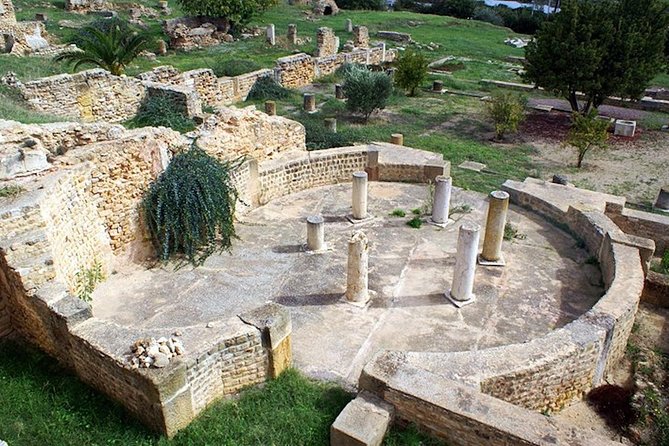
Stop 1 at Site Archeologique de Carthage: Byrsa Hill, city walls, and five-story homes
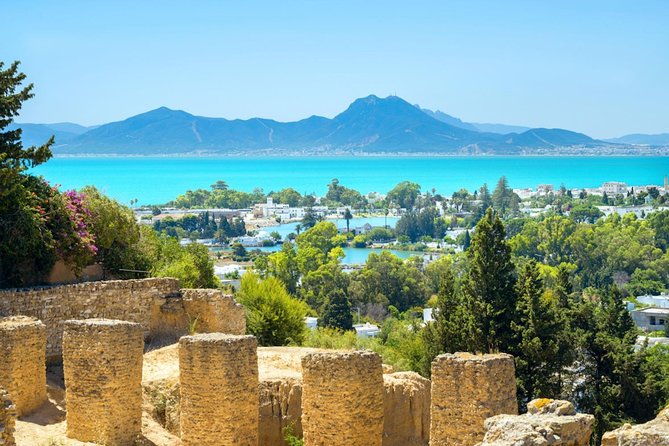
Your first major stop is Site Archeologique de Carthage. This is where the “big picture” clicks, because the views and the site layout give you context for why Carthage was so powerful.
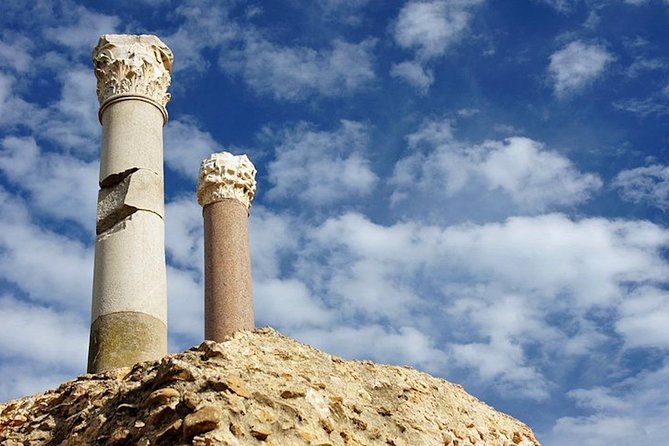
You get roughly 2 hours on site, guided by a licensed professional. Expect to walk through key ruins and viewpoints, including the seaside setting and the surrounding coastline. One of the most striking pieces of information tied to the excavations is that Carthage revealed structures that go beyond what people picture for ancient ruins.
Here are examples that help you visualize the scale:
- Excavations suggest five-story homes
- Evidence includes a sewage system
- There are remains linked to city walls that once stretched about 21 miles (34 km) across Byrsa Hill
- Carthage was famously destroyed by the Romans in 146 BC
That Roman date matters, because it frames why the site feels like both a city and a collection of layers. You are not just looking at rubble. You are seeing how later powers built on, replaced, or erased the earlier city.
Practical note: a big archaeological site can mean uneven ground. Wear shoes you trust. Bring water, and plan for sun. This stop is one of the most comfortable pieces of the day because you have the time to settle in, but you still want to go in prepared.
Stop 2 at Tophet de Carthage: a sensitive stop you should treat carefully
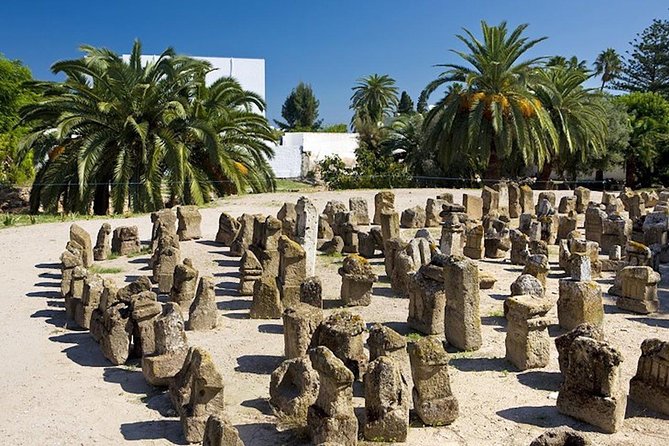
Next comes Tophet de Carthage, with about 1 hour here. This stop sits at the center of a contentious archaeological debate in North Africa connected to the ancient Carthaginian Empire.
The Tophet sites are widely discussed because they are believed to be tied to ritual use involving children and animals, though the topic is sensitive and emotionally charged. Since you cannot control what you personally feel, the best thing you can do is approach it with respect and take breaks if you need them.
What I like about including this stop is that it prevents Carthage from becoming just scenic ruins. It forces you to face the uncomfortable parts of history, and it helps explain why Carthage is studied so intensely.
Also, keep your expectations realistic. A Tophet is not a “fun photo stop.” It is a place where your guide’s explanation will matter more than the visuals themselves. If your guide is strong at explaining context and uncertainty, you will leave feeling you understood the debate instead of just hearing an accusation.
Point the Tunis day somewhere else:
- Private Tour to Kairouan, El Jem & Monastir from Tunis_hammamet
★ 5.0 · 301 reviews - Private tour: Medina,Carthage ,Sidi Bou Said, Bardo Museum+lunch
★ 5.0 · 230 reviews - Carthage, Bardo Museum, Sidi Bou Said and Medina Private Day Tour
★ 4.5 · 153 reviews - Private Excursion to Testour, Dougga and Bulla Regia from Tunis.
★ 5.0 · 100 reviews
Stop 3 at Carthage Museum: when artifacts turn into a story
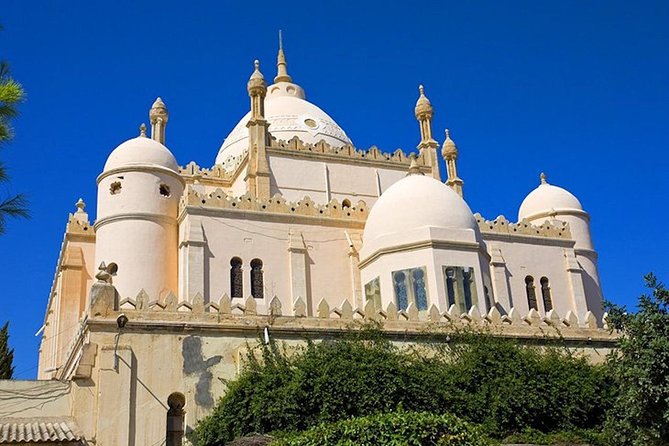
After the outdoor stops, you get 30 minutes at Carthage Museum. The museum is housed in a building tied to a Catholic religious scholarly site, adjacent to the Saint-Louis basilica, which was built in the late 1800s. It sits on the site of the Carthage acropolis, which adds another layer of meaning as you move from hill to museum to streets.
This museum covers material from multiple periods, including:
- Phoenician-Punic layers
- Roman-African periods
- Arab-Muslem periods
The “why this matters” is simple: without a museum, people often come away from ruins with scattered impressions. With the museum included, you have a chance to match what you saw outside to objects and evidence. Even though the time is short, the museum works as a connective tissue.
One practical caution: 30 minutes goes fast. If you are the type who likes reading every label, you might feel rushed. In that case, pick what you want most in the moment. Ask your guide what to focus on before you walk in, and then let them point you to the items that best explain what you saw earlier.
Stop 4 Punic Ports and Museum: follow the design of power
The final stop is Punic Ports & Museum, with about 30 minutes here. Admission is described as free for this portion.
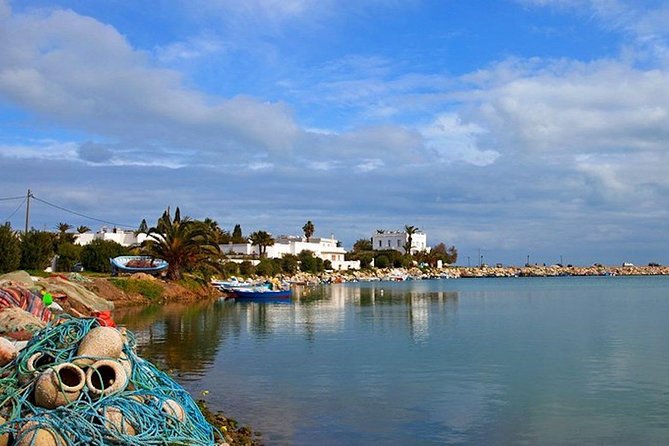
This part is fascinating because today, much of what remains is shape and trace rather than full structures. The tour focuses on how the ports worked as a system.
Key details to understand what you are looking at:
- There was a narrow channel linking a southern merchant port to a northern naval port
- The merchant port was oblong
- The naval port was circular
- This arrangement helped hide military activity from outside views, while still letting the navy see out to sea
- The military base included moorings for about 220 vessels, with dry docks and quay edges
- The commercial port covered about 7 hectares, bordered by quays and warehouses
Even if you cannot picture every building that once stood there, the geometry gives you a “systems” view of Carthage. You start to see Carthage less as myth and more as logistics, trade, and naval strategy.
This is also a good ending point because it ties back to the theme of power. Phoenician-Punic Carthage was not just dramatic history. It was a working maritime engine.
Licensed guide and private vehicle: what changes in your day
The tour includes a licensed tour guide and transport by a private vehicle. That combination usually makes a difference in two ways.
First, it helps the day feel coherent. A good guide can connect the dots between what you see outside and what the museum explains, so you are not just collecting facts. Based on what I know about how these sites are explained well, you should expect your guide to place Carthage’s story in order, then add the small details that help you picture daily life and political power.
Second, it makes the logistics smoother. You are not coordinating multiple buses, managing transfers, or trying to find the right entrances while dealing with heat. Your transport is part of the time plan, which is exactly what you want on a half day.
And you do get the personal touch that comes with a private format. Even on short tours, that flexibility is what turns “I saw ruins” into “I understood the place.”
Price and value: $94.90 for a half day that includes the important bits
At $94.90 per person, this tour is not the cheapest way to see Carthage. But it also includes many of the line items that often make low-cost tours feel more expensive once you add everything up.
Here is what is included:
- Pickup and drop-off from Tunis or Hammamet
- Licensed tour guide
- Transport by private vehicle
- Entrance fees (with specific admissions included at the archaeological site, Tophet, and museum)
And what is not included:
- Lunch
- Hotel pickup and drop-off for cities other than Tunis or Hammamet
For value, I think the big win is that you do not have to think about admissions during the day. You also get private transport in an air-conditioned vehicle, which is not a small thing when you are moving between hill areas, museum buildings, and port areas.
If you are traveling with a small group and want control over timing, private tours usually start to look like good value. If you are going solo and just need the simplest possible bus-and-walk visit, you might find other options. But if you want a guided story and comfort in a short time, this price starts to feel reasonable.
Who this tour is best for, and who may want something else
This is a strong fit for:
- First-time visitors to Carthage who want the main sights in about 4 hours
- People who want comfort with pickup, private transport, and admissions included
- History-minded travelers who like political and maritime context, not just architecture
It may be less ideal if:
- You want to spend hours lingering in a single area, reading every detail slowly
- You have limited comfort with outdoor walking in heat, since the time is efficient and not built around long breaks
- You are very sensitive about the subject matter at Tophet de Carthage, since it is explicitly connected to a controversial interpretation of ritual remains
If you fall into those categories, you can still book, but you should plan your pace and ask your guide to slow down where you need it.
Practical tips to get more out of your guide
A half-day tour moves fast. Your best advantage is to walk in ready to ask questions.
Here are a few ways to make it better:
- Wear comfortable shoes for uneven ground and sun exposure at archaeological areas
- Bring water and sun protection. You are outdoors for a meaningful chunk of the day
- If you care most about specific periods (Phoenician-Punic, Roman, or later), tell your guide early. A good guide will adjust the emphasis
- At the museum, don’t try to read everything. Ask what to look for first, then focus your attention
One small mindset shift helps: treat each stop as a chapter. Start with the city remains and coastline context, then accept that Tophet will be heavy and explainable in a careful way, then use the museum to connect the outdoor evidence to artifacts, and end with the ports to understand how Carthage functioned.
Should you book Carthage Discovery Half-Day with Licensed Guide?
I would book it if you want a fast, guided, and comfortable way to see the most important Carthage sites without juggling logistics. The big strengths are the licensed guide, the private transport from Tunis or Hammamet, and the fact that admissions are included so the day stays simple.
Skip or think twice if you need lots of slow time to wander, or if the Tophet topic is likely to be hard for you. In that case, you might prefer a longer visit with more pacing.
If you are on a tight schedule but still want to leave with a real understanding of Carthage, this half day is a solid bet.
FAQ
What does this tour include?
It includes pickup and drop-off from your hotel in Tunis or Hammamet, a licensed tour guide, transport by private vehicle, and entrance fees. Admission tickets are included for the archaeological site, Tophet de Carthage, and the Carthage Museum. The Punic Ports & Museum portion is listed as admission free.
How long is the tour?
The tour duration is about 4 hours.
Are transfers included, and where do pickups happen?
Yes. The tour offers round-trip transfers from Tunis or Hammamet, with pickup from your hotel in those areas and then drop-off at the end.
Is this a private tour?
Yes. It is described as a private tour/activity, meaning only your group participates.
Do I need to pay for museum or site tickets?
No extra tickets are needed for the included admissions. Entrance fees are included, with admission tickets included at the first three stops. The Punic Ports & Museum stop is free.
What is not included in the price?
Lunch is not included. Also, hotel pickup and drop-off are only included for hotels in Tunis or Hammamet.
Can children join the tour?
Most travelers can participate, and children must be accompanied by an adult.
Is there any info about tickets on your phone?
The tour is listed as having a mobile ticket, and you should receive confirmation at the time of booking.
What if the weather is bad?
The experience requires good weather. If it is canceled due to poor weather, you will be offered a different date or a full refund.
What is the cancellation policy?
Free cancellation is offered up to 24 hours in advance for a full refund. If you cancel less than 24 hours before the start time, the amount you paid is not refunded.
Fresh reviews around Tunis
- Private Group Day Tour Tunis Medina Carthage Sidi Bou Said★ 4.5 · 3 reviews
- Explore Tunisia in Depth:The Private Grand Tour in 8 Days★ 5.0 · 3 reviews
- Private Tour Bardo Museum, Carthage, Sidi Bou Said and Medina★ 4.5 · 3 reviews
- 3-Day South of Tunisia Guided Tour from Tunis★ 4.0 · 3 reviews
- Private Tour to Kairouan, El Jem and Sousse★ 5.0 · 4 reviews
- Private Excursion to the Cap Bon Peninsula★ 5.0 · 4 reviews
- From Tunis: Star Wars 5 day tour★ 5.0 · 4 reviews
- 4-Day Private Tour: Sahara and Djerba Island from Tunis and Hammamet★ 5.0 · 4 reviews
Carthage & Sidi Bou Said Tours, compared.
VIP Tour: Tunis Medina/Bardo, Sidi Bou Said, Carthage
Read our review →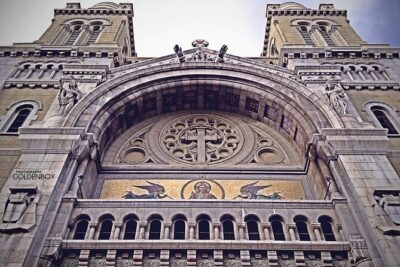
Private tour: Medina,Carthage ,Sidi Bou Said, Bardo Museum+lunch
Read our review →
Carthage, Bardo Museum, Sidi Bou Said and Medina Private Day Tour
Read our review →
Guided Bike Tour of Carthage Archeological Site in Tunisia
Read our review →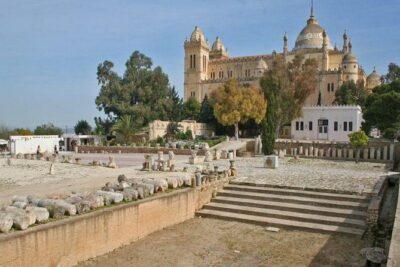
1 day excursion Tunis Sidi Bousaid Carthage departure from Sousse
Read our review →
Group Guided Bike Tour of Carthage Archeological Site in Tunisia
Read our review →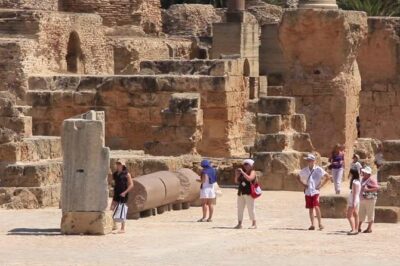
Archaelogical Site Of Carthage + Picturesque Village Of Sidi Bou Said
Read our review →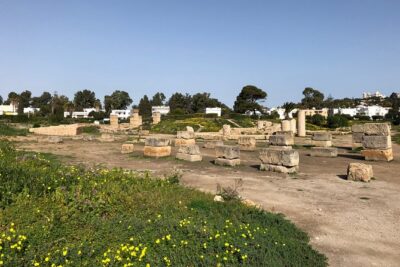
Browse the lists this tour appears in