
Reviewed · LUNCH EXPERIENCES
The Best of Tunisia, 3 Days Guided Tour with Lunch
Tunisia can feel like two trips at once: medieval streets that wind like a puzzle, then big, undeniable monuments that make you sit up and pay attention. This 3-day guided route strings together major highlights, including five UNESCO World Heritage sites, without turning the days into a blur.
I especially like how the plan balances city life and archaeology. You get real time in the Medina of Tunis and Kairouan, then you move on to major set-piece sights like Carthage and the amphitheater of El Djem. I also like that lunches are included and guides are praised for pacing, clear English, and planning routes to keep the experience smooth.
One consideration: it is a lot of ground in three days, so you’ll spend plenty of time in transit and on your feet. If you dislike long drive days or heavy walking in medinas, you may find the schedule tight.
Key things that make this tour worth your time
- Five UNESCO World Heritage sites in 3 days, covering Tunis, Carthage, Kairouan, El Djem, and Sousse
- Guides and drivers with strong reviews, including praised English and good timing (names you may meet include Fahmi, Chouaib, Ahmed, Said)
- Ticketed access for the headline sites like Medina Tunis, Carthage, the Great Mosque area, and El Djem
- A Roman amphitheater moment at El Djem, plus nearby museum context so it makes sense
- Included lunches that are described as excellent, with food from different regions
- Private-group setup, so it is only your group, not a free-for-all
Tunisia’s UNESCO sprint: five big sights, one smart rhythm
If you want Tunisia in one shot, this tour is built for exactly that. You start in Tunis, then work your way across the country in a logical arc: capital coast first, then inland holy sites and Roman-era remains, then back toward the Sahel and the coast again.
What makes the route work is the mix of scales. Medinas are human scale, where you can smell spices, hear shop life, and notice doorways, tiling, and old stone. Then you hit grand, preserved monuments. The shift keeps the trip from feeling repetitive, and it helps you see how Tunisia’s layers stack up over time.
It is also a practical value play. At this price point, you are not just buying transport. You are getting a guide to connect the dots, and included admission tickets for most major stops. In other words, you are paying for time you can spend actually seeing, not figuring out logistics.
More from Tunis to compare against
- Guided Bike Tour of Carthage Archeological Site in Tunisia
★ 5.0 · 88 reviews - Guided tour in the UNESCO world heritage Medina of Tunis
★ 5.0 · 68 reviews - Group Guided Bike Tour of Carthage Archeological Site in Tunisia
★ 5.0 · 57 reviews
Day 1 in Tunis and Carthage: Medina maze to cliff views in Sidi Bou Saïd
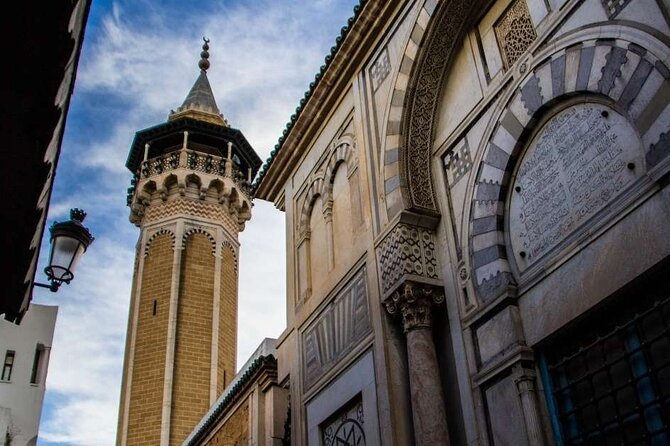
Your day starts with the Medina of Tunis, and that is the right move. A medina is not one sight, it is a world. Expect a sprawling maze of streets and alleys with covered souks and shops that range from everyday essentials to items tied to local culture like shisha. You’ll see historic palaces, hammams, mosques, and madrassas, with lots of decorated details: tiles, carved stucco, and marble columns.
This stop is about orientation as much as it is about photos. If you give yourself a little patience here, you learn the medina’s rhythm fast. Ask your guide to point out the architectural cues, because once you notice them you start spotting them everywhere.
Next comes La Goulette, a suburban district by the sea. It’s described as animated year-round, with café terraces and restaurants lining up by the water. This is a good breather stop. After medina walking, you get a change of scenery and a chance to reset your legs.
Then you visit Site Archéologique de Carthage. What I like about Carthage in this format is that you are not stuck with a single fenced ruin. The site is scattered through the modern area of Carthage, and that makes the story feel more grounded in real geography. You’ll have enough time to appreciate the scale and the fact that history is not sealed off behind glass.
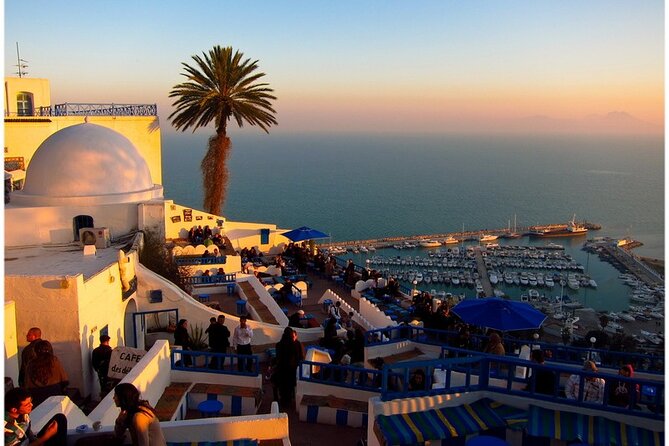
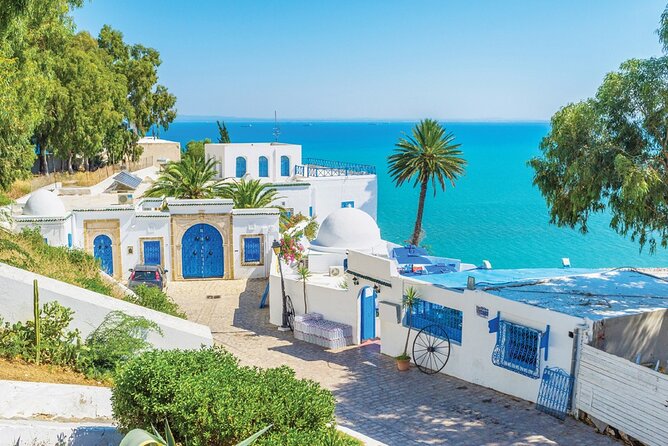
Finally, you reach Sidi Bou Saïd, the cliff-top village famous for its blue-and-white look, cobbled streets, and views over the water. The architecture gets specific here: it reflects Ottoman and Andalusian influence, tied to Spanish Muslims who arrived in the 16th century. Even if you are not an architecture nut, that blend helps you understand why the village has its distinct vibe.
Practical note: Sidi Bou Saïd is scenic, so plan to slow down and watch the corners, not just the postcard fronts.
Where Day 1 may feel long
This is the kind of day where you go from tight alleys to open viewpoints to scattered archaeology. If you prefer one type of sight per day, you might find the variety tiring. But the payoff is that you learn what Tunis is about quickly.
The best part of La Goulette: that sea-side pause between big sights
La Goulette is short on time compared with the medina and Carthage, but it’s not just filler. It is a strategic break. You go from enclosed streets to open light, from close-up details to sea-level air.
If you want to make this stop count, treat it like a reset. Sit at a café terrace, drink something cool, and let your brain stop trying to memorize street patterns. Then when you re-enter the next big historical site, you’ll be more present.
Also, since this stop has free admission, it is a good place to keep your expectations flexible. If crowds or timing feel awkward, you can simply use it as a quick landing spot before the day’s heavier sights.
Point the Tunis day somewhere else:
- Private Tour to Kairouan, El Jem & Monastir from Tunis_hammamet
★ 5.0 · 301 reviews - Private tour: Medina,Carthage ,Sidi Bou Said, Bardo Museum+lunch
★ 5.0 · 230 reviews - Carthage, Bardo Museum, Sidi Bou Said and Medina Private Day Tour
★ 4.5 · 153 reviews - Private Excursion to Testour, Dougga and Bulla Regia from Tunis.
★ 5.0 · 100 reviews
Day 2 in Kairouan and El Djem: the holy center and the Roman colosseum moment
Day 2 is a one-two punch: Kairouan first, then El Djem. And it works because Kairouan gives you a deeply human understanding of why this region matters, while El Djem gives you pure monument power.
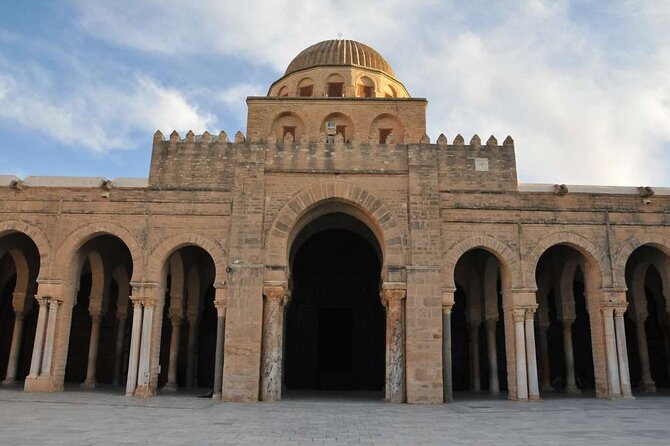
You start with the Great Mosque of Kairouan. This is described as a symbol of Kairouan and one of the oldest and most beautiful mosques in the world. You’ll notice the imposing minaret, the courtyard with large dimensions, arcades, and even a sundial. Doors are carved cedar wood, and the prayer rooms are set off by dozens of marble columns.
One detail I find useful for context: the mosque dates to 670, and its appearance is said to evoke an adobe fortress, which influenced other mosques in the Maghreb. That means the architecture is not random. It is a model that traveled.
Next you visit Bassins Aghlabites. These basins are a major historical hydraulic work from the 9th century, located outside the ramparts. If mosques are about belief, this stop is about how communities kept life moving through water systems. It’s a different kind of monument, and it often becomes a favorite because it feels technical and real.
Then comes Medina of Kairouan, one of the most preserved and authentic in Tunisia. This is where you can slow down again. You’ll have time in the souks, and your route is built around local tastes too, including pastries in Kairouan often linked with mekroudhs, plus artisanal carpet manufacturing.
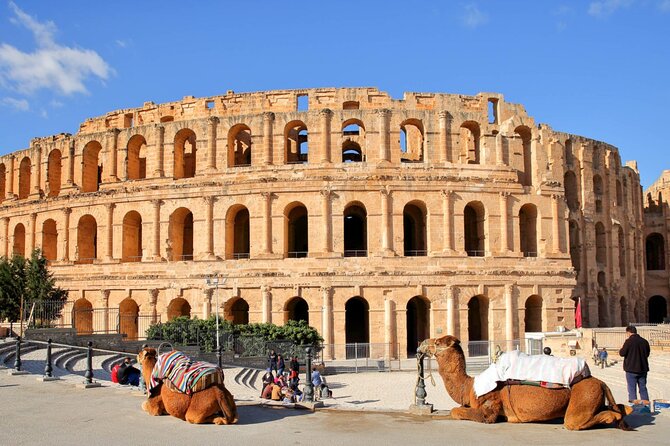
Finally, you go to Amphitheatre D’el Jem, the Roman amphitheater also known as the Roman Colosseum. It’s dated to the 3rd century AD and can accommodate 30,000 spectators. It is described as the third largest in the Roman world by size, after Rome and Capua. You’ll appreciate it most if you take a moment before walking around, and really picture the scale in your mind.
Your day continues with the Archaeological Museum of El-Djem. I like pairing amphitheaters with museum stops because it turns the sight into an understanding. The museum is near the Thysdrus amphitheater area, and it is built on the site of a Roman villa, restoring a layout that includes a central courtyard and rooms around it. Expect exhibits such as sculptures, mosaic paintings, and ceramics from excavation campaigns.
If you want one practical move: when you see mosaics and ceramics in a museum, you start recognizing decorative patterns you might have missed on first glance outside.
Where Day 2 shines
The Great Mosque and Bassins Aghlabites give you two angles on the same question, how societies organize power, worship, and daily life. El Djem then gives you the showpiece, but the museum adds the meaning.
Day 3 from Hammamet and Sousse to Monastir’s ribat
Day 3 starts with Hammamet. It is known as a summer resort, yet the tour frames it as a small town with an authentic character. You’ll get beaches in the background, but you also hear about the medina lined with fine sand, plus the nearby contemporary resort area of Yasmine Hammamet for a different feel. Lemon trees and countryside are mentioned as something nature lovers can appreciate, even if you do not get long nature time on this route.
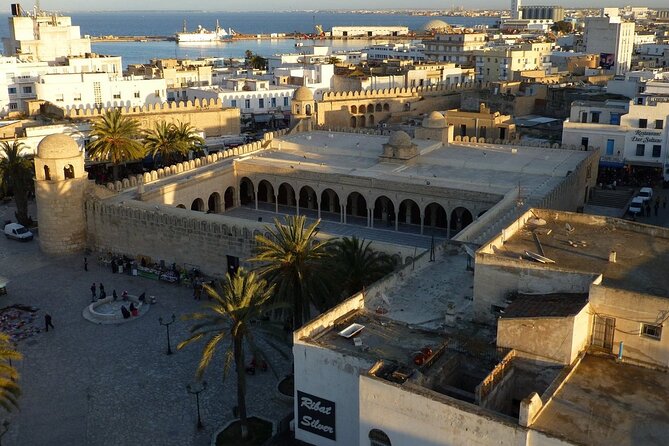
From Hammamet, you head to Medina de Susa, which is described as a homogeneous architectural ensemble reflecting Arab-Muslim town planning applied to a coastal city exposed to piracy and dangers from the sea. That last part matters. It helps you read the city form with a reason behind it, instead of only admiring shapes.
Then you go to Ribat of Monastir. This is a standout historical stop because it’s defensive architecture tied to early Islam. It’s described as the oldest and most important of the Maghreb coast defensive works by Arab conquerors at the dawn of Islam. Founded in 796, it underwent medieval renovations and is shaped like a quadrilateral with four buildings around two interior courtyards.
The description also includes the idea of “warrior monks” who had military duties and devoted themselves to prayer and contemplation. The ribat includes two prayer rooms, and the watchtower is reached by a hundred spiral steps. That detail is useful for planning. If stairs make you slow down, you’ll want to take breaks and pace yourself.
You wrap the day with Monastir Marina, described as a port of call, passage, wintering point, and place for regattas. It is a calmer ending, where the day’s historical intensity gets replaced by sea life and boats.
A day that ends well
This is not the kind of day that ends with one more museum hall. It ends with a view and a sense of the region’s coastal rhythm. That balance keeps the trip from feeling like history class for three straight days.
Price and value: what you’re really paying for at $494.77
At $494.77 per person, this is not the cheapest way to see Tunisia. The value comes from how much is bundled and how tight the guidance is.
First, this is a private tour, meaning it’s only your group. That tends to improve pacing and decision-making in the moment. If you need a break, if someone in your group wants photos from a specific angle, or if you want to move a bit slower through crowded stretches, your guide can usually adjust.
Second, pickup is offered and many of the key admission tickets are included. You get admission for major stops such as the Medina of Tunis, Carthage, the Great Mosque area, Bassins Aghlabites, El Djem amphitheater, and the El-Djem museum. That reduces the “surprise costs” factor that can happen on self-guided days.
Third, lunches are included, and the food part has real praise. The tour description notes that lunches are excellent and highlight food from different regions. Food stops matter in North Africa because they let you recharge without spending extra time hunting for options.
Finally, the strongest value lever is the human factor. Multiple guides and drivers have been praised for being on time and for clear English. Names like Fahmi and Chouaib show up alongside drivers such as Said and Ahmed. Even if you do not get the exact same team, the pattern is consistent: people pay attention to timing and communication, not just sightseeing.
Timing, pacing, and getting the most out of long medina days
Start time is 8:30 am, and that matters. Early departures help you beat the hardest crowds and heat. It also gives you enough daylight to spend time inside sites and still have an enjoyable rhythm outdoors.
This route also stacks days with both walking-heavy areas and monument-heavy areas. The key is how you move through medinas:
- Wear comfortable shoes you trust for uneven stone.
- Keep water and sun protection handy, especially before midday.
- Let your guide help you spot the good angles, not just the big names. That saves time.
One more practical tip: in medinas, you can lose your mental bearings fast. Use your guide’s wayfinding cues. People praised guides for knowing where to go and how to avoid crowds, and you’ll feel that benefit most in places like Medina Tunis and Medina Kairouan.
Which sites are your best bets if you only care about the highlights
If you love UNESCO-branded sights, this tour hits the big ones:
- Medina of Tunis for medieval city design and craft life
- Carthage for an archaeological site spread through the modern area
- Kairouan for the Great Mosque and the preserved medina atmosphere
- El Djem for the amphitheater and museum context
- Medina of Sousse for coastal town planning and architectural unity
If you are more of a “monuments with atmosphere” person, I’d pay special attention to:
- Sidi Bou Saïd for the blue-and-white visual identity and the coastal cliffs
- Ribat of Monastir for defensive architecture and the full geometry of its courtyards
- Bassins Aghlabites if you like the behind-the-scenes engineering side of history
Should you book this 3-day Best of Tunisia guided tour?
Book it if you want a structured, guide-led way to see Tunisia’s biggest UNESCO hits in a short time, with included lunches and mostly included admission tickets. It’s a strong fit if your group values English-speaking guidance, good pacing, and a smooth driver-and-guide setup.
Skip it or consider a lighter version if you know you struggle with lots of walking and long drive days. This is not a slow, relaxed wander through one neighborhood. It’s a “see the essentials, then keep moving” approach.
If you want Tunisia that feels organized but still authentic, this tour makes a lot of sense. You’ll come away with a real sense of Tunisian layers: medieval street life, inland spiritual architecture, Roman scale at El Djem, and the coastal cities that connect it all.
FAQ
How long is the tour?
The tour runs for 3 days (approx.).
What time does the tour start?
The start time is 8:30 am.
Is pickup included?
Pickup is offered.
Is this a private tour?
Yes. It is private, so only your group participates.
Which UNESCO World Heritage sites are included?
The tour includes the Medina of Tunis, Carthage, Kairouan, El Djem, and the Medina of Sousse.
Are admission tickets included?
Admission tickets are included for many stops, including Medina Tunis, Carthage, the Great Mosque of Kairouan, Bassins Aghlabites, Medina of Kairouan, El Djem amphitheater, and the El-Djem museum. Some stops are listed as free, such as La Goulette, Sidi Bou Saïd, and Hammamet.
Can I cancel for a full refund?
Yes. You can cancel up to 24 hours in advance for a full refund, and the experience may be rescheduled or refunded if weather is poor.
Fresh reviews around Tunis
- Private Group Day Tour Tunis Medina Carthage Sidi Bou Said★ 4.5 · 3 reviews
- Explore Tunisia in Depth:The Private Grand Tour in 8 Days★ 5.0 · 3 reviews
- Private Tour Bardo Museum, Carthage, Sidi Bou Said and Medina★ 4.5 · 3 reviews
- 3-Day South of Tunisia Guided Tour from Tunis★ 4.0 · 3 reviews
- Private Tour to Kairouan, El Jem and Sousse★ 5.0 · 4 reviews
- Private Excursion to the Cap Bon Peninsula★ 5.0 · 4 reviews
- From Tunis: Star Wars 5 day tour★ 5.0 · 4 reviews
- DAY TRIP TO Dougga & Bulla Regia , DEPARTURE FROM Tunis★ 5.0 · 4 reviews
Lunch Experiences, compared.
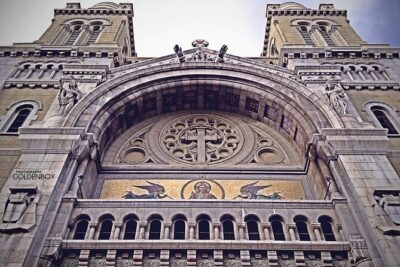
Private tour: Medina,Carthage ,Sidi Bou Said, Bardo Museum+lunch
Read our review →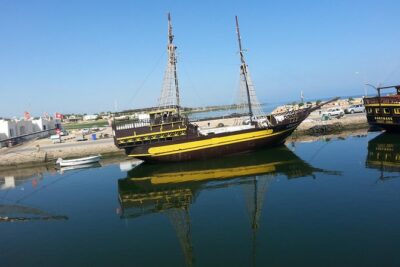
Djerba Flamingo Island Pirate Boatrip – Trip, Lunch & Pick-up
Read our review →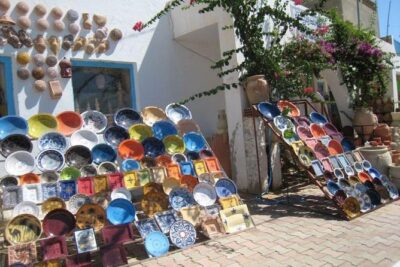
Guided Tour of Djerba island, Museums, Crocodile park & lunch
Read our review →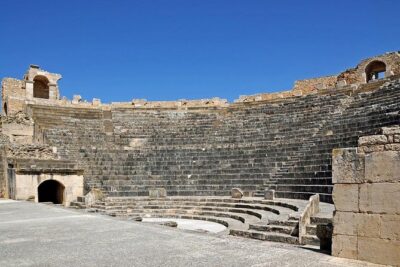
Full Day Dougga & Bulla Regia Via Testour Private tour with Lunch
Read our review →Private tour: Medina,Carthage ,Sidi Bou Said, Bardo Museum+lunch
Read our review →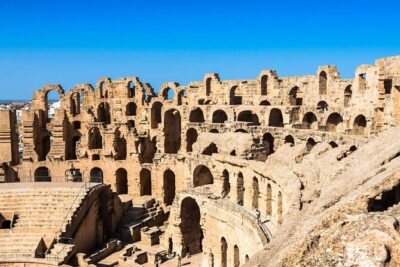
Kairouan & El Djem Guided Day Trip with Lunch from Hammamet
Read our review →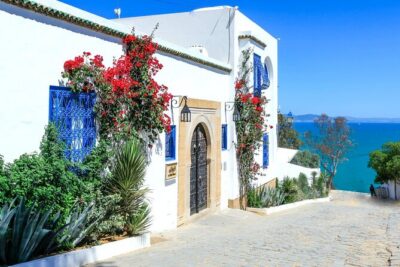
Ancient Carthage and Sidi Bou Said Half Day Tour with Lunch
Read our review →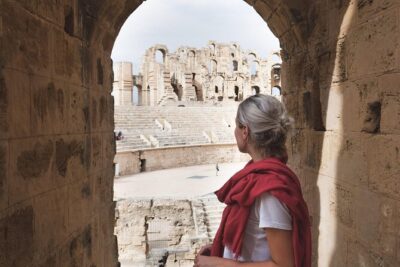
El Jem and Monastir Full-Day Tour with Lunch from Tunis or Hammamet
Read our review →Browse the lists this tour appears in