
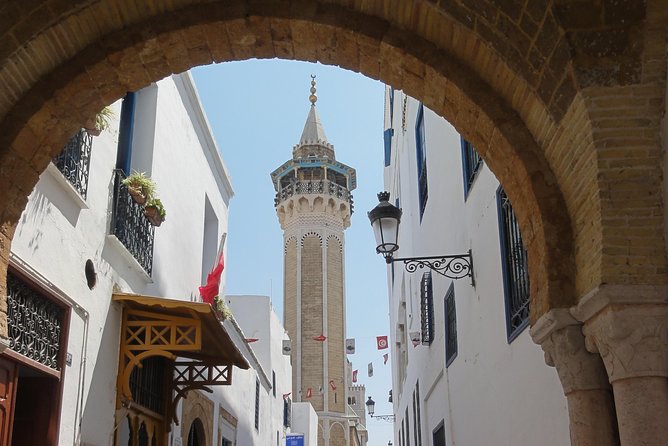
Reviewed · MEDINA WALKS
The Medina
This tour works because it turns the Tunis medina from a maze into a map. You get a private guide who connects the monuments to the city’s changing empires, plus you start right at the UNESCO core. I love that the route is built around big anchors like Ez-Zitouna Mosque and the medersa schools, so you understand what you are seeing. I also love the slow moment in the middle, with tea and views from an old palace rooftop. One thing to consider, though, is that weather and traffic can affect timing, so if rain or storms hit, you may have to be patient.
You can choose a morning or afternoon start, and the whole experience is short enough to fit your day without feeling rushed. You’ll use a mobile ticket, and the plan runs through a mix of religious sites, learning spaces, souks, and a central food stop. Ideal if you want context fast, but it’s not for you if you hate walking and want a quiet, sit-down tour.
Key highlights at a glance
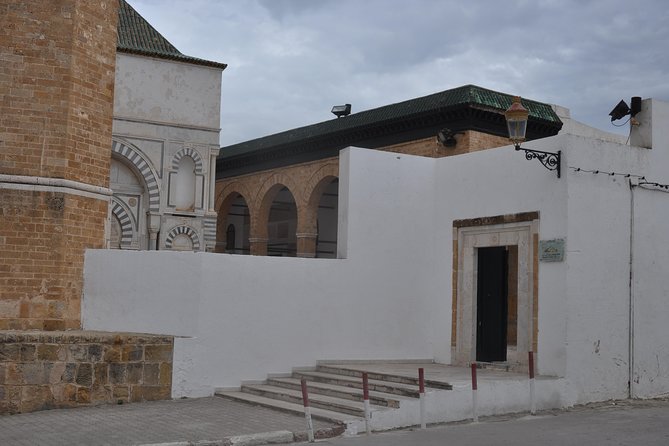
- UNESCO Tunis medina walk with historic context
- Ez-Zitouna Mosque as your first major anchor
- Bab Bhar to the Great Mosque area plus rooftop tea and panoramic views
- Fondouk El Ghala and Marché Central for a feel of Tunis food life
- Medersa Slimaniya and Quran-school architecture from the 18th century
- Small private experience with a maximum of 20 travelers
A UNESCO Tunis Medina Walk With Context (Private, 2-3 Hours)
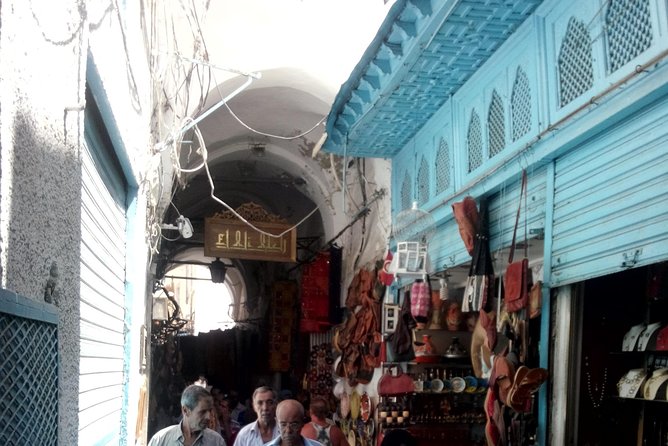
The Tunis medina can feel like a living puzzle, all curves and doorways and sudden shifts in street life. This is why a guided format matters. Instead of wandering and guessing, you move from landmark to landmark with a story that explains why each place exists and what it meant as different powers shaped the city.
The tour is private, so you can ask questions and get answers geared to what you care about, whether that is architecture, local daily life, or how the medina functioned as an economic center. The duration, 2 to 3 hours, is also a sweet spot. Long enough to hit real highlights, short enough to keep your energy for the rest of Tunis.
The price is $49.33 per person, which sounds specific for a reason: you are paying for guided interpretation plus a route that hits several key stops. Many entries are marked as free on the itinerary, so a big part of your value comes from the guide’s ability to connect the dots and save you time that you would otherwise spend figuring out what is where.
Stacking up Tunis options? Start with these:
- Private Tour to Kairouan, El Jem & Monastir from Tunis_hammamet
★ 5.0 · 301 reviews - Private tour: Medina,Carthage ,Sidi Bou Said, Bardo Museum+lunch
★ 5.0 · 230 reviews - Carthage, Bardo Museum, Sidi Bou Said and Medina Private Day Tour
★ 4.5 · 153 reviews
Starting Point by I Love Tunis and How the Route Flows
You meet at the I Love Tunis sign (Q5XH+RG3, Tunis). It is a practical start because it is a recognizable landmark, and it places you right where the medina experience begins to make sense quickly.
The overall flow is designed to build your bearings. You start at Ez-Zitouna Mosque, then you move through the medina approach areas and souks (including Bab Bhar), then you branch into medersa schools and perfume souk territory. After that, you shift gears to food and everyday city commerce at Fondouk El Ghala and Marché Central de Tunis, and you finish with charming streets and more specialized local spots.
That route logic helps. You avoid the common problem where you see a mosque, then spend the rest of the afternoon in unrelated streets and lose the thread. Here, the sequence supports the big idea of the medina as both spiritual center and economic machine.
One practical note: the experience works best when you can stay flexible. The itinerary is short, but medina streets can change pace quickly, and the tour is weather-dependent. If rain moves in, expect slower going and potentially waiting while plans adjust.
Ez-Zitouna Mosque: Your First Anchor in Tunis
Your first stop is Ez-Zitouna Mosque, described as the heart of the medina and the first campus keystone of Islamic culture in North Africa and the Maghreb. You get around 30 minutes here, and admission is free.
This first stop does two things for you. First, it gives you the spiritual and educational context before you start chasing souks and side streets. Second, it helps you read the medina like a connected system. When you know that this place was tied to learning and religious life, you start noticing similar themes in the medersa stops that come later.
What to watch for while you are there: how the mosque’s presence shapes the surrounding street life. Even in a short visit, you can usually sense where people gather, where movement funnels, and how everyday commerce sits near sacred space. That is the medina in action, not just a museum walk.
Bab Bhar to the Great Mosque Area, Souks, and Rooftop Tea
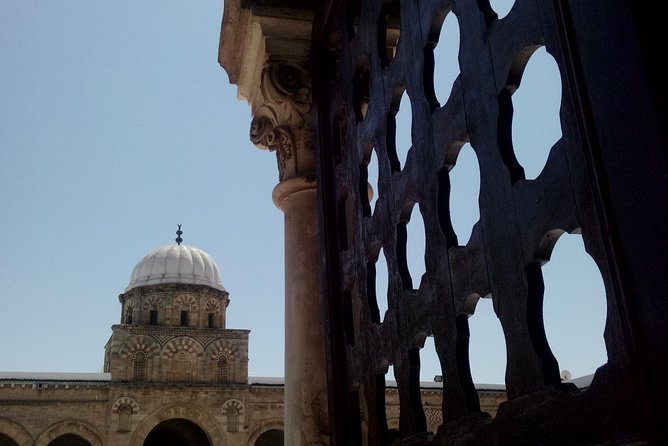
After Ez-Zitouna, the tour moves into the medina itself, heading through Bab Bhar and the souks until the Great Mosque area, then turning around to see key types of medina sites like medressas, hammams, souks, and marabouts.
This is the part that makes first-timers feel confident fast. Bab Bhar is a recognizable threshold, and it helps you understand that the medina is not random. There is structure. The Great Mosque area becomes your reference point, and once you have that, the smaller streets start to feel more navigable.
You also get a stop that many walking tours miss: tea on the roof of an old palace with an exceptional panoramic view. Admission for the Medina of Tunis stop is included, and you have about 20 minutes for this moment.
That rooftop break is not just a nice pause. It is how you catch up with what you have just seen. From above, the medina’s layout can click in your mind. You see why directions feel confusing on the ground, and you start recognizing the way streets loop and connect.
If you are choosing between morning and afternoon, I would lean toward the time that gives you the most comfortable light for that viewpoint. The itinerary does not specify best hours, so go with your comfort and the day’s weather.
Point the Tunis day somewhere else:
- Private Excursion to Testour, Dougga and Bulla Regia from Tunis.
★ 5.0 · 100 reviews - Guided Bike Tour of Carthage Archeological Site in Tunisia
★ 5.0 · 88 reviews - Guided tour in the UNESCO world heritage Medina of Tunis
★ 5.0 · 68 reviews - Group Guided Bike Tour of Carthage Archeological Site in Tunisia
★ 5.0 · 57 reviews
Food Stop Time at Fondouk El Ghala and Marché Central de Tunis
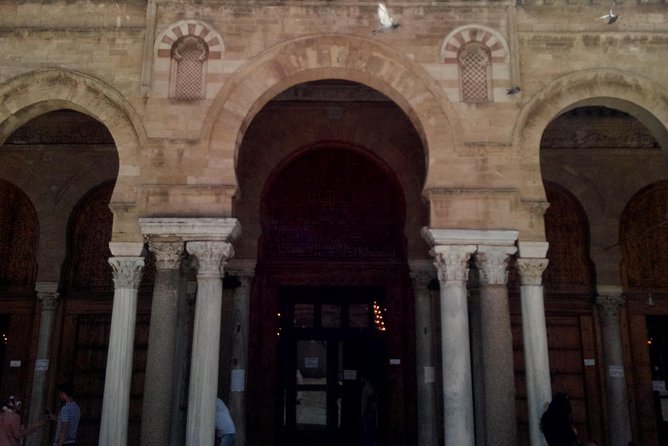
Then you shift to the Marché central de Tunis at Fondouk El Ghala, a food-basket kind of stop. It is scheduled for about 20 minutes, and admission is free.
This stop is valuable because it anchors the medina in daily life. A lot of visitors focus on mosques and medersa architecture, but the medina also lives through trade: food, ingredients, and the routes that keep vendors supplied. Fondouk El Ghala helps you see that the medina is not only ceremonial space. It is a working city.
What you can do here is simple. Use this time to ask your guide what you are seeing in front of you and why it is sold in this area. Even without shopping, you will come away with a more grounded sense of the medina economy.
A small caution: this kind of market stop can be intense if you rush it. Slow down for a few minutes, look at stalls, and let your guide translate what you see. That makes the rest of the tour feel less like sightseeing and more like understanding.
Medersa Slimaniya and the 18th-Century Quran School Detail
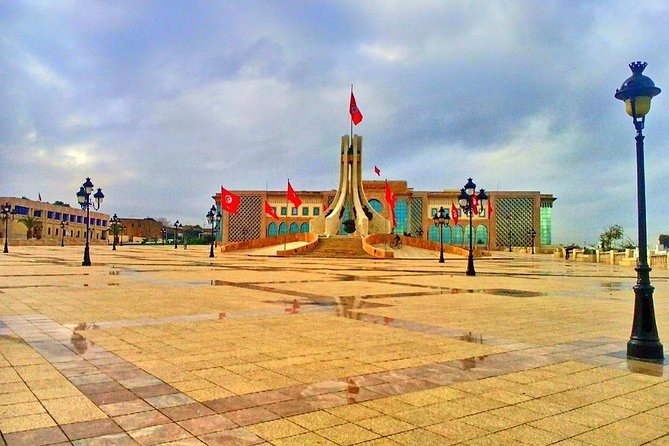
Next up is Medersa Slimaniya, a school of Quran from the 18th century. You spend about 30 minutes here, and admission is free.
Medersa architecture tends to be easy to underestimate from the outside. But inside, it often tells you how learning was organized and how design supported religious study. This stop is a strong counterbalance to the souks. You are reminded that the medina was built to educate as well as to trade.
Look for ornamentation and how the building communicates status through craftsmanship. Since the itinerary frames it as a masterpiece of local architecture and ornamentation, your guide should help you notice what visitors usually miss when they just pass by.
This is also a good stop for photos, as long as you do not slow the group or ignore any site rules. Keep it respectful, and you’ll get the best of both worlds: memorable images and a calm visit.
Souk Al Attarine Perfume Traditions to Rue du Pacha Street Coffee
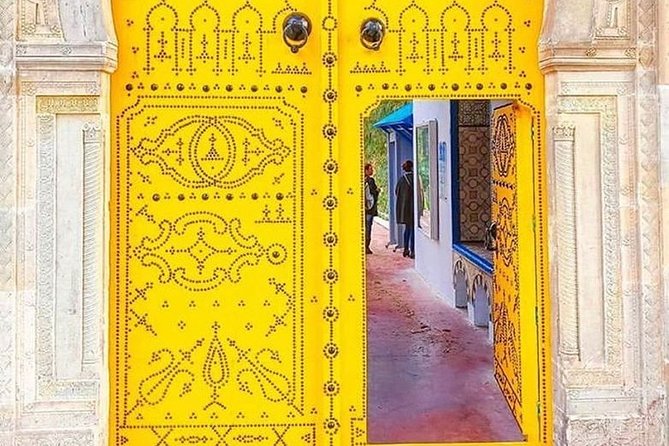
After the medersa, you head to Souk Al Attarine, the old souk des parfumeurs, for about 15 minutes. Admission is free.
Perfume souks are fun because they are specific. You can usually tell what kind of products dominate, and your senses get involved in a way that a stone-and-tile stop never can. If you enjoy small-detail shopping, this is where your guide can help you find what fits your interests instead of letting you get overwhelmed.
Then you continue toward Arts center Bir Lahjar, also described as an old Medressa of Quran, for about 15 minutes. Admission is free. Even with a shorter stop, it adds another layer to the medina’s theme of learning and sacred scholarship.
Finally, you end up on Rue du Pacha, described as one of the most beautiful streets of the medina. This is another about 15 minutes, with street coffee and a local snack noted, plus mention of Medressa Bir Lahjar.
Rue du Pacha is a good closer because it shifts you back to street atmosphere. You get a chance to slow down, take in a beautiful stretch of the medina, and enjoy a simple food or coffee moment that feels local rather than staged.
If you are sensitive to crowds or noise, this final segment can still feel lively. Go at a comfortable pace and let your guide handle small navigational moments so you can enjoy the street without stressing.
Price and Value for $49.33, Plus Timing and Weather Reality
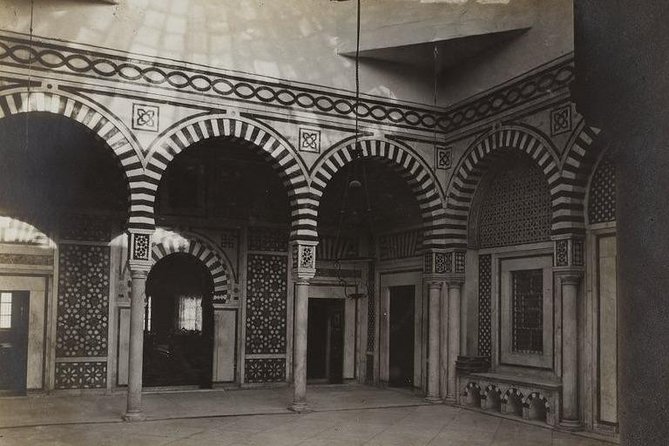
For $49.33 per person, you are getting a structured route in a UNESCO World Heritage setting, guided context, and a mix of stops that explain why the medina functions the way it does. Many of the stops are listed as free or admission-included, which means you are mostly paying for the guide and the planning.
Is it worth it? For me, the value hinges on one thing: whether you want the medina’s story told to you. If you love architecture, religious learning spaces, and understanding how trade and culture connect, the guide’s role becomes the main attraction. If you just want to stroll on your own, you might feel like the guided component is optional.
You also have to think about timing. The tour requires good weather. If poor weather cancels the experience, you are offered a different date or a full refund. And while the plan is only 2 to 3 hours, delays can happen due to rain and traffic, so I recommend building your day with a little slack.
Group size is capped at a maximum of 20 travelers, but because the tour is private, you should expect a more personalized feel than a large group scramble. That balance of cap plus private format is one of the reasons this tour works for first-timers who do not want to feel lost.
Mobile ticketing also simplifies your day. You do not need to hunt for paper passes.
Should You Book The Medina Tour?
Book it if you are on your first visit to Tunis and want to get your bearings fast, without turning the medina into a stress test. This is also a smart choice if you like context, because the route is built around landmarks that explain the city’s cultural and economic importance across time, from ancient Romans to Spanish and Italian influences.
Pass on it if you want a fully self-guided experience, or if you plan to be picky about schedule perfection. The itinerary is short, but Tunis weather and traffic can affect timing, and you will be walking through active streets.
If you do book, do one practical thing: choose your start time based on your comfort in the open air. Then go in with a simple mindset, you are not just collecting photos, you are learning how this place fits together. That is where the $49.33 turns into a real experience.
FAQ
How long is The Medina tour?
The tour lasts about 2 to 3 hours.
What is the meeting point for the tour?
The meeting point is at the I Love Tunis sign, Q5XH+RG3, Tunis, Tunisia.
Do I need to buy tickets for each stop?
Admission is listed as free for several stops, and the Medina of Tunis stop has admission included.
Is this tour private?
Yes, it is described as a private guided tour with a personalized feel.
What time options are available?
You can choose from a morning or afternoon tour time.
What is the maximum group size?
The tour has a maximum of 20 travelers.
What happens if the weather is bad?
The experience requires good weather. If it is canceled due to poor weather, you will be offered a different date or a full refund.
What is the cancellation policy?
You can cancel for free up to 24 hours in advance for a full refund.
Fresh reviews around Tunis
- Private Group Day Tour Tunis Medina Carthage Sidi Bou Said★ 4.5 · 3 reviews
- Explore Tunisia in Depth:The Private Grand Tour in 8 Days★ 5.0 · 3 reviews
- Private Tour Bardo Museum, Carthage, Sidi Bou Said and Medina★ 4.5 · 3 reviews
- 3-Day South of Tunisia Guided Tour from Tunis★ 4.0 · 3 reviews
- Private Tour to Kairouan, El Jem and Sousse★ 5.0 · 4 reviews
- Private Excursion to the Cap Bon Peninsula★ 5.0 · 4 reviews
- From Tunis: Star Wars 5 day tour★ 5.0 · 4 reviews
- DAY TRIP TO Dougga & Bulla Regia , DEPARTURE FROM Tunis★ 5.0 · 4 reviews
Medina Walks, compared.
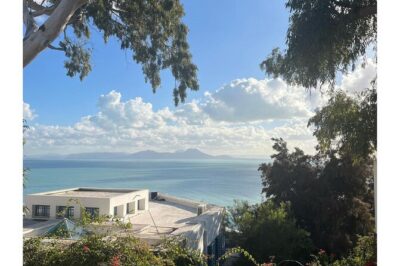
VIP Tour: Tunis Medina/Bardo, Sidi Bou Said, Carthage
Read our review →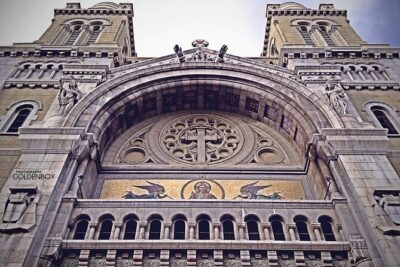
Private tour: Medina,Carthage ,Sidi Bou Said, Bardo Museum+lunch
Read our review →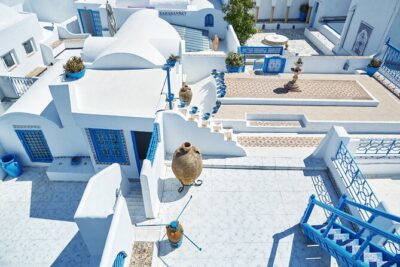
Carthage, Bardo Museum, Sidi Bou Said and Medina Private Day Tour
Read our review →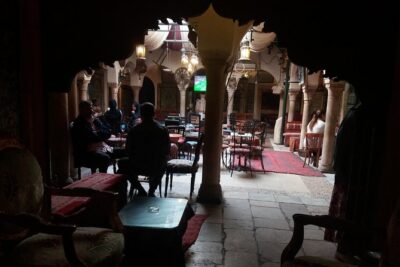
Guided tour in the UNESCO world heritage Medina of Tunis
Read our review →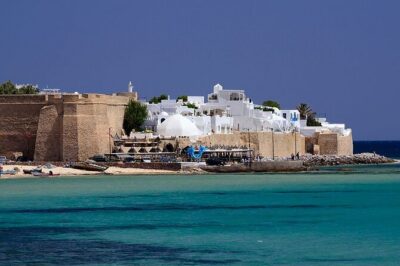
Tour to the Medina of Hammamet and the Spice Market of Nabeul
Read our review →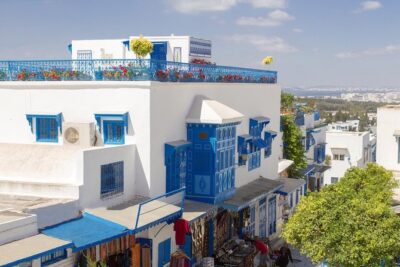
Carthage, Bardo Museum, Sidi Bou Said & Medina Group Tour
Read our review →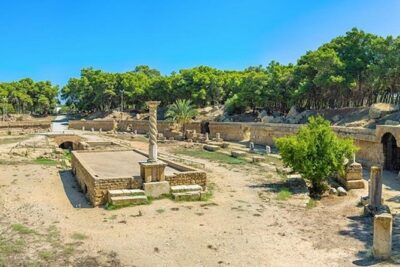
From Hammamet or Tunis: Carthage, Bardo, Sidi Bou said and Medina
Read our review →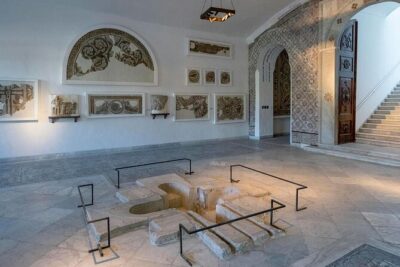
Private Day Tour Tunis Medina Carthage Sidi Bou Said Bardo Museum
Read our review →Browse the lists this tour appears in