
Reviewed · BARDO MUSEUM TOURS
Bardo Museum , Oudhna and the roman aqueduct
Roman Tunisia has a way of hitting you from two angles at once. This tour is interesting because it pairs world-famous Roman mosaics with the engineering story of an aqueduct that once supplied Carthage. I especially love the Bardo Museum setting inside a grand royal palace from the Ottoman era, and I love how the route follows the water line all the way from Carthage to the Zaghouan region. One drawback to plan for: it’s a full half-day, so you’ll be on your feet through museum and archaeological sites where crowds and foot traffic can get busy.
You get a private format for up to 2 people, with an air-conditioned vehicle and pickup offered, plus mobile tickets. Most of the key admissions are handled for you, so you can spend your time looking, not figuring it out, and the whole day runs about 6 to 7 hours.
Key highlights you should care about
- Roman mosaics at the Bardo Museum: a top collection displayed in an Ottoman-era royal palace setting
- The Aqueduct of Hadrien water route: you trace water connecting Carthage to Zaghouan, about 132 km
- Malaga Cisterns at Carthage: 18 water containers built for up to 32,000 litres of water per day
- Oudhna’s Roman amphitheatre scale: seating for about 16,000 spectators
- Byzantine layers at Oudhna: the Capitol area includes underground vaults dating to the Byzantine era
Why this route works: art plus engineering, not just ruins
The Bardo Museum is the kind of place where you can lose track of time, because Roman mosaics are not quick decorations. They are scenes, patterns, and careful craftsmanship, often covering entire floors. Seeing them in a grand Ottoman-era palace also changes the mood. Instead of feeling like a dusty storehouse, it feels like you’re inside a proper display meant for big objects and long looks.
What makes this tour feel different is that it doesn’t stop at the museum. You then shift from pictures on floors to the real-life system that kept Roman cities alive. The Roman aqueduct story is not abstract. You move from the Carthage cistern end point to the Zaghouan segment and then finish in Oudhna, where you get another layer of Roman urban life.
The result is a day that makes you connect dots: art shows wealth and domestic life, while water shows administration and survival. If you like that kind of cause-and-effect travel, you’ll enjoy this one.
More from Tunis to compare against
- Private tour: Medina,Carthage ,Sidi Bou Said, Bardo Museum+lunch
★ 5.0 · 230 reviews - Carthage, Bardo Museum, Sidi Bou Said and Medina Private Day Tour
★ 4.5 · 153 reviews - Tunis: Carthage, Bardo Museum, Sidi Bou Said & Medina Group Tour
★ 4.5 · 33 reviews
Entering the Bardo Museum and focusing your 2-hour visit
Your first stop is the National Bardo Museum. You’ll have about 2 hours, and admission is included. The museum is famous for having the biggest collection of Roman mosaics in the world, displayed in a majestic royal palace from the Ottoman era. That combo matters for your experience. Mosaics need time, and a grand building helps you slow down instead of sprinting through.
How to get the most out of your time
With a set 2-hour window, I’d use a simple approach:
- Pick a handful of mosaic halls or clusters and focus on them deeply, not every single room.
- Look for recurring themes and styles. You’ll start noticing how Roman artists repeated motifs while still making each panel individual.
- Give yourself at least one pause in a quieter spot to compare details. A mosaic you rushed past becomes a mosaic you understand.
What to watch for
Roman mosaics can be visually dense. If you’re prone to scanning, switch to slower looking. Zoom with your eyes: border patterns first, main figures second, then the smaller details that suggest where the craftsmen spent their effort.
Point the Tunis day somewhere else:
- Private Tour to Kairouan, El Jem & Monastir from Tunis_hammamet
★ 5.0 · 301 reviews - Private Excursion to Testour, Dougga and Bulla Regia from Tunis.
★ 5.0 · 100 reviews - Guided Bike Tour of Carthage Archeological Site in Tunisia
★ 5.0 · 88 reviews - Guided tour in the UNESCO world heritage Medina of Tunis
★ 5.0 · 68 reviews
The practical side
This is a busy museum area. Even if the hassle level stays reasonable, there’s still enough bustle that you’ll want to keep your valuables secure and stay aware of your space. Use a crossbody or keep your phone zipped away until you’re ready to take photos.
Carthage’s Malaga Cisterns: the aqueduct’s ending point you can actually see
Next you head to the archaeological site at Carthage, with about 30 minutes on site. Admission is included here too. This is where the aqueduct story turns physical: the aqueduct ends at the Malaga Cisterns.
The details are impressive in a very Roman way. You’re looking at 18 water containers that supported up to 32,000 litres of water per day. That number is not just a trivia fact. It helps you picture what these cisterns were built to do: store and distribute enough water to keep a city running.
What makes this stop special
Most aqueducts are ruins in the distance. Cisterns make it real because they connect directly to storage and daily use. You can stand with your feet still and imagine the flow of water that used to feed neighborhoods and public systems.
Time check
Thirty minutes sounds short, but it works because this segment is focused. You’ll get the key sights without feeling like you’re trapped in a slow-moving maze. Still, if you’re a details person, you may want a bit more time to absorb the scale.
Zaghouan aqueduct sections: 132 km of Roman planning in broken stone
After Carthage, the tour drives to the Aqueduct of Zaghouan area, about 30 minutes south of Carthage. The aqueduct segment here connects to the larger Aqueduct of Hadrien story, which once channeled water from the mount of Zaghouan to Carthage. The full channel length is about 132 km.
Admission at this stop is free, so you’re paying for the drive and the time on the ground, not entry. That’s a nice value piece, especially since you’re already covering paid admissions earlier in the day.
Why this part matters
At the cistern stop, you learned where water ended. At Zaghouan, you get a feel for where water began, even if you’re seeing architectural remnants rather than a functioning system.
Also, the placement helps your understanding. You’ll be on the road between Mhammedia and El Fahs, and these Roman structures stand about 6 km from Oudhna. That framing makes the day feel like one connected map, not four unrelated stops.
What to expect on the ground
This is archaeology, not a polished attraction. You’ll see Roman architectural miracles, but you’ll also see how nature and time treat stone. Bring good walking shoes. Plan for uneven surfaces and sun exposure if the weather is clear.
Oudna archaeological park: amphitheatre, Capitol vaults, and the Villa Laberii mosaics
Your final stop is Oudhna Archaeological Park, with about 2 hours on site. Admission is free. This is where the day expands from water and mosaics into a full Roman city snapshot.
The amphitheatre with space for 16,000
Oudhna has a Roman amphitheatre that held about 16,000 spectators. Standing near a structure with that scale changes how you imagine daily life. It’s not a small venue you can picture casually. It tells you the city could host big events and draw a crowd.
If you’re into atmosphere, it helps to pause at a viewpoint where you can see how the seats curve around. Even without a performance, you can feel the design logic.
The Capitol and Byzantine underground vaults
You’ll also see the Capitol area, noted for some of the finest mosaics at Oudhna, plus impressive underground vaults dating back to the Byzantine era. This is a great reminder that ancient sites weren’t frozen in time. Roman architecture and decoration came first, then later eras reused and adapted parts of the complex.
For you, that means the site is more than one layer of stone. It’s a timeline you can walk through.
Villa Laberii mosaics
Another standout is the Villa Laberii mosaics. After the Bardo Museum, these mosaics hit differently. At the museum, you’re surrounded by a curated collection. At Oudhna, the mosaics are part of the place they belonged to, so your mind connects the artwork to domestic space and local life.
The pace and what to watch for
Two hours here is solid, especially because Oudhna is free and tends to feel less rushed than paid museum time. Still, if you’re taking photos and reading signage slowly, you might feel the clock. I’d prioritize the amphitheatre area, then move to the Capitol and vaults, and then use the Villa Laberii mosaics as your final focus.
The full 6 to 7 hour plan: how the timing feels in real life
The day is designed as a tight loop around Tunis and Carthage. You’re looking at roughly 6 to 7 hours total, including transit between locations.
Here’s how I’d think about the rhythm:
- Museum time (about 2 hours) to take in major mosaics.
- Carthage cistern time (about 30 minutes) for the key aqueduct connection.
- Zaghouan drive and short stop (about 30 minutes) to add the beginning of the water story.
- Oudhna time (about 2 hours) to finish with amphitheatre scale and layered mosaics.
The good news is that the admissions are planned around the time you spend. You get ticket-covered entry at the Bardo and at Carthage cisterns, and free entry at Zaghouan and Oudhna. That makes the money part less complicated than some tours where everything else is add-ons.
Also, pickup offered and an air-conditioned vehicle matter in Tunisia. When the sun hits, you’ll be grateful for the break between sites.
Price and value: is $258.49 for up-to-2 a smart deal?
The price is $258.49 per group for up to 2 people. That structure is basically: you pay for private transport plus the core admissions and access.
Here’s how that looks in value terms:
- You’re paying for a full private day across multiple locations, not just one site.
- Admission is included for the Bardo Museum and the Carthage archaeological site.
- Entry at Zaghouan and Oudhna is free, which keeps the total cost from ballooning with extra ticket stops.
- The tour includes all fees and taxes and an air-conditioned vehicle, which can be hard to recreate easily on your own in the same smooth sequence.
Not included: lunch. That’s the one obvious gap. But it also gives you flexibility. If you want a quick meal near the end, you can do that. If you prefer to eat back in Tunis, you can choose your own spot.
If you’re traveling as a couple or with a friend you trust to keep the pace, this can be a strong value. If you’re solo, it may feel pricey compared with public transit, but the private format is a big part of what you’re paying for.
Who will love this tour, and who might want to tweak it
You’ll love it if:
- You get excited by Roman mosaics and want to see them in more than one setting.
- You like architecture and systems, not just pretty ruins.
- You want a day with structure and minimal friction, since most entry and transport are handled.
You might want a different plan if:
- You hate walking through museums and outdoor sites back-to-back.
- You prefer lots of free time to wander without a set schedule.
Also, if you’re sensitive to busy areas, don’t panic. Just use basic protection: keep your valuables secured and stay aware in entrances where people pass close by.
Quick practical tips to make the day smoother
- Wear shoes you trust. You’ll move through museum floors and outdoor archaeology where the ground can be uneven.
- Bring water for the Bardo and Oudhna stretches. There’s no lunch included, so you’ll appreciate having something to sip.
- Plan for strong daylight. If weather is clear, you’ll likely feel it more at Zaghouan and Oudhna.
- Keep your phone and valuables close in crowded museum entry zones. Even when hassle is low, foot traffic is real.
So, should you book it?
If you’re trying to choose between seeing the Bardo Museum alone and doing a bigger Roman day across Carthage and Oudhna, I’d lean toward booking this. The combination is the whole point: mosaics at their most famous scale, then the aqueduct logic, then Oudhna’s amphitheatre and layered mosaics.
Book it if you want a structured half-day that connects themes, not just stops. Skip it only if you need a slow day or you’re not into walking through museum and archaeological areas in one go.
Just know one more thing: the experience depends on good weather. If rain or poor conditions are forecast, it may be rescheduled or refunded, so keep an eye on the forecast when your day is close.
FAQ
How long is the Bardo Museum, Oudhna and the roman aqueduct tour?
It lasts about 6 to 7 hours.
Is pickup included?
Yes, pickup is offered.
Is admission included for the main sites?
Admission is included for the National Bardo Museum and the archaeological site at Carthage. Admission is free for the Aqueduct of Zaghouan and for Oudhna.
What does the tour price include?
The price includes all fees and taxes, an air-conditioned vehicle, and the included admissions. Mobile tickets are used.
Is lunch included?
No, lunch is not included.
What is the group size for this private tour?
It is a private tour, with only your group participating, up to 2 people per group.
What is the weather requirement?
The experience requires good weather. If it is canceled due to poor weather, you will be offered a different date or a full refund.
Fresh reviews around Tunis
- Explore Tunisia in Depth:The Private Grand Tour in 8 Days★ 5.0 · 3 reviews
- Private Group Day Tour Tunis Medina Carthage Sidi Bou Said★ 4.5 · 3 reviews
- Private Tour Bardo Museum, Carthage, Sidi Bou Said and Medina★ 4.5 · 3 reviews
- 3-Day South of Tunisia Guided Tour from Tunis★ 4.0 · 3 reviews
- Private Tour to Kairouan, El Jem and Sousse★ 5.0 · 4 reviews
- From Tunis: Star Wars 5 day tour★ 5.0 · 4 reviews
- Private Excursion to the Cap Bon Peninsula★ 5.0 · 4 reviews
- 4-Day Private Tour: Sahara and Djerba Island from Tunis and Hammamet★ 5.0 · 4 reviews
Bardo Museum Tours, compared.
VIP Tour: Tunis Medina/Bardo, Sidi Bou Said, Carthage
Read our review →
Private tour: Medina,Carthage ,Sidi Bou Said, Bardo Museum+lunch
Read our review →
Carthage, Bardo Museum, Sidi Bou Said and Medina Private Day Tour
Read our review →
Carthage, Bardo Museum, Sidi Bou Said & Medina Group Tour
Read our review →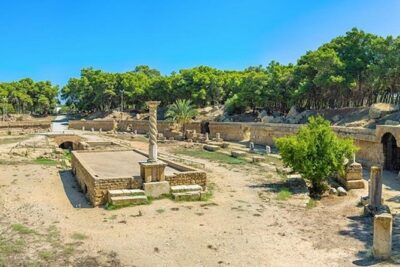
From Hammamet or Tunis: Carthage, Bardo, Sidi Bou said and Medina
Read our review →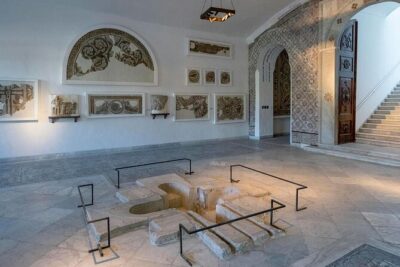
Private Day Tour Tunis Medina Carthage Sidi Bou Said Bardo Museum
Read our review →Private tour: Medina,Carthage ,Sidi Bou Said, Bardo Museum+lunch
Read our review →
Daytrip Carthage Sidi Bousaid Bardo and Tunis Medina
Read our review →Browse the lists this tour appears in