
Reviewed · GUIDED
Dougga Guided Day Tour from Tunis
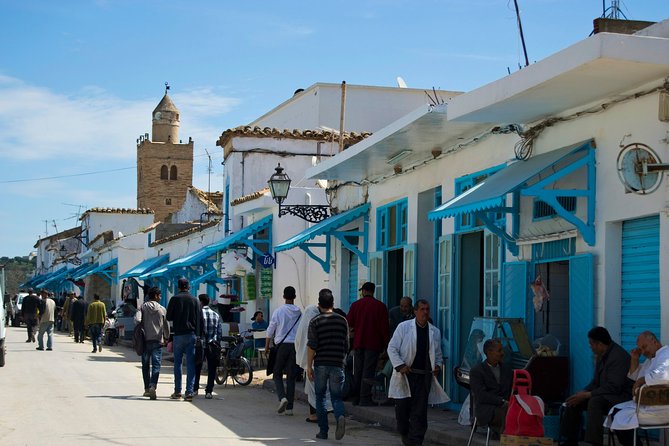
If you want a day trip that feels like two different eras of Tunisia, this one works. You start in the Andalusian village of Testour, then switch to Dougga, a World Heritage Roman site that is big enough to feel worth the drive.
I like that the pace is handled for you, with an air-conditioned minivan and a guide who explains what you are seeing, not just where to stand. I also like the small-group size, capped at 8 people, which makes it easier to ask questions and actually hear the guide. One thing to consider is that Dougga admission is not included, so you should be ready for that add-on at the site.
Key Points at a Glance
- Testour’s Andalusian style Great Mosque, including a 23-meter octagonal minaret with glazed inscriptions and a mechanical clock
- Cheese tasting in Testour, a local specialty stop that turns a quick village break into a highlight
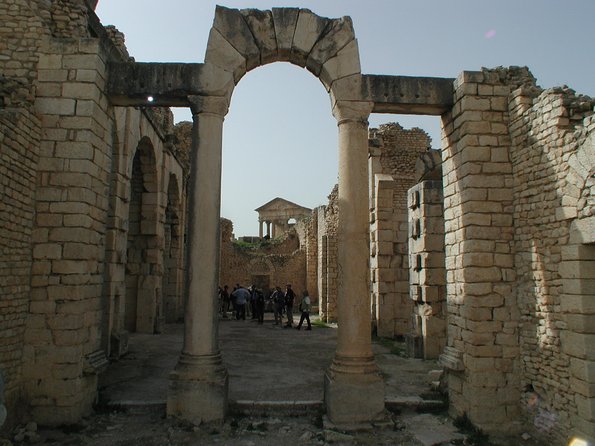
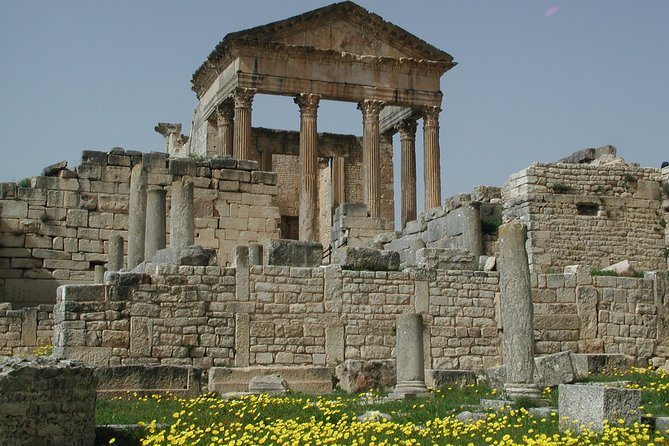
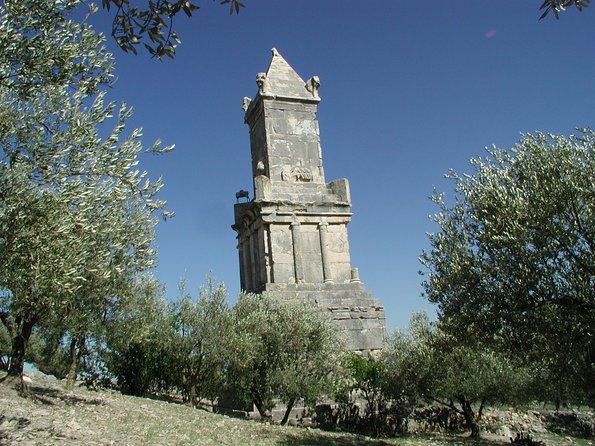
- Dougga World Heritage Roman ruins, with stops planned around the theater, baths, forums, and temples
- Blue Badge guidance plus a small group size (max 8), so you get context as you walk
- Comfortable transport with hotel pickup, drop-off, and an air-conditioned minivan
A Small-Group Day Out of Tunis to Dougga and Testour
This is the kind of outing that makes day trips from Tunis actually feel doable. You are not left to figure out schedules, parking, or translations. Instead, you get a guided route, hotel pickup, and a comfortable ride in an air-conditioned minivan, with a cap of 8 travelers.
The timing matters here. You start at 8:00 am, and the full day runs about 8 hours. That gives you enough room to enjoy two very different stops without feeling rushed through either one. Also, because Dougga is a sizable archaeological area, having a guide help you sequence the sights is a big deal. You get a clear path through the major points rather than wandering.
The best part for me is how the tour balances big “wow” monuments with a human-scale village moment. Testour is not just a photo stop. Dougga is not just a quick glance either. You get structured time at Testour (1 hour) and a longer visit at Dougga (1 hour 30 minutes), which is exactly what you want for a site where details are the point.
If you care about learning while you travel, this is tuned for that. The guide focuses on Roman deities and everyday life, so the ruins become more than stone shapes. You start to notice how public spaces, temples, markets, and baths fit together.
More from Tunis to compare against
- Guided Bike Tour of Carthage Archeological Site in Tunisia
★ 5.0 · 88 reviews - Guided tour in the UNESCO world heritage Medina of Tunis
★ 5.0 · 68 reviews - Group Guided Bike Tour of Carthage Archeological Site in Tunisia
★ 5.0 · 57 reviews
Testour Cheese Tasting and the Great Mosque Minaret
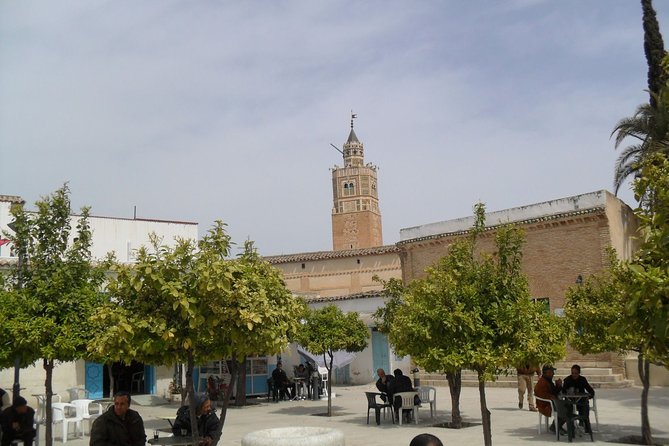
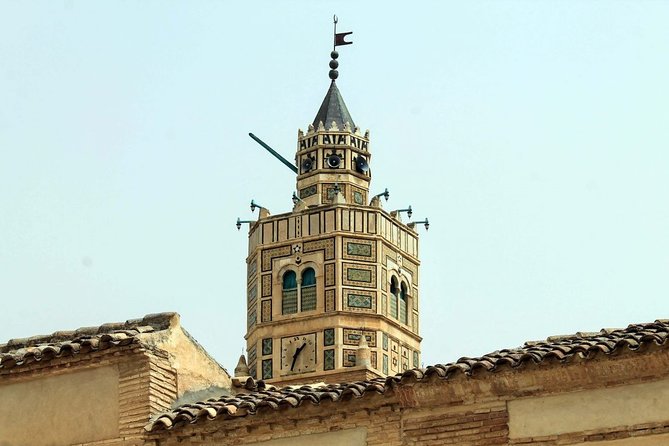
Testour is where the day gains character. This Andalusian village is known for architecture that feels tied to southern Spain, and the star is the Great Mosque. The minaret is described as 23 meters tall and octagonal, with small double windows. Those windows are decorated with glazed inscriptions, and there is even a mechanical clock at the top.
The minaret also carries a specific visual link to Aragón style bell towers in southern Spain. That comparison helps because it gives you a mental reference point while you are looking up, not down. Even if you do not know much about Islamic architecture, you can still read the building in layers: shape first, then ornament, then the clock detail.
Then comes the stop that makes Testour feel like a place, not just a monument: cheese tasting. You get to sample the regional specialty as part of the village visit, and this is one of those moments that is easy to overlook on DIY trips. Here, it is scheduled, so you do not have to hunt for it or wonder if it will be worth your time.
A practical note: this stop includes an admission ticket that is listed as free, and the time on the ground is about 1 hour. That is enough for the mosque view, the tasting, and a relaxed walk through the village feel. If you like architecture, food, and short, focused breaks, this stop is a strong reason to book.
Possible drawback: if you are expecting a long, slow village wander, 1 hour might feel short. But for most people, it is the right length because it sets you up for the bigger, more tiring walking at Dougga later.
Dougga World Heritage: Theater, Baths, Temples, and the Roman City Plan
Now for the main event. Dougga is a World Heritage archaeological site, and it is known for some of the largest Roman ruins in North Africa. This is not a tiny ruin cluster. It is a whole Roman city layout, so the guide’s routing really matters.
The tour begins at the theater, which is a good anchor point because it gives you a sense of how Romans gathered for performance and public life. From there, you move through key spaces that would have shaped daily routines.
One of the planned stops is the Place de la Rose des Vents, a name that immediately makes you think there is a specific spatial or directional concept here. Even without getting too technical, the name helps you understand that Romans organized civic space for function, movement, and meeting up.
You also visit a marketplace, then the Capitoline Temple, and the Forum. Those three together do a lot for your understanding of the city. The marketplace gives you an economic pulse. The forum represents civic and political life. The Capitoline Temple connects the city to religion and Roman ideals. Once you see those in sequence, it becomes much easier to picture who would have been where, and why.
Next up are the Public Baths and the House of Trifolium. Baths are always a favorite stop for me in archaeology because they show Roman social life beyond politics and temples. People did not just work and worship. They gathered, talked, and cleaned up in spaces designed for routine and comfort. The house stop adds a domestic contrast, reminding you that there was everyday living happening right alongside public monuments.
The guide ties it together by explaining Roman deities and life in ancient times, so you do not walk away with a checklist only. You walk away with a clearer story: what people believed, how they met, how they ate or shopped, and how they spent leisure time.
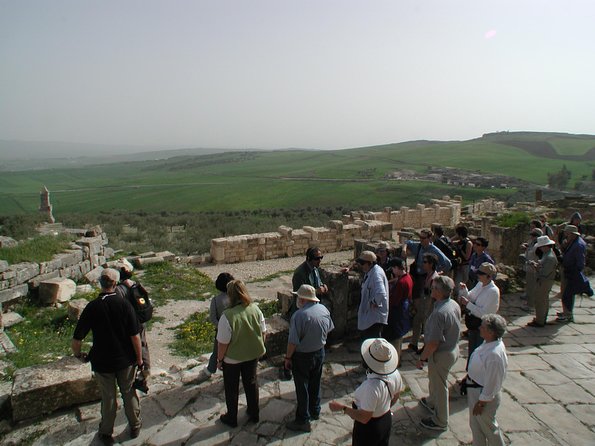
Your time at Dougga is listed at 1 hour 30 minutes, and that is realistic for a site where you will want to stop, look closely, and not feel like you are speed-walking. Admission for Dougga is not included, so you will likely need to budget for entrance at the site.
Practical consideration: Dougga is an outdoor archaeological area. You should wear comfortable shoes and be ready for uneven ground. Even if you have moderate fitness, plan on steady walking and some standing for viewpoints.
Blue Badge Guidance That Makes Ruins Make Sense
This tour leans hard into one smart idea: context. You are not just dropped off. You get a Blue Badge guide, and that matters because it usually means the guiding approach is structured around interpretation, not just narration.
At Dougga, the guide’s focus on Roman deities and everyday life is the difference between seeing ruins and understanding a Roman city. When you know what the spaces were for, you start noticing patterns: public buildings clustered around civic areas, religious architecture placed for visibility and meaning, and baths and houses that show private routines.
At Testour, the guiding attention shifts to architecture and details. The minaret description includes specific features you can look for, like the glazed inscriptions on the small double windows and the mechanical clock. When someone points out those kinds of elements, your photos get better too, because you know what deserves a close-up.
The small group size helps with the learning. With a maximum of 8 people, you are less likely to get lost at the back of the group, and questions tend to land better. It also makes the day feel calmer, which matters because the sites are the kind of places where you might otherwise just skim.
One more thing I appreciate is that the tour is described as hassle-free. In real life, that usually means the day stays organized, with a clear pickup point and a set return plan, so you can enjoy the sites instead of managing logistics.
Point the Tunis day somewhere else:
- Private Tour to Kairouan, El Jem & Monastir from Tunis_hammamet
★ 5.0 · 301 reviews - Private tour: Medina,Carthage ,Sidi Bou Said, Bardo Museum+lunch
★ 5.0 · 230 reviews - Carthage, Bardo Museum, Sidi Bou Said and Medina Private Day Tour
★ 4.5 · 153 reviews - Private Excursion to Testour, Dougga and Bulla Regia from Tunis.
★ 5.0 · 100 reviews
Lunch, Timing, and How the Day Flows
You get lunch included, which is one of the easiest ways to judge value on a day tour. Food adds up quickly on your own, especially if you land at a site where options are limited. Here, lunch is built into the schedule, so you do not have to make decisions mid-day.
The itinerary structure makes sense: you start with Testour, then move on to Dougga. That order is helpful because Testour is more compact, and Dougga is where the walking and time on your feet really build. The cheese tasting also gives you a satisfying stop before the main ruins.
The duration is about 8 hours, which is long enough for a meaningful visit but short enough to keep it realistic as a day trip from Tunis. Starting at 8:00 am helps too, because you are earlier at the sites and you avoid feeling like the day is collapsing into heat and fatigue.
If you care about dietary needs, there is a vegetarian option available if you request it when booking. That is important because a day tour can leave you stuck with whatever is easiest unless the operator plans for alternatives ahead of time.
What is not included is food and drinks beyond what is specified. So if you expect to buy extra snacks or drinks along the way, you should plan for it. For most people, having lunch covered is enough, and you just add water as needed.
Price and What You Really Get for $139.06
At $139.06 per person, this tour sits in the mid-range for a guided day trip with transport and a major site included. The value is not just the guide. It is the full package: lunch, air-conditioned minivan transport, hotel pickup and drop-off, and a Blue Badge guide.
Here is why that pricing can feel fair. First, you are paying for time and expertise. Dougga is a major archaeological site, and without a guide you might enjoy it, but you will probably miss layers of meaning. Second, you are paying for convenience. Hotel pickup and drop-off remove the stress of getting yourself to and from the Roman ruins.
Where you should do a little math: Dougga admission is not included. Testour’s admission is listed as free, but you still should account for the Dougga entrance fee when you plan your total spending.
Also, the tour caps at 8 people, which usually means less crowding and more guide attention. If you prefer small-group experiences, that can make the per-person cost feel more justified than a bigger bus tour.
For budgeting, think of your total as base tour price plus whatever Dougga admission costs and any extra drinks or snacks you choose to buy.
What to Bring and Who This Tour Suits Best
This is a moderate-effort day trip. The tour is described as suitable for people with moderate physical fitness, and that fits the reality of visiting an archaeological site that is outdoors and involves walking between monuments.
So, bring the basics that make the difference at ruins:
- comfortable walking shoes (this is not a stroll on smooth pavement)
- sun protection, because outdoor time can add up
- a light layer if you like to stay comfortable early in the morning
If you care about learning, you will like this format. The guide explains Roman deities and daily life, and the planned stops at the theater, baths, forum, and temple create a clear story. If you just want photos, you will still get great ones, but you might enjoy it more if you lean into the explanations.
Who this suits best:
- couples and small friend groups who want a calm day with a guide
- people who like architecture and also want a major archaeological site
- anyone who does not want to wrestle with transport planning for a long day
Who might want to rethink:
- people who struggle with uneven ground or long standing periods, since Dougga is an outdoor ruin complex
- people who want fully unguided free time, because this day is structured
Should You Book the Dougga and Testour Guided Day Trip?
Book it if you want an organized day that pairs two high-value stops: the Andalusian architecture and cheese tasting of Testour, then the big Roman city experience at Dougga with guide-led context. The small-group size, included lunch, and air-conditioned transport make it feel like you get real help, not just a transfer to a ticket line.
I would pass if you are on a tight budget for admissions, or if you strongly prefer to explore at your own pace. Dougga admission is not included, so your final cost will be a bit higher than the headline price.
FAQ
How long is the Dougga guided day tour from Tunis?
The tour is about 8 hours.
What is included in the tour price?
It includes lunch, a Blue Badge guide, transport by air-conditioned minivan, and hotel pickup and drop-off.
Is Dougga admission included?
No. Dougga admission is listed as not included.
Is Testour admission included?
Testour admission is listed as free.
Is lunch included?
Yes, lunch is included.
Is there a cheese tasting in Testour?
Yes. The tour includes a cheese tasting in Testour.
How many people are on the tour?
The tour is capped at a maximum of 8 travelers per group.
Is a vegetarian lunch option available?
Yes. A vegetarian option is available if you advise at booking.
What time does the tour start and where does it meet?
It starts at 8:00 am. The meeting point is 12 Av. de Paris, Tunis 1000, Tunisia, and the tour ends back at the meeting point.
What is the cancellation policy?
Free cancellation is available up to 24 hours before the experience start time for a full refund.
Fresh reviews around Tunis
- Explore Tunisia in Depth:The Private Grand Tour in 8 Days★ 5.0 · 3 reviews
- Private Group Day Tour Tunis Medina Carthage Sidi Bou Said★ 4.5 · 3 reviews
- Private Tour Bardo Museum, Carthage, Sidi Bou Said and Medina★ 4.5 · 3 reviews
- 3-Day South of Tunisia Guided Tour from Tunis★ 4.0 · 3 reviews
- Private Tour to Kairouan, El Jem and Sousse★ 5.0 · 4 reviews
- From Tunis: Star Wars 5 day tour★ 5.0 · 4 reviews
- Private Excursion to the Cap Bon Peninsula★ 5.0 · 4 reviews
- 4-Day Private Tour: Sahara and Djerba Island from Tunis and Hammamet★ 5.0 · 4 reviews
Guided, compared.

Guided Bike Tour of Carthage Archeological Site in Tunisia
Read our review →
Guided tour in the UNESCO world heritage Medina of Tunis
Read our review →

Group Guided Bike Tour of Carthage Archeological Site in Tunisia
Read our review →
Guided Tour of Djerba island, Museums, Crocodile park & lunch
Read our review →
Private and Guided Tour to Kairouan and El Jem and Monastir
Read our review →
Kairouan & El Djem Guided Day Trip with Lunch from Hammamet
Read our review →Browse the lists this tour appears in